Three days from now, at two in the afternoon on March 5, Goyang Special City will call researchers together at KINTEX Exhibition Center 2. The name is the "Academic Conference on the Excavation Findings of the Bukhansanseong Haenggung Site." Laying out in one place what has come out of fourteen years of investigation underground is the business of the day, and this is also the first academic event held since the World Heritage nomination dossier for "The Capital Fortifications of Hanyang" was submitted.
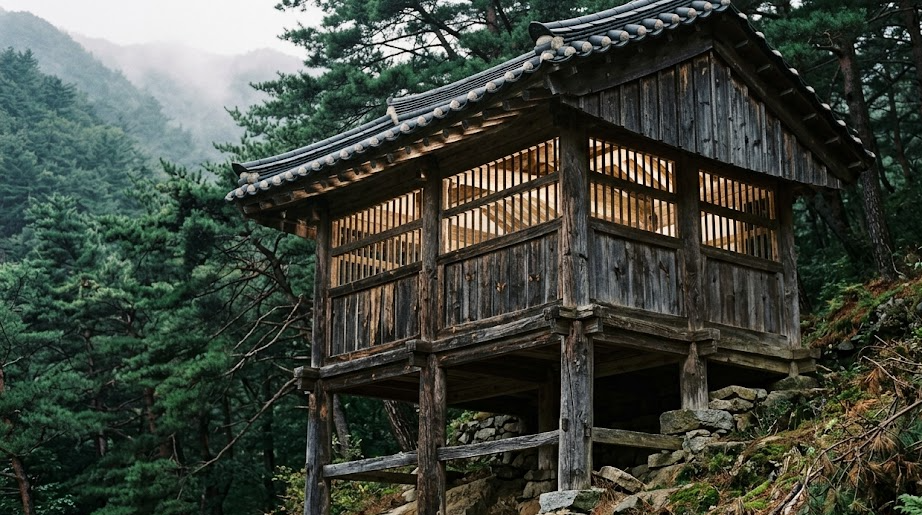
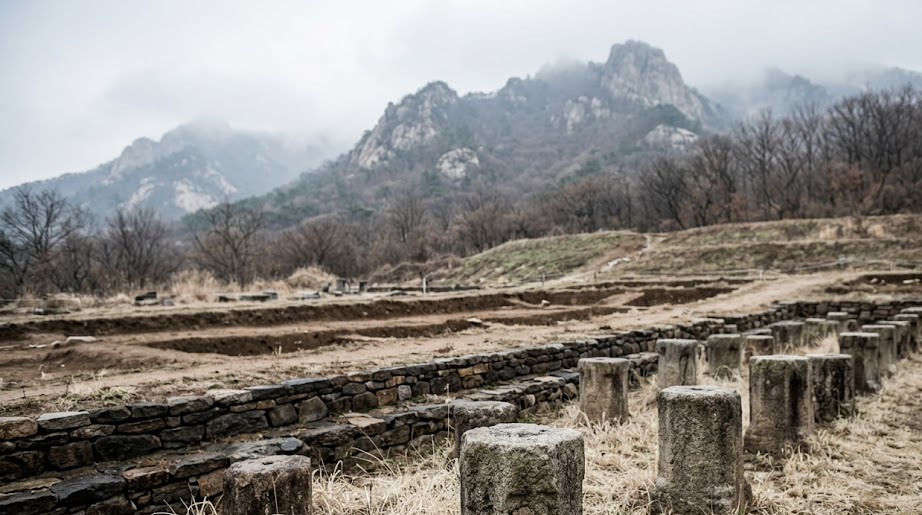
The year the haenggung was built was the 38th year of King Sukjong, 1712. It was a detached palace for the king to move to and carry on state affairs when the capital fortress fell, so the character of this place was governance in an emergency from the start. The inner quarters where the king and queen stayed and the outer quarters where state affairs were discussed with officials came to 129 bays together. It would not be too much to say that an entire palace was transplanted whole into the mountains.
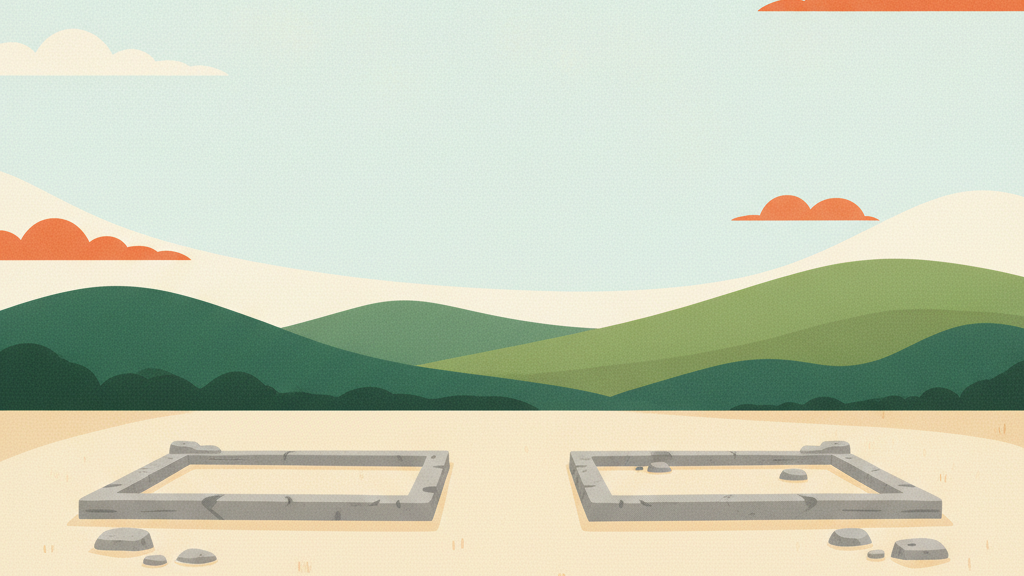
What erased those wooden buildings was water. The great flood of 1915 came down the valley and covered the buildings under soil and stone, and after that only the platforms and foundation stones remained. Moss on the granite surfaces, the damp smell rising from the soil after rain, fragments of roof tile crumbling underfoot. Designation as a historic site came in 2007.
The work of opening the ground began with a test excavation in 2011. From the following year until last year, detailed excavations were repeated six times, and in that period the material on how the buildings were set and in what manner they were raised grew thicker layer by layer. At this conference the excavation findings accumulated in that way will be brought together in one place. How many building sites have been confirmed, and how far the outline of the 129 bays has been established, can be learned only by hearing the presentations on the day.
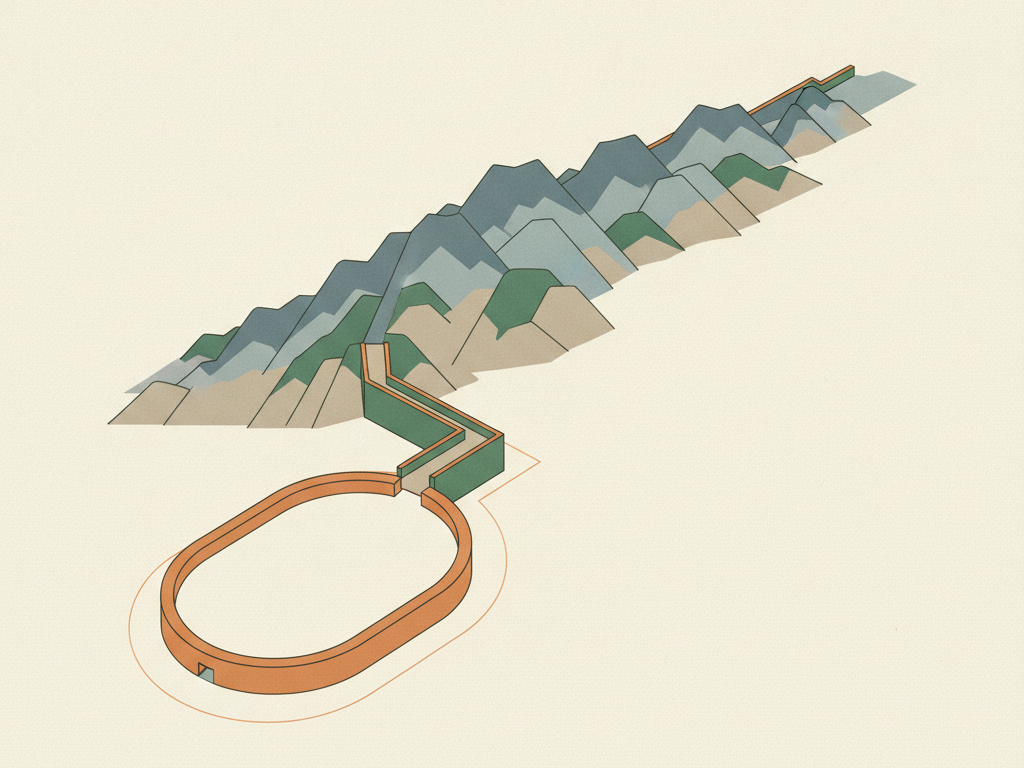
The name being put forward for listing is "The Capital Fortifications of Hanyang." The Hanyang City Wall, the center of administration, Bukhansanseong, which took on military defense, and Tangchundaeseong, which connects the two, are not separated but bound together as a single defense system. The haenggung falls at the meeting point of this concept. Only with the duality of being a palace where the king stayed and at the same time a facility inside a fortress does the explanation that the mountain fortress was more than a mere wall hold.
The keynote lecture that day will be given by Song In-ho, professor emeritus at the University of Seoul. After he, a former chair of ICOMOS Korea, takes up "The World Heritage Value of Bukhansanseong and the Capital Fortifications of Hanyang," three presentations will follow. Shin Young-moon, head of the Seoul Metropolitan Government's World Heritage inscription team, will address the procurement and expedient handling of resources in the construction of the haenggung during Sukjong's reign, Lee Seung-yeon, director of the Architecture, Documents and Archaeology Studio, will address the architectural system and techniques of late Joseon haenggung, and Park Hyun-wook, senior researcher at the Gyeonggi Cultural Foundation, will address conservation, restoration and use.
Tension hangs on the title of the third presentation. Show the site as it is, or raise the buildings again. Restoration returns form to visitors but covers the original traces left in the ground. The general discussion will be chaired by Shin Hee-kwon, professor at the University of Seoul and secretary general of ICOMOS Korea, with Seo Bong-soo, director of the Baekdu Cultural Research Institute, Cho Jae-mo, professor at Kyungpook National University, and Han Wook-bin, head of the Korea Building Safety Center, taking part.
A city official described the place with its two faces, a space of royal governance in a time of war and a military strategic point, and said the city would set the direction for conservation and restoration on the basis of academic verification. For the city led by Mayor Lee Dong-hwan of Goyang Special City, the time remaining until the listing review becomes a period for building the case. The review falls to the 49th session of the World Heritage Committee in 2027.
Whatever conclusion comes out of the conference hall, confirming it means walking up there in the end. Inside Bukhansanseong, on a slope where the sound of the valley stream carries, the platform stones lie in rows. Setting 129 bays on top of them is something the presentation papers cannot do. The person standing beside the platform stones has to do it directly.