
Nationwide integrated care under the Integrated Care Support Act begins this March. From two months from now, medical, long-term care, caregiving, housing and daily living support will be tied together in the community, and receiving them at home rather than in a facility or hospital will become the national default. The announcement comes in March, but some cities have already been living that way for several years.
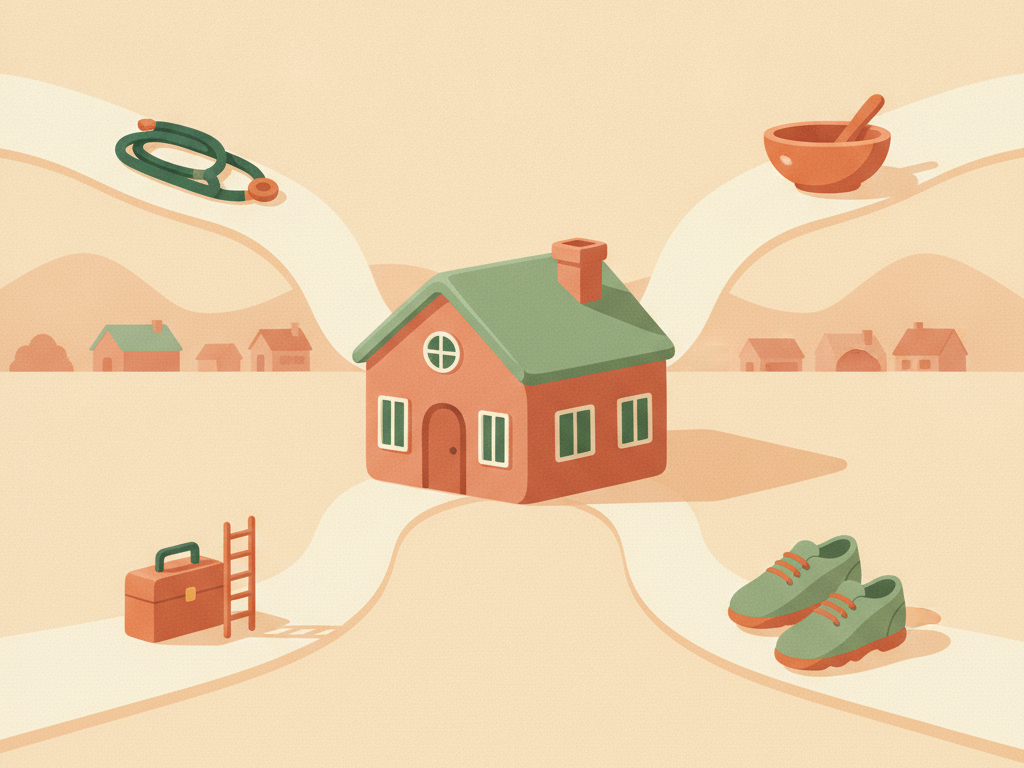
The city of Pohang has been selected for the Ministry of Health and Welfare's pilot project on integrated medical and long-term care support for older adults for two consecutive years. Pohang divided this into four branches, △public health care △community linkage for discharged patients △housing improvement △hospital escort services and nutrition support, and called it "Pohang-style integrated care." Last year 2.3 billion won of the city's own budget went into it.
The results remain by category. There were 4,083 home visits, 553 nutrition lunchboxes, 380 hospital escort services, 56 emergency care support cases, 12 housing improvements and 36 cases of support for discharged patients returning to the community. None of it happened only on paper. These are counts of lowering thresholds, delivering meals and walking with someone to the consultation room.
For those results Pohang was named a "2025 outstanding local government for integrated care" and received a commendation from the Minister of Health and Welfare. This year it will form an integrated care task force and open a "home medical care support center." It plans to run a "home medical care support team" made up of doctors, pharmacists and oriental medicine doctors, and to create a "halfway house," a recovery care space for people who have difficulty going straight home right after discharge.
The method Suncheon chose is to make a single entrance. It is setting up integrated counters at 24 eup, myeon and dong administrative welfare centers, building a one-stop system that handles everything from consultation and application to service linkage and delivery in one place. It means people no longer have to go from department to department repeating the same circumstances.
Suncheon is also running a community linkage project for discharged patients in partnership with 13 hospitals in the area. Among existing programs, the healthy meal support, food ingredient support and meal kit support that drew good responses will be expanded in target and scope. It is worth noting that both Pohang and Suncheon set discharged patient linkage apart as its own program. That is because they learned in the field that the few days after walking out of the hospital door shape the years that follow.
In Gangwon, the city of Chuncheon created the province's first dedicated integrated care organization and set up a "Chuncheon-style integrated care" system. Yuk Dong-han, mayor of Chuncheon, announced the city's administrative direction for 2026 at the city hall briefing room on the 6th and presented a "6+1 future city transition strategy." The names differ by city, but the principle of moving services rather than moving people is the same.
The reason such experiments became necessary is not hard to calculate. Health insurance spending related to older adults rose from 37.5 trillion won in 2020 to 52.1 trillion won in 2024, and long-term care insurance spending rose from 8.9 trillion won to 14.8 trillion won over the same period. The population aged 65 and over passed 10 million as of 2025, more than 20% of the total. It means the approach of coping by increasing facilities and hospital beds is hard to sustain for long.
With March approaching, the eligibility criteria and application procedures have not been made public. So for now, what the city, county or district you live in has been preparing makes the difference people feel. March will not be the same in a city with a home medical care team and a city without one, or in a city with one counter and a city with many.
A system starts with a public notice, but care starts at the front door. Pohang's 4,083 cases and Suncheon's 24 counters are a record of how many times that door was knocked on. What older adults across the country will experience after March is not the name of a law, but the time between the doorbell ringing and the door opening.