The "Petroglyphs along the Bangucheon Stream," inscribed on the UNESCO World Heritage List last July, has passed six months since the listing. According to the Ulsan Metropolitan City announcement on the 9th, visitors to the Ulsan Petroglyph Museum have risen by a monthly average of 75% from the previous year since the inscription. Foreign visitors have nearly doubled compared with 2024. A single change of name has visibly changed the flow of people.
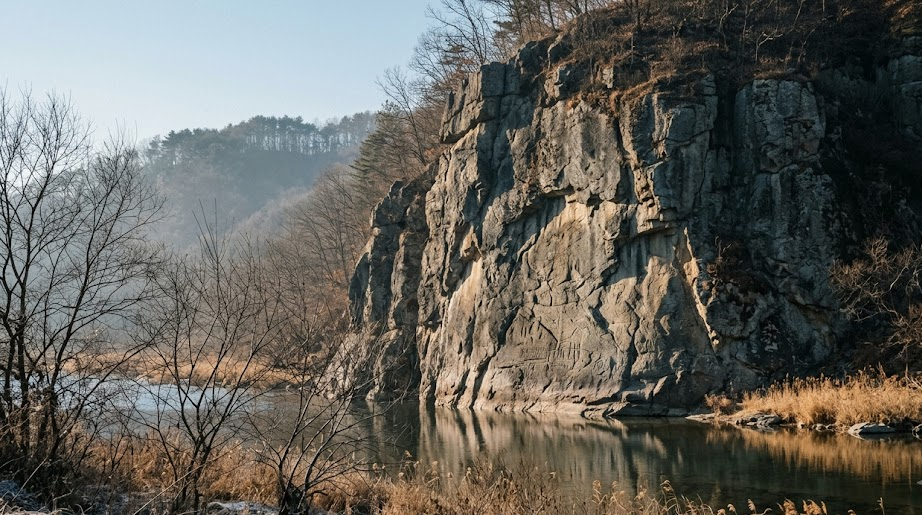
The World Heritage site "Petroglyphs along the Bangucheon Stream" encompasses two National Treasures, the Inscriptions and Petroglyphs at Cheonjeon-ri in Ulju and the Bangudae Petroglyphs at Daegok-ri in Ulju, along with the surrounding area. It is recorded as the Republic of Korea's 17th World Heritage site and the oldest among the country's inscribed heritage. The Bangudae Petroglyphs at Daegok-ri were discovered in 1971, and the whales carved there number more than fifty.
Cheonjeon-ri has a different grain. A rock 2.7m high and 9.5m wide lies stretched out from north to south, and on its face some 620 figures, inscriptions and images are carved overlapping one another. It was discovered in December 1970, a little over 2km from Daegok-ri along the course of the Daegokcheon Stream.
One side has whales carved into it, the other has names and figures added by people. Flowing between the two rocks is the Bangucheon Stream.
The increase also shows up month by month. In August, October and November 2025, visitors exceeded 10,000 each month. The museum, which opened in May 2008, passed 1.56 million cumulative visitors at the end of last December. On top of a total accumulated over more than 17 years since opening, the curve of the past six months is clearly laid.
But this figure was counted inside the museum. How many people passed the approach roads to Daegok-ri and Cheonjeon-ri and through Daegok Village to stand before the rocks has not been announced separately. The same goes for what burden the increased footfall has placed on the village road and the waterside. What the visitor curve shows is an indoor report card, and the heritage is outdoors.
The plan Ulsan Metropolitan City presented at its New Year briefing on the 8th takes aim at this gap. It will draw up a master plan from this May through the end of the year to turn the Bangucheon area into a combined history, culture and tourism space, with construction beginning in 2028. The Bangucheon World Petroglyph Center is targeted for design in 2027, groundbreaking in 2029 and completion in 2030, following a feasibility study in February and an application for central review of local finance investment in March. The creation of a history and culture trail, improvement of the approach road to Daegok Village, and shuttle bus operation are also being pursued.
The way it is seen will be reworked as well. The idea is to develop a Bangucheon World Heritage brand design and attach XR telescopes and a smart interpretation guide system so that the carved lines can be examined from a distance. Fifteen five-seat electric vehicles called "Ulsan Machatransport" set to roll at Taehwagang National Garden and Ulsan Grand Park from this March, and a 12-seat pontoon boat entering trial operation in March 2027, are part of the same tourism design. Devices that bring people closer and devices that keep people at some remove from the rocks are contained in a single plan.
Anyone who has stood beside the rocks knows. When the water rises the whales disappear, and when it recedes they return. The name World Heritage does not stop that repetition. Inscription is only the beginning of a promise, and it does not bring preservation to a close.
For now, the museum is the closer way to encounter Bangucheon. The special exhibition marking the inscription, "World Heritage: The Petroglyphs along the Bangucheon Stream We Loved," runs until February 28. "Forest Museum School" for preschool groups is held on Tuesdays and Thursdays in the second and fourth weeks of January, and "Petroglyph Workshop" for families is held on Saturday, January 31. Step out of the exhibition hall and walk along the Daegokcheon Stream, and you can see with your own eyes on which paths the footprints added over the past six months have fallen.