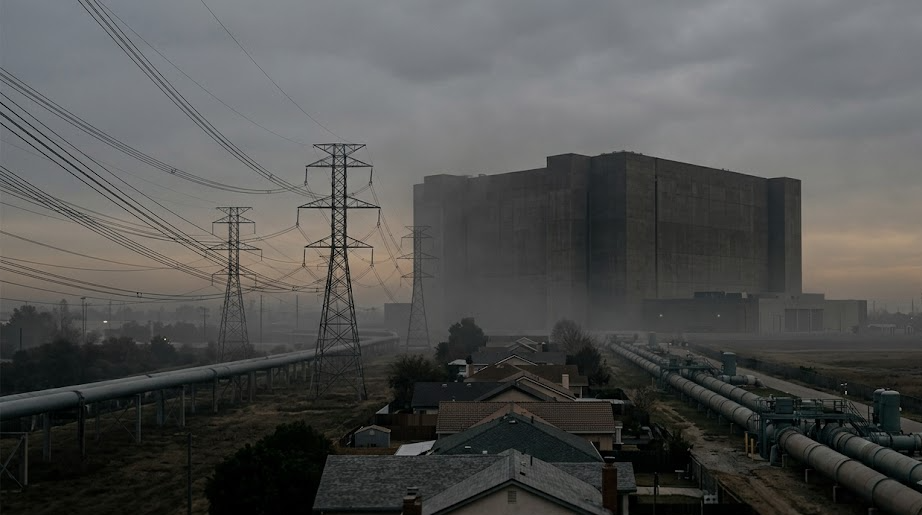
Pennsylvania has 71 data centers in operation, with 66 more projects waiting. The executive order signed by Governor Josh Shapiro on the 18th, local time, narrows the entryway for those 66. Developers must secure local government approval before applying for state permit review, and all data centers are excluded from the state's fast-track permitting program. The order took effect upon signing.
The fast track is a single window that gathers the permits for major investment projects and processes them quickly. Being excluded from it means standing in the same line as other industrial facilities. In exchange, state agencies may no longer sign nondisclosure agreements with developers. The measure is meant to end the practice in which residents learn only after the fact which company is negotiating to build what size of facility and where.
The cost provisions weigh more heavily. Developers must meet water conservation standards, must pay directly for the costs arising from the additional electricity demand they create, and must have their own generating capacity as well. Clean energy is to be procured within the region, and local power resources, including existing nuclear plants, are to be used first. This is different in character from a moratorium that blocks new construction across the board, but the conditions for getting through have clearly tightened.
In a statement, Governor Shapiro said speculative development proposals that give no consideration to communities have grown excessive. He added that he would build the strictest safeguards in the United States.
Public opinion moved ahead of the measure. In a July Quinnipiac University survey, 74% of Pennsylvania voters opposed an AI data center being built in their own community. In a nationwide survey in June, about a third of respondents supported the expansion of data centers in general, while the share supporting one in their own area fell to 14%.
There are reasons Pennsylvania has been targeted so heavily. Its natural gas supply chain is thick, transmission infrastructure is in place, and the densely populated East Coast is close by. Amazon announced a $20 billion (about 28 trillion won) investment plan in 2025 to expand its cloud infrastructure in the state. Projects under way in Luzerne County and Bucks County are going through permitting while facing local opposition.
Other states are on a similar path. New York State imposed a halt of up to one year on large new data centers, and Texas also put a brake on new projects. In both places, explanations differ over the legal basis and scope of the measures, so what actually applies to a given site will depend on each state's follow-up notices. Over the past year, at least 15 states have considered restrictions or halts.
Behind the wave of regulation lies the question of power plants. In the United States, 99 natural gas plants are planned for data centers, amounting to 126 GW of capacity. One estimate found that running them at industry-average levels would produce 318 million tons of carbon dioxide a year, more than 20% of the 1.485 billion tons emitted by the entire U.S. power sector in 2025. Many of the planned plants are expected to use less efficient simple-cycle gas turbines, and Amazon and Microsoft have a foot in the related projects.
The demand curve is steeper still. The Electric Power Research Institute projected that electricity used by data centers will rise from 4-5% of total U.S. power consumption to 10-20% by 2035. Using more than twice as much electricity means new transmission lines and substations must be built, and those costs flow into utility bills. That is why legislation is being pushed in the U.S. Congress to keep ordinary households from bearing the costs of generation, transmission, and distribution facilities.
Pennsylvania will send only projects that have cleared local approval to the state review table, and this sequence could stretch development timelines by months. On the other hand, projects that succeed in persuading residents are less likely to be halted by lawsuits after construction begins. Which route proves faster in the end will show in how the 66 projects diverge over the next one to two years.
The next document Luzerne County residents receive is more likely to be a local government approval item than a notice of completion. That means more evenings spent at meeting halls asking about water use and the sharing of electricity costs. The fact that the place where AI first arrives in a person's day is a neighborhood meeting hall rather than a chatbot screen says quite a lot about how this technology is being handled.