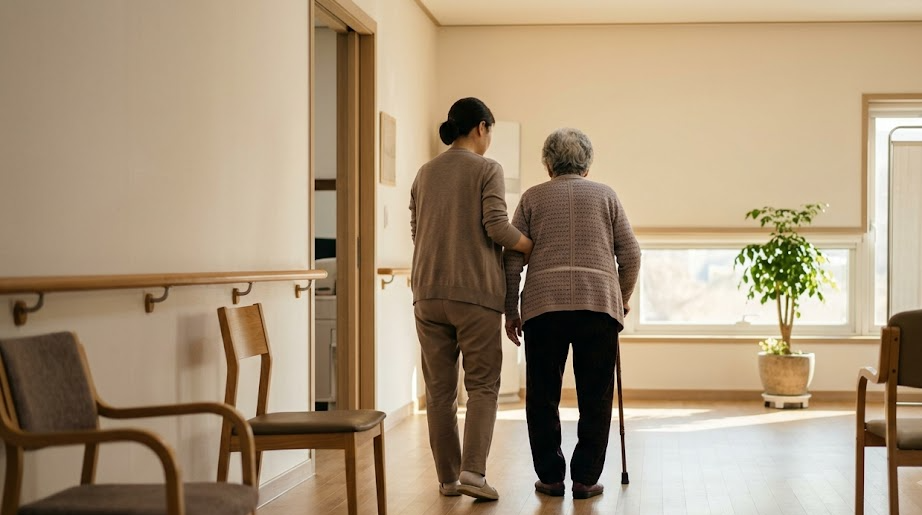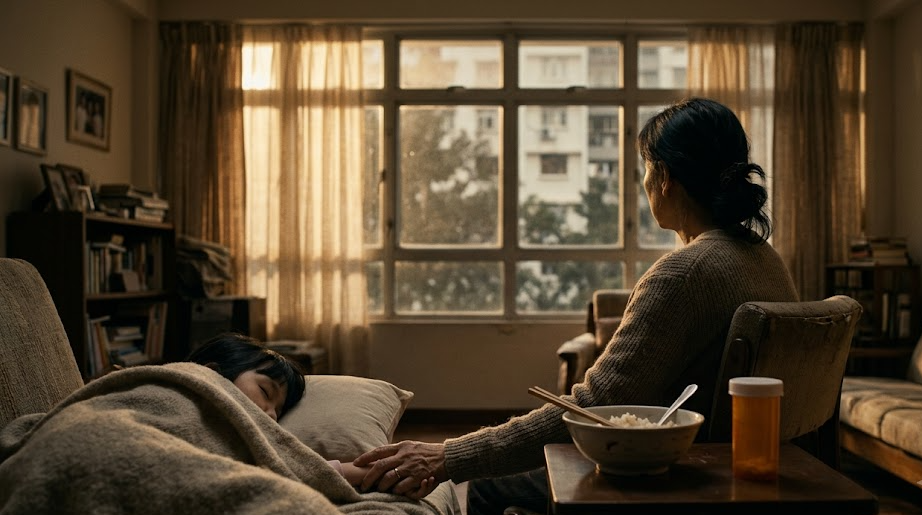
From 2006 to 2018, there were 60 cases of people taking their own lives while caring for an ill family member. Of those, 15 cases, one in four, were parents caring for a child with a severe disability. This is contained in material the Ministry of Health and Welfare submitted to the 35th Cabinet meeting on the 11th. Minister Jeong Eun-kyeong said that cases in which a family member takes their own life while caring for a relative with a serious illness or a severe disability keep recurring, and said the government would break the chain in which the burden of care leads to a family member's death.
At the same meeting, the ministry, together with the Ministry of Employment and Labor and other related ministries, presented the "suicide prevention measures for the burden of care and nursing" and the "suicide prevention measures for isolated and crisis households." They are one branch of the suicide prevention measures in nine areas discussed at the Cabinet meeting in May this year.
The method of finding people changes first. From the second half of this year, the government will directly seek out crisis households at high risk of suicide among families caring for older people with severe dementia or people with developmental disabilities. Households in which the family living with a person with a disability is elderly, or in which the person has not used services for a certain period or longer, will be the target. At the time of disability registration, it will also work with developmental disability support centers and other bodies to check whether family members are depressed.
Households that are found will receive emergency care from 2027. Up to 72 hours. It can be divided into 24 days of three hours each, or used in a block of nine days of eight hours each.
Which of the two is better is chosen by the person providing the care. Households with someone at high risk of suicide will be connected first to community integrated care services such as housekeeping support and to specialized counseling at mental health welfare centers.
Whether these 72 hours are counted per year or are an amount that can be used at one time was not made clear in the announcement of the measures. The explanation that integrated care for people with the most severe developmental disabilities and 24-hour emergency support would be expanded, and that regions with weak care infrastructure such as farming and fishing villages would be reinforced, also did not go as far as detailed plans.
The statistics themselves stop at 2018. The ministry does not have figures or data on suicides among families of people with severe disabilities since then. The measures have been built on an eight-year gap, so it is also hard to say at present how many households will be covered by the search.
The measures on isolation work by linking various pieces of crisis information to screen for those affected. From 2027, for households whose social ties have been cut off, records of emergency room visits for self-harm and suicide attempts will be used to find an estimated 20,000 people at risk of suicide. In the lonely death crisis response system, weights will be added to crisis information to screen out those at higher risk first.
Financial crisis information such as excessive debt or damage from illegal private lending will be passed to local governments so they can respond in advance. For high-risk groups among low-income people, eup, myeon and dong offices will pay emergency welfare living costs directly without on-site verification procedures.
Youth Future Centers for isolated and reclusive young people will expand from four cities and provinces to 17 starting in September. Aimed at men in their 50s and 60s, who account for a high share of lonely deaths, tailored services that reconnect relationships and look after health, and programs specialized for middle-aged and older people who go to social welfare facilities as if commuting to work, will be developed. The ministry is also reviewing the construction of an "integrated crisis household identification platform" that would gather the crisis information of the welfare blind spot identification system and the lonely death crisis response system in one place using AI.
Similar measures followed in the regions.
The Paju City Public Health Center and the Paju Mental Health Welfare Center announced on the 12th that they will jointly carry out a "one-stop service support project for families bereaved by suicide." It is available to bereaved relatives within the second degree of kinship who lost a family member to suicide and who consent to using the service. In addition to psychological and emotional support such as specialized grief counseling, the self-help group "Hanultari" and psychological autopsy interviews, it bundles special cleaning costs, temporary housing costs, costs for administrative procedures after the death, legal and administrative counseling costs for procedures such as renunciation of inheritance or qualified acceptance, children's tuition, and psychiatric treatment costs.
Linkage to welfare services such as basic livelihood security or single-parent family support is provided as well. Paju's suicide rate is 21.4, above Gyeonggi Province's 20.7, Goyang's 19.6 and Gimpo's 15.5.
The Ulsan Buk-gu Mental Health Welfare Center and the Ulsan No. 2 Municipal Senior Welfare Center signed a business agreement on mental health promotion, and the city of Pohang decided to strengthen public-private cooperation for the mental health of small business owners and for suicide prevention. The Naju City Public Health Center runs a mental health program for children and adolescents.
On July 14, the ministry said it would carry out the "Sonjabadeurim" cooperation project with related organizations to ease the isolation of parents of people with disabilities. Policies to seek out high-risk households directly, to fill the gaps where support had been missing, and to give families time to rest were announced at the same time.
Once the search begins in the second half of the year, families who had not been on any list will come into the view of the administration for the first time. What they are actually connected to, and whether the 72 hours really come within reach, will become clear in 2027, the first year.