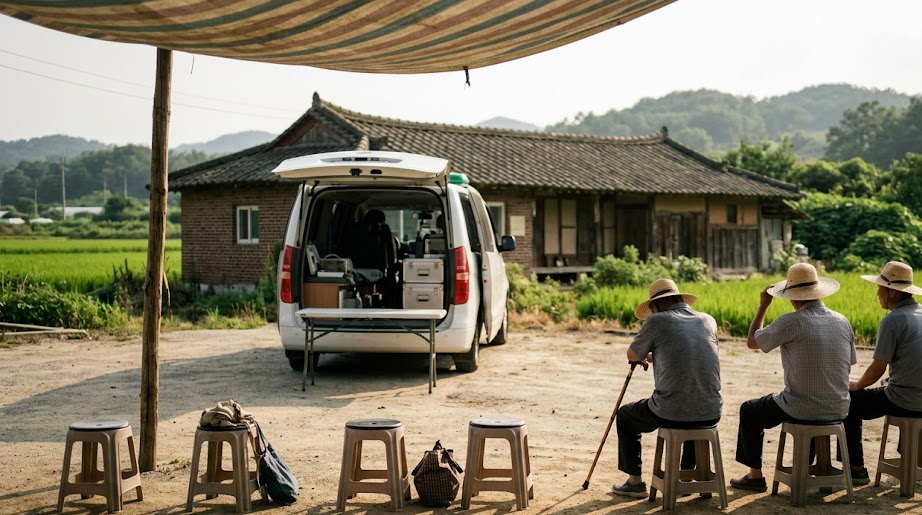
People gathered on the 22nd at the Inyang-ri village hall in Cheongnam-myeon, Cheongyang-gun, South Chungcheong Province. Officials from the Ministry of Health and Welfare's Integrated Care Support Office and Integrated Care Policy Division, officials from the South Chungcheong Provincial Health and Welfare Bureau, and about 10 members of the press corps watched the village mobile clinic run by the Cheongyang-gun Public Health Medical Center. Cheongyang-gun Mayor Kim Hong-yeol and Public Health Medical Center Director Kim Sang-gyeong also came to the site. Among the 223 basic local governments nationwide, the integrated care model case the Ministry visited in person was Cheongyang.
The "visiting medical center" is a method in which a medical bus goes into villages where it is difficult to reach a hospital. It provides medical, Korean medicine and ophthalmology care, with physical therapy and basic testing attached. Chronic disease counseling and health education are also carried out together at the village hall.
The Act on Integrated Support for Community Care Including Medical Care and Long-Term Care took effect in March.
Seoul's Yangcheon-gu announced on the 27th that it had passed 100 days of implementing "Yangcheon-style integrated care." A total of 531 people applied, and 1,294 services were connected. It runs 42 services, adding 8 Yangcheon-style specialized projects to 34 basic connections that include home visit medical care, home visit nursing, psychological support and household support. By field, 394 cases of daily care, 366 cases of public health and medical care, 254 cases of health management, and 158 cases of housing support accumulated.
Among the 42, the most used service was the home visit exercise instruction project. Ninety-five people took part, recording 103% of the target. The Y Korean medicine primary care doctor program with 72 cases and public-private cooperative integrated care with 57 cases followed.
From May to July, Yangcheon-gu conducted intensive outreach with long-term care benefit users, discharged patients and elderly people with disabilities as priority management targets. Along with that, it provided "visiting integrated care outreach education" to 140 daily living support workers and 300 care workers, and gave practical training to 62 staff members at community welfare centers and home-based long-term care institutions. A total of 502 people received the training.

Gangwon's Pyeongchang-gun announced on the 27th a full survey of integrated care recipients among older adults and people with disabilities. The survey of older adults runs through December, centered on priority management targets aged 65 and over who need complex support. Long-term care home benefit users, patients discharged from medical institutions, the priority group for the customized care service for older adults, those outside long-term care grades, and households in crisis are on the list.
Because phone calls alone miss some cases, home visit surveys are being conducted alongside. On the disability side, the targets are 140 people under the age of 65 with severe brain lesions or physical disabilities.
Pyeongchang-gun's integrated care team checks needs in four areas, housing, public health and medical care, long-term care, and daily care, through counseling and home visit surveys. Those outside long-term care grades are also included on the survey list.
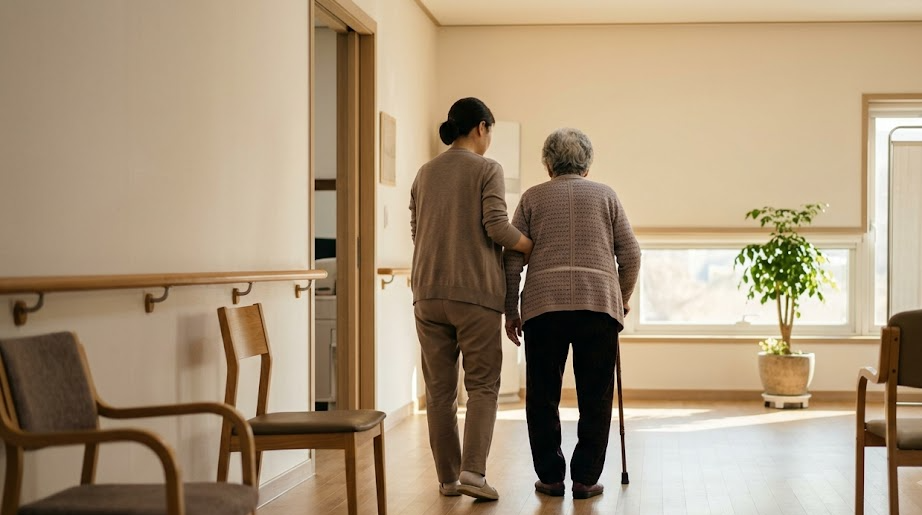
Pyeongchang is conducting home visit surveys alongside, Yangcheon trained 502 people, and Cheongyang put medical staff on a bus and sent them into villages.
So what needs to be checked next also becomes clear. How many homes one daily living support worker handles, and whether a care worker can make a living from that work, is the real stamina of integrated care. Compared with a list of 42 services, the circumstances of the person who carries that list up the stairs determine whether the program continues.
Over 100 days, Yangcheon-gu connected 1,294 services for 531 people. Pyeongchang's survey continues through December. Around that time, it will be possible to check what help the people on the list received.