
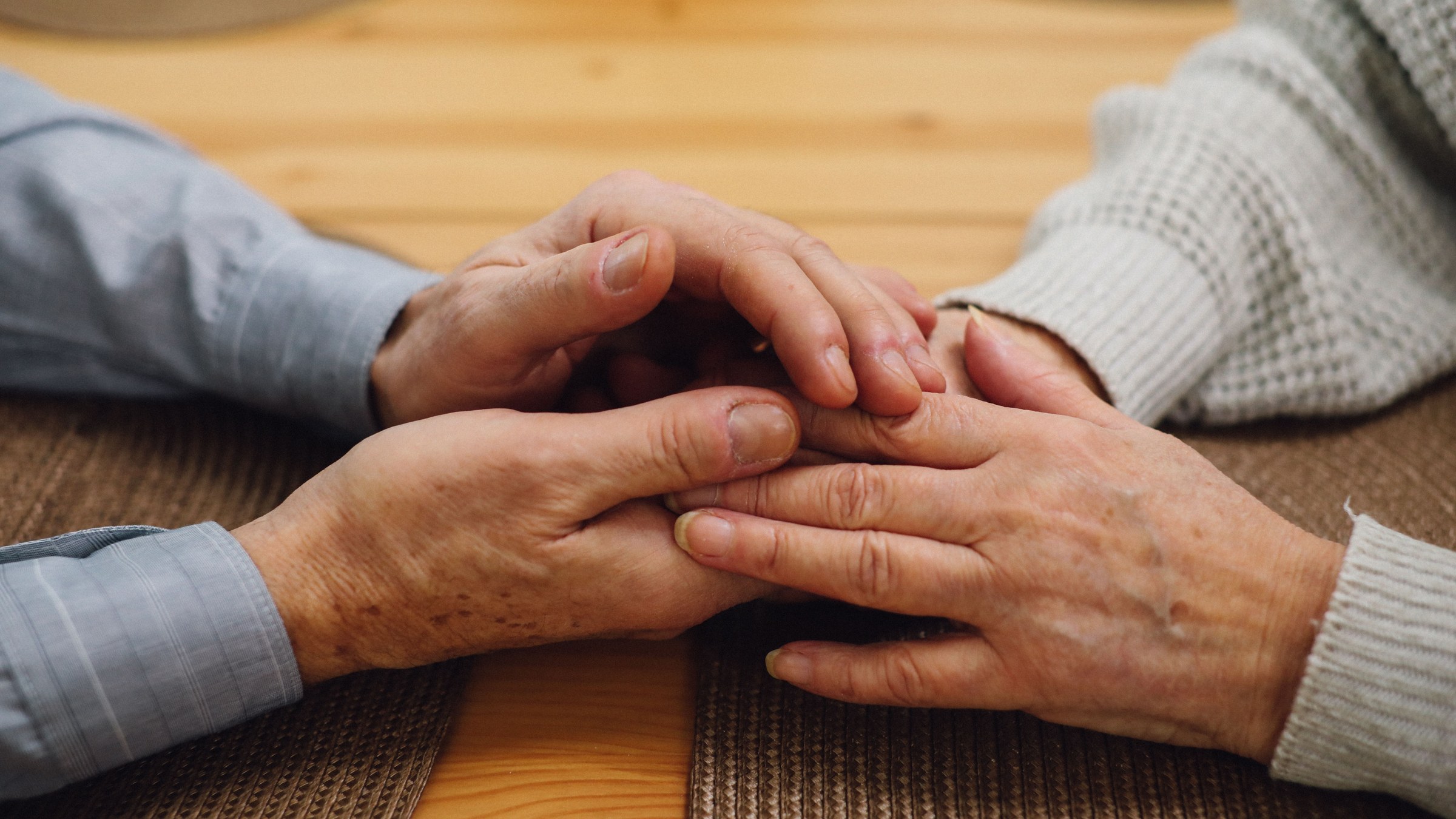
Four hands are wrapped around one another on a pale pine table. The hand that came over from the left has the sleeve of a gray-blue shirt folded back, and the hand from the right has put the back of the hand out past an oatmeal-colored knit. The light coming in through the window picks out the tendons, the age spots, and the thickened knuckles one by one.
There is no face anywhere in the frame. Even so, the years the two have passed through together are all written on the backs of their hands.
Care usually begins in this shape. Opening a packet of pills, fastening buttons, warming up soup that has gone cold, opening the bedroom door several times at night, all of it happens at the fingertips. That kind of labor is rarely recorded.
It takes place inside the home, no price is put on it, and even the person doing it does not say she worked. Talk of society sharing the load of care has gone back and forth for a long time, yet much of it still stays between the hands of two people sitting across from each other.
Look again at the lower part of the frame. The smooth wood ends, and a loosely woven brown cloth passes across at an angle. The stacked hands rest on that border.
The cuffs differ as well. The shirt on the left has a crease standing straight, and the knit on the right has a hem stretched out from many washings covering the wrist. One of them has come back from outside, and the other has probably kept this table all day. The common circumstance in which care tilts to one side has quietly entered the grain of the cuffs.
Look once more and it is not easily divided who is holding and who is held. The hand covering the back of the other and the hand held up from below have leaned on each other and barely made one low roof.