
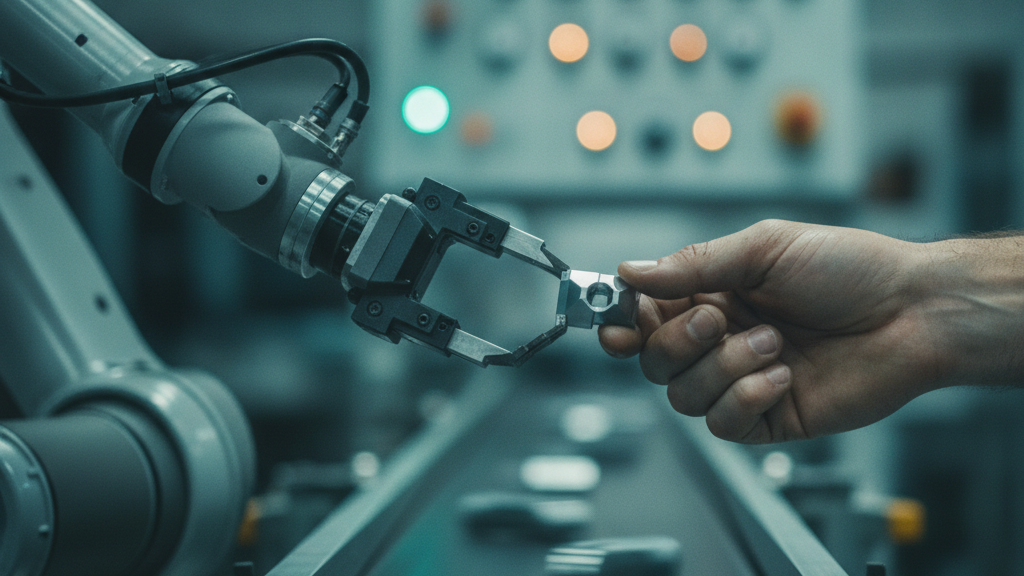
The government said it will keep a standing watch on employment changes brought by the AI transition. The 'Basic Plan for Employment Stability in Industrial Transition', presented on the 9th at the first national policy coordination meeting after Prime Minister Han Seong-sook took office, includes building a 'Korean-style canary dashboard' and developing a 'Korean AI exposure index (K-AIOE)'. It is the first time the government has drawn up a separate basic plan for employment stability aimed at changes in the industrial structure. But this monitoring network will be switched on, by the Ministry of Employment and Labor's account, in the second half of 2027 at the earliest and in early 2028 at the latest.
The canary dashboard is a tool put out by the Stanford Digital Economy Lab in the United States. Built on the idea of catching small tremors in employment indicators early, like the bird in a coal mine, it tracks in real time the effect AI has on hiring and employment by occupation. The AI exposure index is a figure that converts how much room there is for a given occupation's work to be replaced or assisted by AI. Put the two tools together and a map is drawn of which industries and which job groups are shaking.
A year and a half is left until the dashboard and the exposure index are finished.
In the meantime, in Ulsan, how wages are to be paid has come to the negotiating table. Hyundai Motor's labor and management discussed a plan to commission a study on introducing a full monthly salary system at wage and collective agreement talks on the 8th. Production workers' pay is now based on an hourly wage with overtime and night-shift allowances added, and when the lines are automated and overtime shrinks, this method leads to a cut in wages themselves.
Labor and management decided to take the study results and weigh the timing and scope of implementation in a joint task force. In the same talks, the union also demanded a clause preventing AI and robots from being brought in without prior consultation.
Hyundai Motor has been pushing a plan to put Boston Dynamics' humanoid 'Atlas' into parts processes at Metaplant America in Georgia, the United States. The group also put out a plan to mass-produce 30,000 of these robots from 2028. Whether they will go into domestic plants remains a matter that has to go through labor-management consultation.
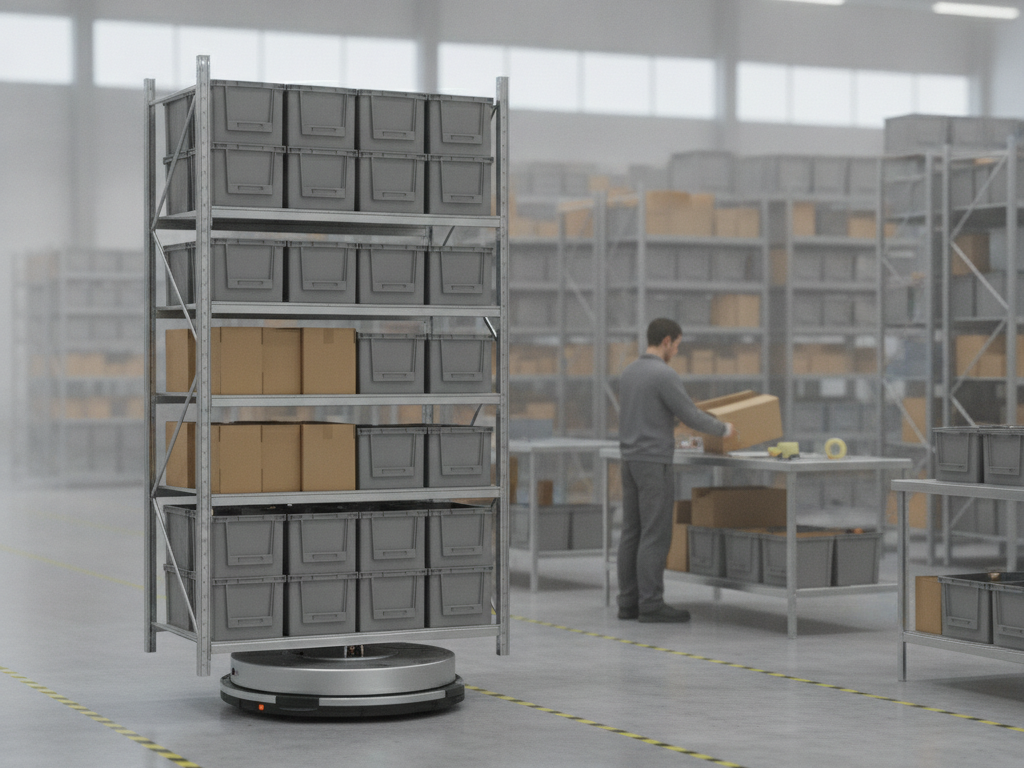
The automation rate at LG Electronics' plant in Tennessee, the United States, is 68%, but people have not disappeared. A division has hardened in which machines take on repetitive work and dangerous work while people hold process management and response to problems. An Amazon fulfillment center in the same state also runs in a way that robots push shelves of goods up to the worker. High labor costs and the difficulty of finding people, along with a thin supplier ecosystem, pushed this transition.
Laidiandao, an electric vehicle charging island that opened in Qingdao last May, manages 1,200 unmanned electric delivery vehicles with no resident staff. Neolix, the operator, explained that keeping 50 employees and managers would cost 60 million won a month on an eight-hour basis, and 180 million won a month for 24-hour operation. The company is about to build 300 more unmanned charging stations and raise its delivery vehicles to 300,000. Qingdao Port's fourth-generation automated terminal raised a single crane's container throughput per hour from 26 to 62, and the workforce comes to nine in all, with six on site in three shifts.
The 'Robot+ Application Action Plan', issued jointly by 17 ministries including the Ministry of Industry and Information Technology, pinned down 10 industries including manufacturing, agriculture and construction as targets for automation.
The government's reading is that new hiring is shrinking as AI replaces simple and repetitive work. Companies that have carried out job cuts, for their part, draw a line at AI being the direct cause. While different accounts pass back and forth over causation, no tool has come out for counting what has shrunk and by how much on a common measure. The background to the talk of a robot tax in Korea also reaches this point.
The government decided to support AI job training for more than 1 million people from 2026 to 2030, and to discuss wage insurance for workers whose pay is cut in the course of the transition as a medium- to long-term task. The point that the shock of the carbon-neutral transition is concentrated in particular regions such as South Chungcheong, Ulsan, Yeosu and Pohang was also reflected in the plan. When the training and wage insurance will run and at what scale will emerge in the annual implementation plans to come.
For workers whose overtime allowances make up a large part of their pay, automation is a matter of next month's wages. What conclusion the Hyundai Motor study and joint task force reach, and whether the government's exposure index comes out earlier than that conclusion, will divide the next year and a half.