Lawmakers from three parties seated on the same panel offered different prescriptions, but the premise alone was the same. Increasing renewable energy goes beyond partisan taste and amounts to the country's line of defense. At the 2026 Climate Talk Seoul, held on the 2nd in Yeouido, Seoul, Rep. Park Ji-hye of the Democratic Party of Korea, Rep. Kim Gun of the People Power Party and Rep. Lee Ju-young of the Reform Party sat together and shared that premise.
The theme of the event itself was "Energy Security in the Era of the Renewable Energy Transition - Korea-Germany Governance Dialogue." It was co-hosted by the German Embassy in Seoul and the National Assembly's Global Diplomacy and Security Forum, and organized by Solutions for Our Climate. Congratulatory remarks came in turn from Rep. Yun Jae-ok, representative of the National Assembly's Global Diplomacy and Security Forum, Chung Suh-yong, president of the Seoul International Law Academy, and Gyeon Jong-ho, Ambassador for Climate Change at the Ministry of Foreign Affairs.
Jörn Beißert, Chargé d'affaires of the German Embassy in Seoul, who delivered the opening address, said a country grows weaker in proportion to how much it leans on fossil energy. So expanding renewable energy is a security policy before it is a climate policy. He said temperatures in some European cities came close to 40 degrees this summer and that heat deaths tallied by the WHO exceeded 1,300. He added an assessment that, through the war in Ukraine, Europe's fossil fuel dependence would have been locked at around the 50% level had renewable energy not been built up in advance.
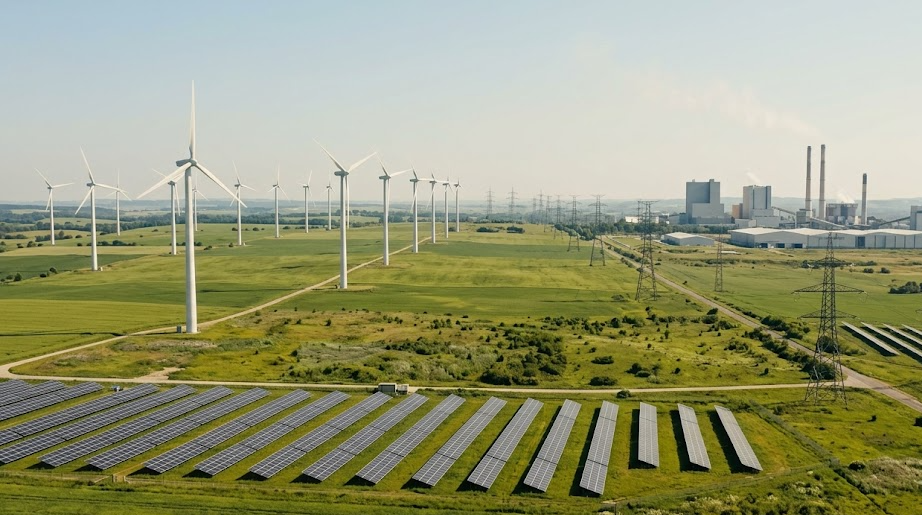
The one who laid out the German experience in concrete terms was Falk Lüdecke, head of the JBO Engineering Group. His starting point was the Renewable Energy Sources Act (EEG), which took effect in 2000. With that system, which guaranteed fixed prices and created predictability for investment, as a lever, the share of renewable energy in Germany's electricity climbed from 6.2% to 27.8%. The road was not smooth throughout, and he also described the period around 2014 when policy was cut off and the industry pulled back, along with a failed auction in 2025.
Conditions are not the same either. Lüdecke pointed out that Europe has reached the world's lowest levelized cost of electricity (LCOE), while the Asia-Pacific has weak wind speeds and carries constraints from natural conditions such as typhoons and earthquakes. That is why copying Germany's system over as it is does not work.
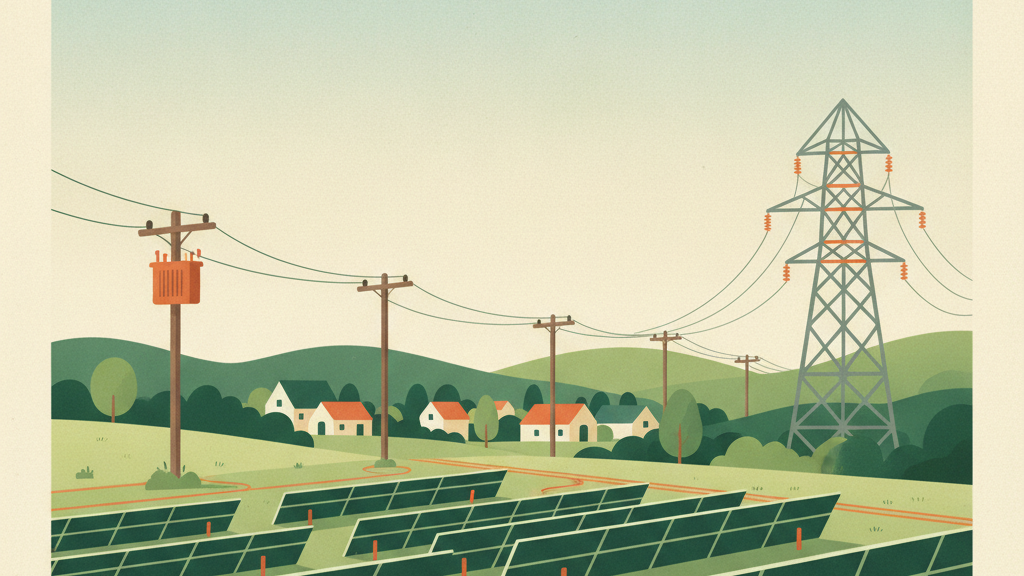
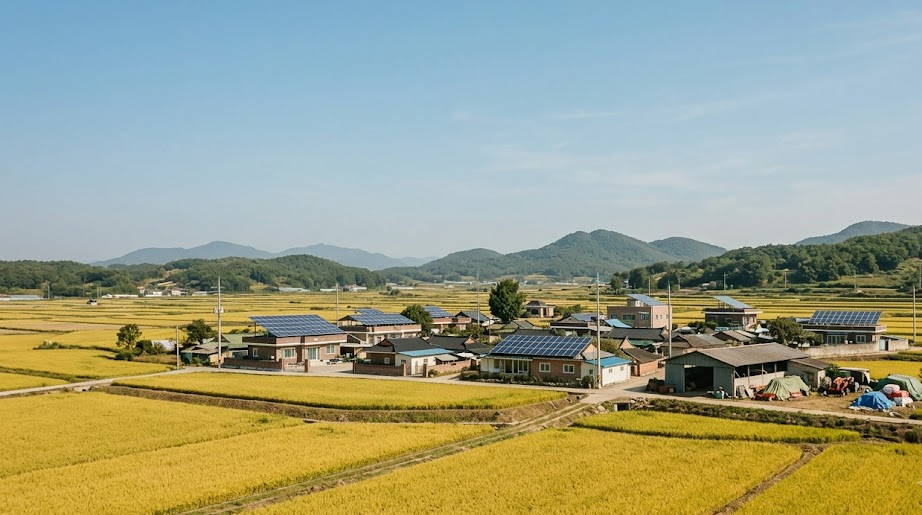
The one who brought up Korea's reality was Rep. Park Ji-hye. Renewable energy stays in the 10% range while fossil fuels reach 60%. She named raising the renewable energy target to 100 gigawatts (GW) as the most urgent task, and proposed along with it expanding grid capacity, fostering domestic industry, an acceptance policy in the form of "sunlight income villages" where residents share the revenue, strengthening the emissions trading scheme (ETS), and issuing green government bonds.
Rep. Kim Gun took a different approach. His explanation was that momentum comes when climate action is carried over into the language of energy security, and he stressed a balanced energy mix including nuclear power and the diversification of energy sources. He also raised the question of infrastructure such as transmission networks being accepted in local communities. Rep. Lee Ju-young described Korea's situation of being unable to send and receive electricity with neighboring countries as "effectively an island when it comes to power."
Government plans sit on this same current. Climate Change Ambassador Gyeon Jong-ho introduced the 2035 Nationally Determined Contribution (NDC) announced last year and the plan to eliminate thermal power plants by 2040 and triple renewable energy. The grid problem is run into directly at industrial sites as well. When an investment plan for a semiconductor cluster in the Honam region came out, concerns that power would fall short followed, and Kim Woo-chang, presidential secretary for national AI policy, countered to the effect that renewable energy in the southwestern region is sufficient and there is room to add more.
Common ground is not legislation. Since the People Power Party submitted resignation letters from all of its members on 11 standing committees on the 30th of last month in protest against National Assembly Speaker Cho Jung-sik's committee assignments, the Climate, Energy, Environment and Labor Committee has not been fully put together. The standing committee where the discussion would continue is itself not running normally.
If you have ever received a notice that a transmission line or a solar facility is going in near your home, it is worth checking the schedule for the residents' briefing. Acceptance is not made in the conference hall, it is made at those sites where residents are met face to face. The grid bottleneck that all three lawmakers pointed to is in the end the same problem.