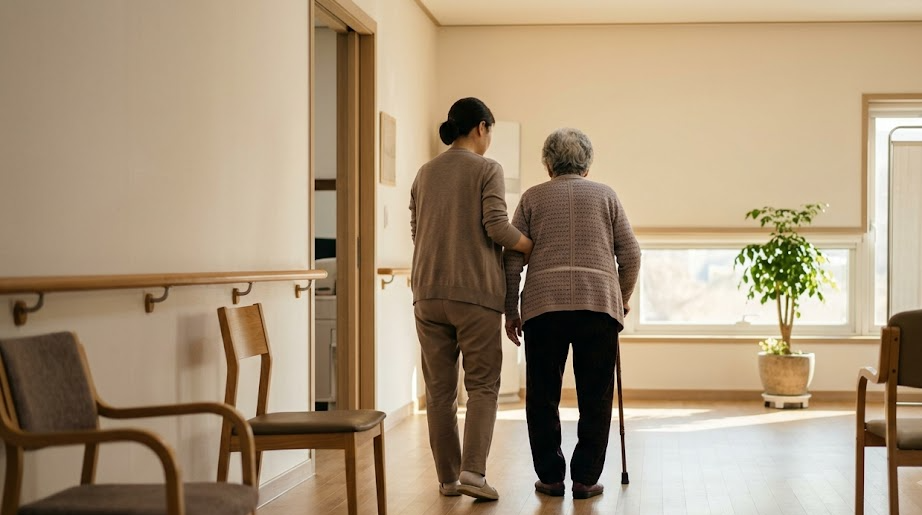
Integrated care, which bundles medical services, welfare and housing improvements so that people who need care can keep living in the homes where they have been living, marked 100 days since it took effect on July 4. According to the operating results the Ministry of Health and Welfare released on July 2, 46,215 people completed applications and intake between March 27 and June 26, and 37,304 people were selected as recipients after screening and connected to services. Each person received an average of 3.3 services.
An awareness survey the ministry conducted with 2,000 adults over the same period shows a different picture. Of the respondents, 42.9% said they "do not know at all" that integrated care had started, and 41.6% said they "have heard of it but do not know it well." Together they come to more than eight in ten. The program has taken effect, but awareness has not risen as much.
Older adults accounted for 45,619 applicants, or 98.7%. People with disabilities numbered 16,568, or 35.8%, a figure counted with overlap with the older group.
Among the services connected, daily living care such as housework and mobility support was the most common at 43.1%. Health management and prevention, including specialized dementia care and mental health care, followed at 19.7%, and long-term care such as home visit nursing and home bathing at 12.8%.
Regional gaps also emerged. Applicants per 10,000 residents aged 65 and older were highest in South Jeolla and Gwangju at 93.3, and lowest in Ulsan at 21.0. That is a difference of more than four times. It is a gap that is hard to explain by the share of older residents or care demand alone.
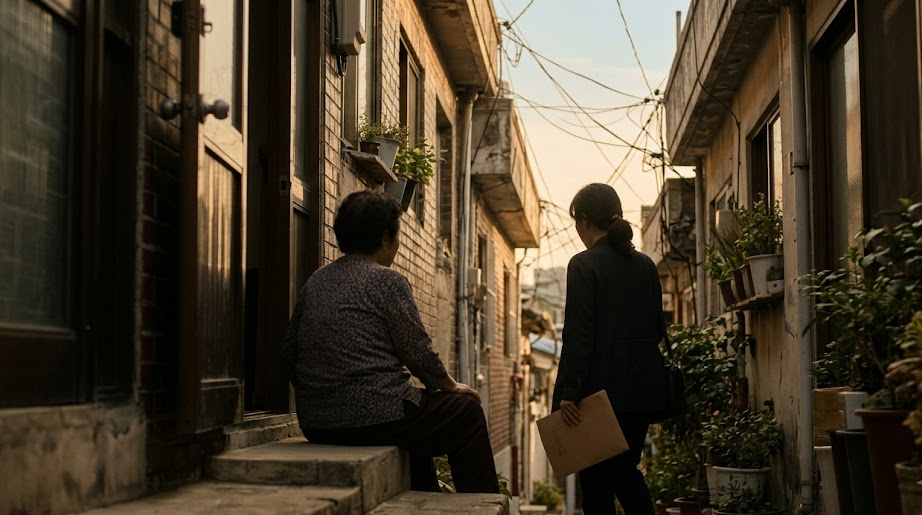
A ministry official explained that Gwangju has run an integrated care pilot project since 2019 and that officials in eup, myeon and dong offices are required to visit the homes of people who need care. A difference in the number of applicants appeared between regions that only receive applications and regions where officials visit in person.

Yeongdeungpo-gu in Seoul announced on June 30 that it had reached 100 days of "Yeongdeungpo-style integrated care," holding integrated support meetings 13 times and connecting about 750 cases of tailored care. The meetings bring the public health center, the National Health Insurance Service and private welfare organizations together in one place. Programs such as safe discharge integrated care, home visit exercise education, the tailored meal support program "Geonganghanga," zero fall home care and a respite program for caregiving families came out of them.
Yeongdeungpo-gu produced 1,500 copies of a guidebook and distributed them to community service centers in 18 dong, the public health center, general social welfare centers and private care organizations. It puts six areas, including health care, health management and prevention, long-term care, daily living care, housing welfare and support for people with disabilities, into one volume.
In Guri, Gyeonggi Province, Mayor Shin Dong-hwa approved as his first signed decision right after taking office on July 1 a plan to sign agreements with providers of specialized integrated care programs and on support for connecting discharged patients to integrated care. The decision follows from his record of co-sponsoring the "Ordinance on Integrated Care Support in Guri" when he was chairman of the city council. Once the agreements are signed, the plan is to build a system for connecting discharged patients back to the community and to strengthen the identification of recipients and case management.
For integrated care, anyone who needs care, such as older adults aged 65 and over or people with disabilities, can apply in person or through a family member at the eup, myeon or dong community service center of their registered address. Those who are selected as recipients after screening following the application are connected to the services they need. It has not been disclosed why the roughly 8,900 people between the 46,215 applicants and the 37,304 people connected did not reach services.
If you feel a parent no longer moves about as before, you can ask at a community service center whether you can apply for integrated care. Unlike Gwangju, where eup, myeon and dong officials are required to visit homes, more regions operate by waiting for applications.