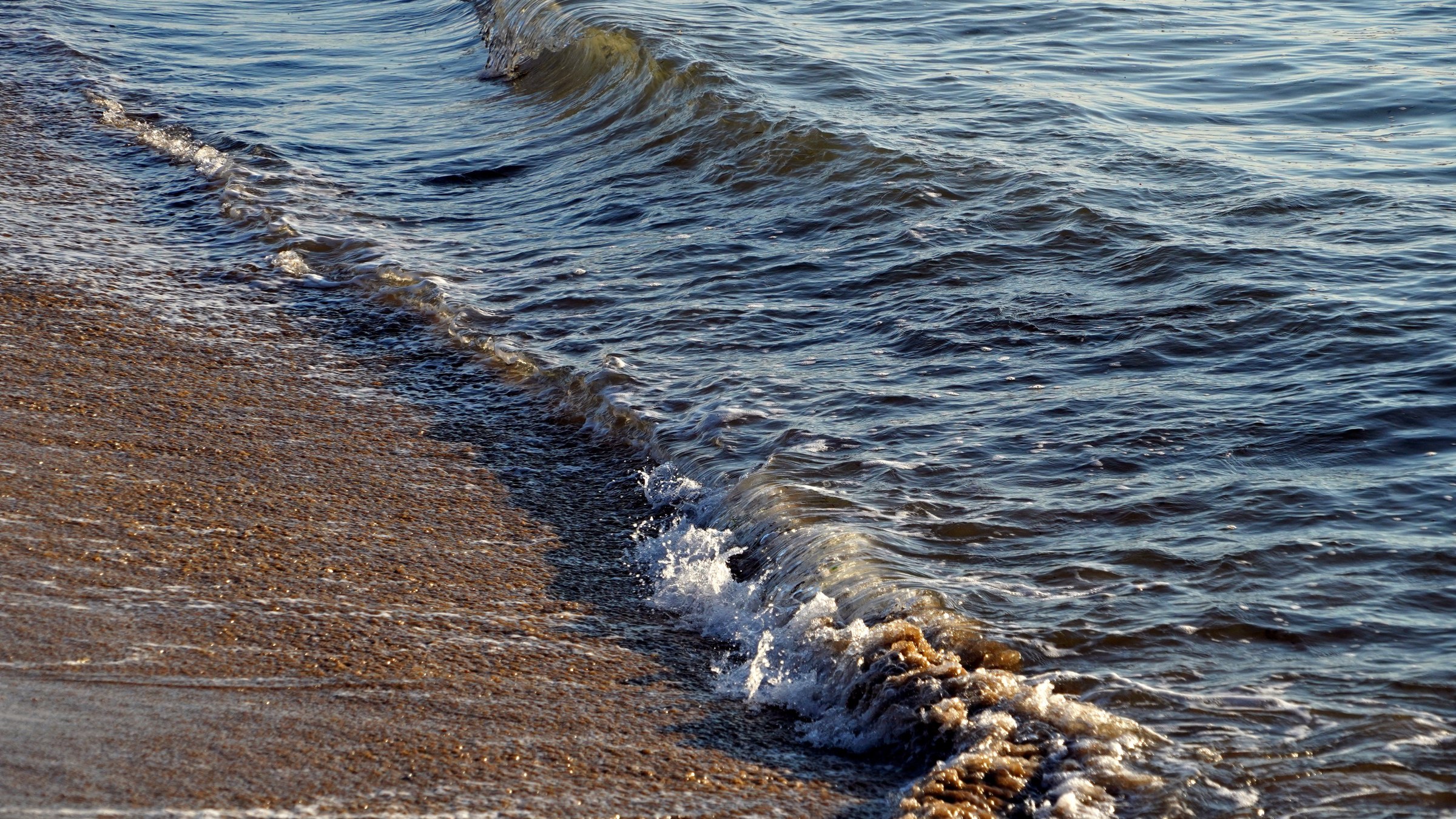
A low wave pushes in, cutting across the sand at an angle. The sand on the side the water reached has darkened with wet, and the side it did not reach stays dry, its fine grains catching the light. White foam breaks at the crest, and beyond it the late afternoon light scatters in small pieces across the surface.
Standing beside a scene like this, the body finds a rhythm on its own. The shoulders rise just a little as the water comes in, and settle as it draws back. The soles of the feet sink slightly into the wet sand, and the eyes, unable to hold on any one point, loosen and follow the waves.
On busy days the breath follows the beat of one's thoughts. When the mind runs ahead the breath shortens, and the shortened breath hurries the mind again.
From wherever you are, rest your eyes on one place, the view out a window or a wall, and breathe in on a count of four as a wave comes in and out on a count of six as it draws back. One breath to one wave, and about ten of them takes less than three minutes.
The same count can be carried over to the short wait for a traffic light to change. With your feet still and your eyes hung on the green light across the way, breathing in on a count of four and out on a count of six, it is possible to notice how the belly swells and falls without putting a hand on it. Follow it as far as the feeling of the collar inside your shirt pushing out slightly and coming back. Noticing whether that rise and fall is even or uneven is enough.
Even after it breaks, a wave returns as the next one without hurrying.