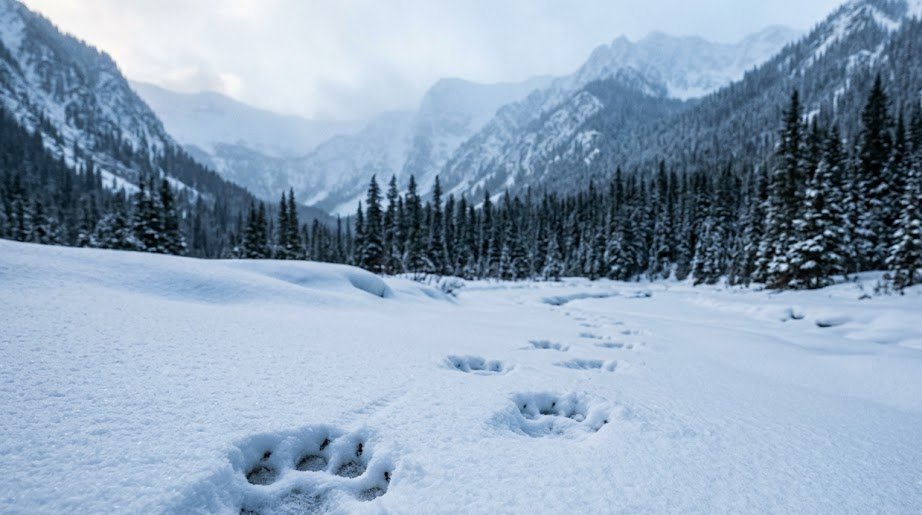
A single male needs about 1,400㎢ of land to live on, a female about 400㎢. The Ministry of Climate, Energy and Environment announced on the 1st that it had selected the tiger, a Class I endangered wild species, as July's "Endangered Wild Species of the Month." It has been more than 100 years since the animal that uses a forest more than twice the size of Seoul on its own disappeared from the southern half of the Korean Peninsula. The last tiger recorded in South Korea was an individual captured in Hoengseong, Gangwon Province, in 1924.
The tiger, a member of the cat family, is classified into nine subspecies in all. Of these, the Caspian, Javan and Bali tigers have vanished from the earth entirely, and six remain: the Bengal, Amur, Sumatran, Indochinese, Malayan and South China tigers. The one that lived on the Korean Peninsula was the Amur tiger (Panthera tigris altaica), measuring 140-280㎝ in body length and weighing 100-250㎏. A small number of individuals are presumed to remain in the Hamgyong region of North Korea, while in the South not even a trace has been confirmed.
The circumstances of its disappearance are clear. The pest-extermination campaign of the Japanese colonial period and overhunting for tiger pelts are cited as the direct causes. But the gunfire of that era alone is hard to credit for the whole of today's absence. Worldwide, the factors threatening tigers are cited as habitat destruction, a decline in the animals they prey on, and conflict with human activity.
All three are questions of land. Tigers live in dense forests and in woods along valleys and streams, and they eat wild boar and deer species. For a large predator to hold on, there must be plenty of herbivores to prey on, and for that the forest must run unbroken. The largest number of individuals remains in the Russian Far East, and a trend has been observed in which their range is widening toward Jilin and Heilongjiang provinces in China, because forests of that scale remain there.
Decisions over land are always difficult. In November 2024, the Ministry of Land, Infrastructure and Transport and the Seoul Metropolitan Government placed the Seoripul District 1 and 2 area in Seocho-gu on the list of candidate sites for public housing development, on the grounds that damage had progressed and conservation value was low. In the subsequent strategic environmental impact assessment for Seoripul District 2, seven legally protected species including the northern goshawk, Eurasian sparrowhawk, narrow-mouth frog, otter and oriental scops owl were confirmed inside and around the district, and the literature recorded a further 16 legally protected species and 29 wild species protected by the Seoul Metropolitan Government. The Seoul Metropolitan Council and the Seocho-gu Council accepted petitions to preserve the site, and some 9,500 parishioners of a nearby church are also calling for its preservation.
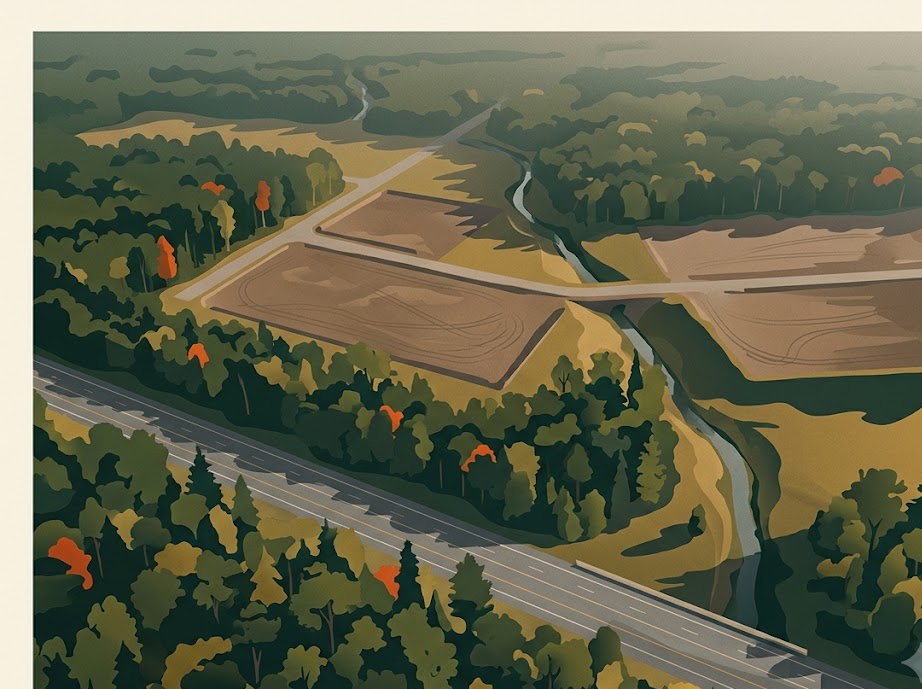
Housing is needed and wildlife is needed. So what draws attention these days is the approach of holding both on one piece of land rather than choosing between them. In California, the United States, lives the San Joaquin kit fox, the smallest fox in North America. This fox, around 50㎝ in body length, was once spread across some 30,000㎢ of the Central Valley, but now remains in less than 10% of its former habitat, and it was designated a federally endangered species in 1967.
A research team from the Endangered Species Recovery Program at California State University tracked the fox with GPS collars and radio transmitters for about three years each at solar power plants in the Topaz and Panoche valleys. Both plants were built on land classified by the Fish and Wildlife Service as core kit fox habitat, and measures such as leaving a 12-15㎝ gap beneath the fences were applied. The foxes moved freely in and out of the plant grounds and dug dens, and some left signs of having bred inside the grounds.
Returning tigers to the mountains of South Korea is not a matter under discussion now. The lesson this animal left behind is far more practical. Large animals disappear quietly from the moment their habitat is broken into pieces, and the result does not come back even after 100 years.
Capturing or killing a Class I endangered wild species without a permit is punishable by up to five years in prison or a fine of between 5 million won and 50 million won. Designating a species by law does not mean the land it stands on is protected as well.
Anyone can check what plans now cover the mountain slopes and streamsides of the area where they live. It is enough to open the environmental impact assessment once when a development plan is put on public view, and read which organisms are listed there. The websites of the National Institute of Biological Resources (nibr.go.kr) and the National Institute of Ecology (nie.re.kr) carry lists of the endangered species that remain alongside us.