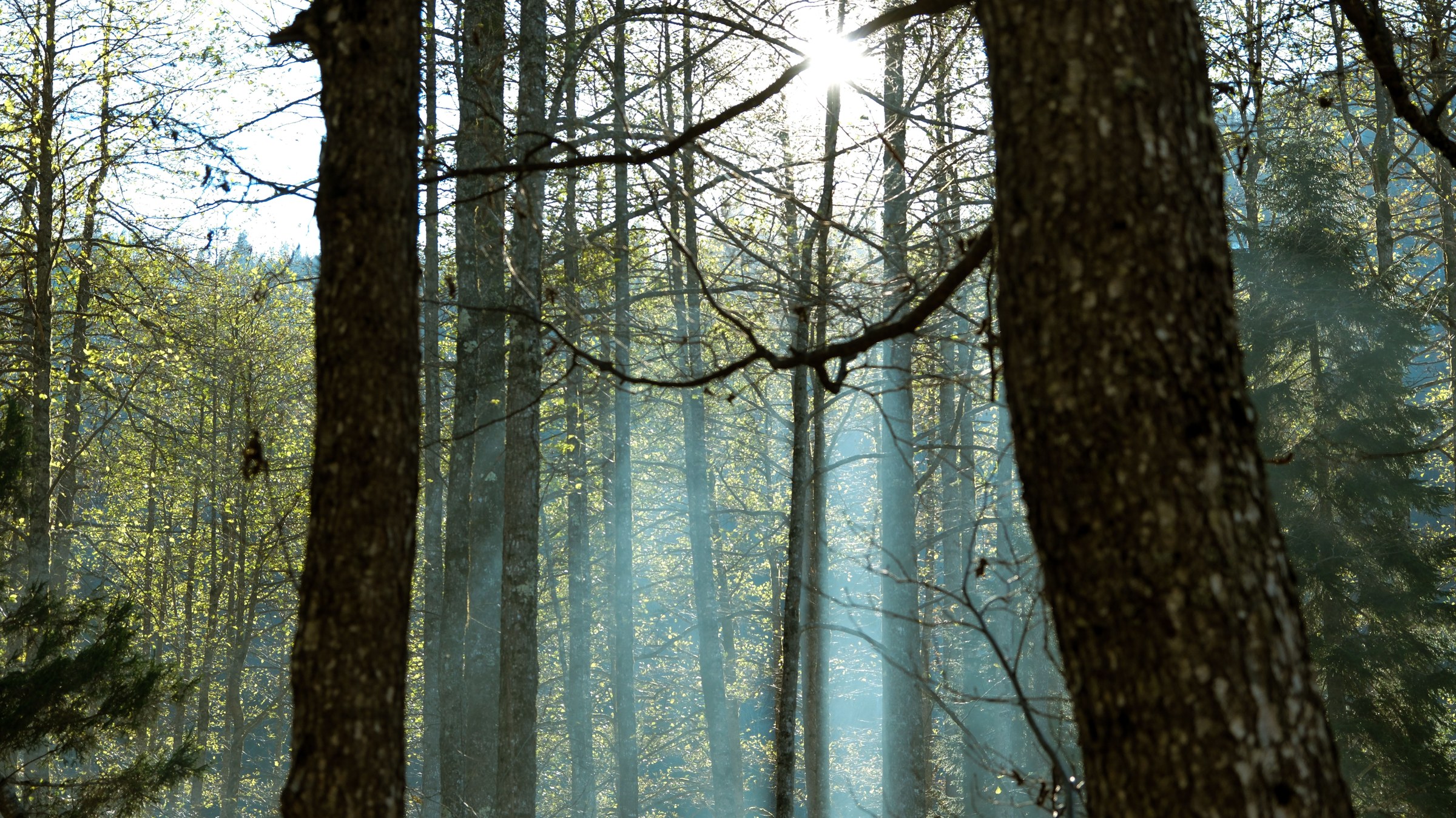
The sun hangs low. Two thick trunks divide the frame vertically on either side, and through the narrow gap between them sunlight pours in at an angle. The moisture that gathered overnight still hangs in the air, so the outline of each shaft of light is visible to the eye. The leaves are a pale green, not yet darkened, and the branches, tangled together, share out the sky above bit by bit.
The busiest thing in this scene is probably the one that makes no sound. From the moment light touches a leaf, a tree begins the work of catching carbon from the air and turning it into its own body. The thickness of the trunks in the photograph is the result of that work repeated without a single day's break for decades. When we talk about carbon neutrality, much of the carbon absorption we count has been borne on our behalf by things standing quietly like this.
Mist lifts slowly or quickly depending on the density of the forest. Where trees stand close together, moisture lingers longer, the ground dries later, and the creatures living in the shade gain a place to endure the summer. Felling one tree does not end with the loss of one tree. The distribution of light, water and shade changes all at once.
The way to protect it need not always be grand. Using one sheet of paper less, checking once where a piece of timber came from, walking a nearby forest path without damaging it, even this much makes the scene last a little longer. Look at the photograph again. The gap that light passed through is the space that formed as the trees made room for one another.