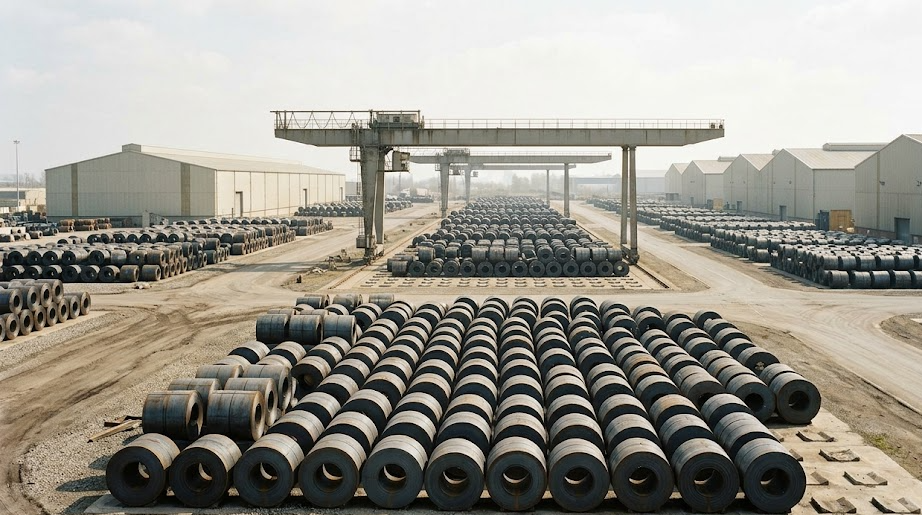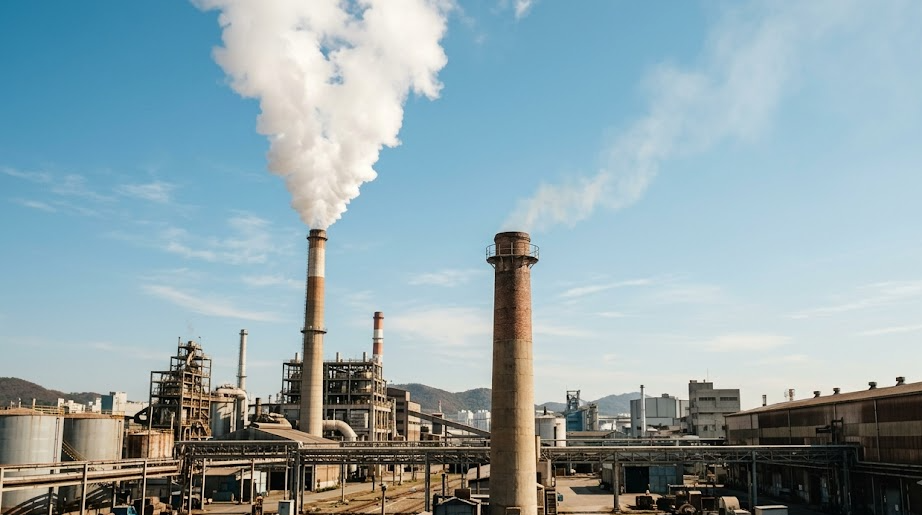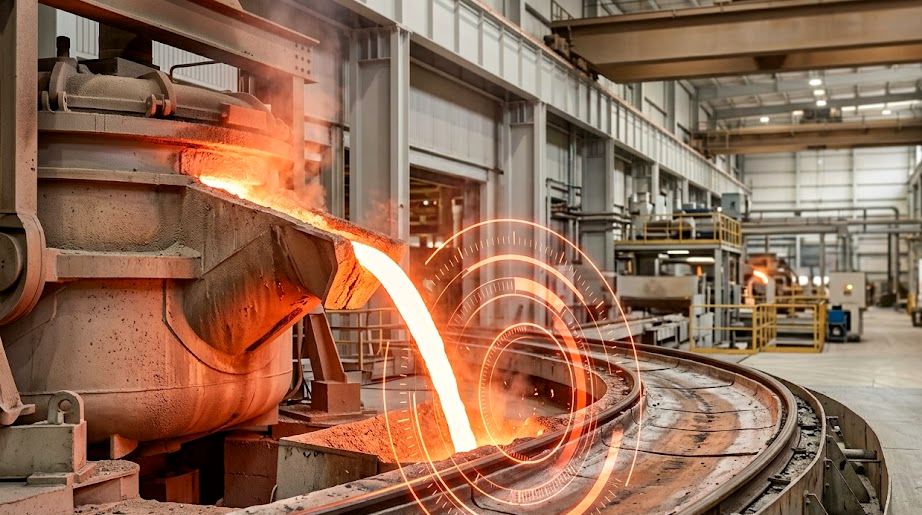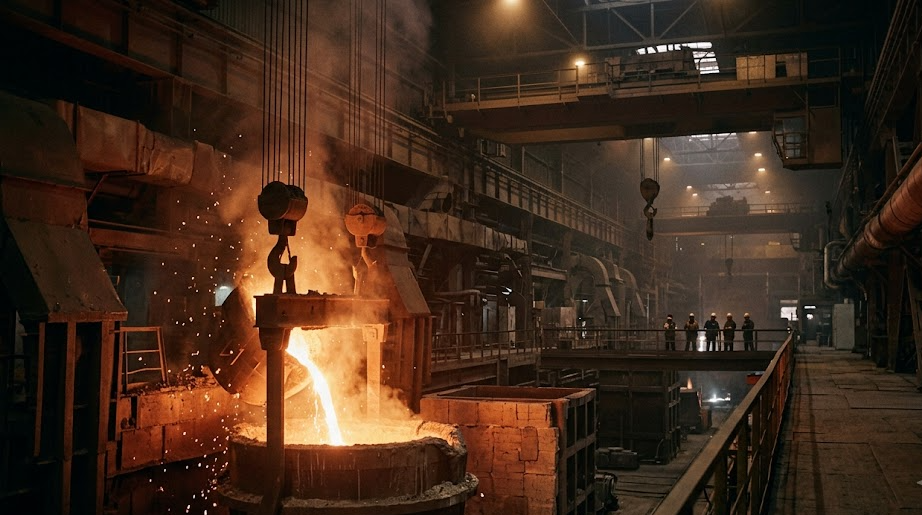
POSCO held a completion ceremony on the 17th for an electric arc furnace with an annual capacity of 2.5 million tons at its Gwangyang Works in South Jeolla Province. The project cost was about 600 billion won as of completion, the largest in the country for a single facility. From the start of construction in February 2024 to completion, 270,000 workers on a cumulative basis took part in the work. The Special Act on Strengthening the Competitiveness of the Steel Industry and the Transition to Carbon Neutrality (K-Steel Act) and its enforcement decree also took effect the same day.
An electric arc furnace melts scrap to make molten iron. POSCO says it emits up to about 75% less carbon than a blast furnace, and that figure is based on the company's average emissions in 2017-2019. The actual size of the reduction varies with scrap supply conditions and where the electricity is drawn from.
Prime Minister Kim Min-seok, POSCO Group Chairman Chang In-hwa, POSCO President Lee Hee-geun, lawmakers Kwon Hyang-yeob and Cho Kye-won, and Gwangyang Mayor Jeong In-hwa attended the ceremony. In his congratulatory address, Kim said the government would support efforts to raise the quality of steel scrap and stabilize its supply and pursue a hydrogen reduction ironmaking demonstration project. POSCO is developing a molten metal blending technology that mixes and refines molten iron from the electric arc furnace with molten iron from the blast furnace, and has set 2030 as the point for mass production of automotive steel sheet and electrical steel sheet. High-grade steel from the electric arc furnace has been placed among the eight strategic products, and a project team combining research, production and sales has been formed.
The K-Steel Act was enacted in December 2025. It runs until December 31, 2028, and can be extended by up to three years if needed. The enforcement decree passed the Cabinet meeting on June 9 and contains five systems: the formation and operation of a special committee, certification standards and procedures for low-carbon steel, requirements for designating low-carbon steel special districts, the designation of companies specializing in processing recycled iron resources, and exceptions to the Fair Trade Act for business restructuring. The special committee, under the Prime Minister, is made up of ministerial-level officials from relevant ministries and private experts, and reviews five-year basic plans.
The industrial electricity rate cut the industry has long sought did not go into the final enforcement decree. The government cited the point that lowering rates for certain industries alone could be read as a subsidy under WTO rules and become the target of a complaint, and that it would create fairness issues with other industries that use a lot of electricity. The content and timing of alternative support measures have not been settled.
Electricity unit prices kept rising in the meantime. The industrial sales price held at 101-107 won per kWh in 2013-2021 before climbing to 112 won in 2022, 154 won in 2023, 168 won in 2024 and 170 won in 2025 (provisional). On a quarterly basis, it is tallied as rising about 75.8% from 105.5 won in the fourth quarter of 2021 to 185.5 won in the fourth quarter of 2024, and the household increase over the same period was about 35%.
Song Jae-man, head of the Hyundai Steel branch of the Korean Metal Workers' Union's Pohang chapter, put the increase over five years at about 79% at a June 1 news conference. Electricity accounts for more than 20% of steelmakers' manufacturing costs.
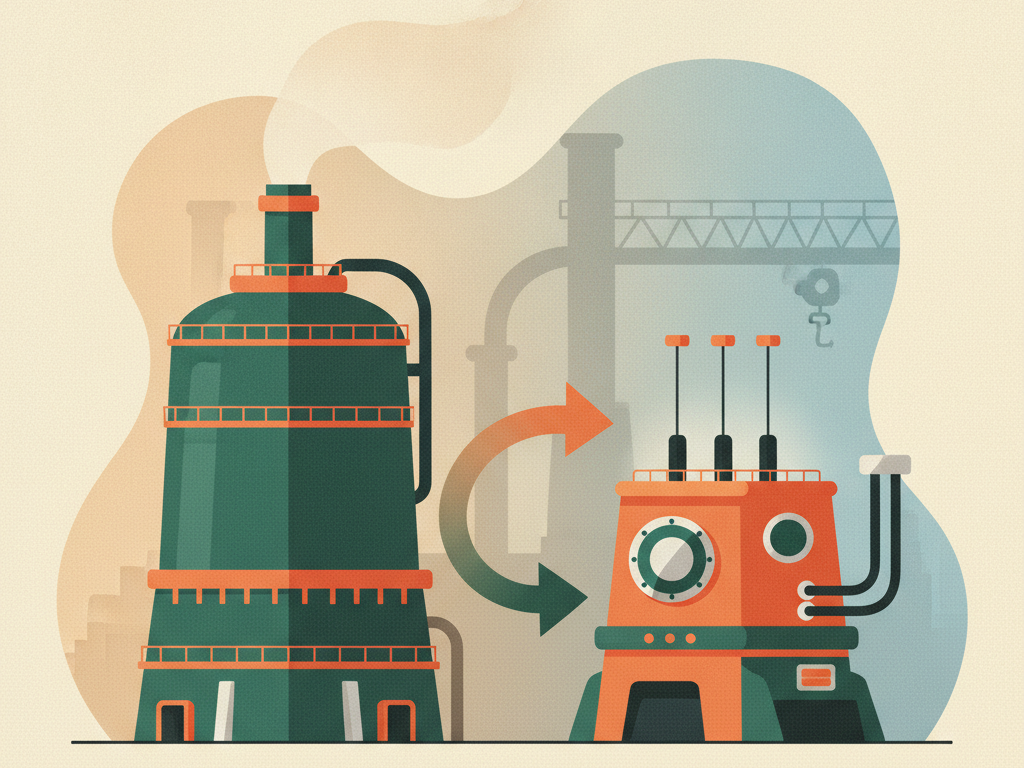
Estimates put forward on the size of the burden are larger. Cho Hong-jong, a professor at Dankook University, said at a National Assembly Steel Forum seminar that the switch to electric arc furnaces costs 2 trillion to 5 trillion won per unit, and that if POSCO cannot use in-house power generation from byproduct gas, its electricity bill burden could top 10 trillion won. Hydrogen reduction ironmaking requires more electricity.
The industry estimates that running one 2.5 million-ton-a-year facility requires 1GW for green hydrogen electrolysis and 250MW for the melting process, more than three times that of a coal-based blast furnace. Kim Jae-sung, a leader at POSCO's technology research laboratory, said at a public hearing on the 2035 NDC that the Gwangyang electric arc furnace will be at a loss from the moment it operates.
The burden on the export side is tied in as well. The EU's CBAM requires goods exported into the bloc to report the carbon from their production process and to buy certificates matching that amount, and forecasts have been made that Korea's steel industry will bear more than 3 trillion won in certificate costs over the next 10 years. Other companies are also reworking their facilities. Hyundai Steel began making carbon-reduced steel sheet in February at its Dangjin Works with a process combining an electric arc furnace and a blast furnace, and Dongkuk Steel, which runs three 1 million-ton-class electric arc furnaces, has set a plan to develop a hyper electric arc furnace by 2028.
POSCO's next step is HyREX, its hydrogen reduction ironmaking process. Unlike the shaft process adopted by steelmakers in Europe and North America, it does away with the blast furnace and carries out direct reduction in a fluidized reduction reactor, and the goal is to finish developing commercialization technology in 2030 through a demonstration facility with an annual capacity of 300,000 tons. With the change to the Pohang national industrial complex plan winning approval from the Ministry of Land, Infrastructure and Transport in March, the way opened to lay out a HyREX site on about 1.35 million square meters (410,000 pyeong) near the Pohang Works.
The group-level reduction targets are 10% by 2030, 30% by 2035 and 50% by 2040 against average emissions in 2017-2019. The record shows a fall from 80.5 million tons in 2019 to 71.1 million tons in 2024, a drop of 9.4 million tons, or 11.7%. More than 99% of emissions from domestic worksites come from three companies, POSCO, POSCO Future M and POSCO International.
The emissions threshold for low-carbon steel certification and the areas to be designated as special districts are at the stage of awaiting public notice. Depending on whether the five-year basic plan the special committee will review covers how electricity costs are handled, the profit and loss calculation for the Gwangyang electric arc furnace will change as well.