Two bills supporting the industrial decarbonization transition were introduced in the National Assembly in March 2026. They are the "Special Act on Fostering Carbon-Neutral Industries and Promoting Corporate Decarbonization Transition" and the "Full Amendment to the Act on Promoting the Transition to an Environment-Friendly Industrial Structure" (Industrial Green Transition Promotion Bill). Of these, the carbon-neutral industry bill was introduced on March 25 by Rep. Park Ji-hye of the Democratic Party of Korea as lead sponsor. Because the bill includes a carbon contract for difference (CCfD), the Ministry of Climate, Energy and Environment is conducting a study titled "Design of a Korean-Style Carbon Contract for Difference and Preparation of Draft Legislation."
A CCfD is a system under which the government and companies settle with each other based on the difference between the cost of cutting greenhouse gases and the trading price of emissions allowances. It is designed as a two-way settlement in which the government pays the difference when the market price of allowances falls below the contracted price, and companies return the excess to the government when the market price exceeds the contracted price. Korea's allowance market has formed a lower price range than the European Union and others under the influence of over-allocation. The longer prices stay low, the larger the difference the government has to bear.
Under the text of the bill, the ceiling on the contract term is 15 years, and on the government side long-term contracts of 10-15 years are cited as under review. The floor number of years and the stage of confirmation do not match. The 15-year ceiling is confirmed on both sides.
The funding has not been settled into one source either. Both bills point to the Climate Response Fund as the main source, while there are also statements that revenue from paid allocation of allowances is being reviewed as a CCfD funding source. For the Climate Response Fund, the amount actually secured against plans stood at 43.6% in 2022 and 21.3% in 2023. If the securing rate stays at this level, a contract design premised on long-term settlement will lean more heavily on the fiscal spending cap mechanism.
The two bills differ from the approach up. The Industrial GX Promotion Bill is bottom-up, with business associations voluntarily drawing up sector roadmaps that the government reviews and approves. Companies declare reduction targets, take part in competitive bidding and sign implementation agreements, receiving support payments linked to performance, and the payments are recovered if they fall short of the targets. The carbon-neutral industry bill is top-down, with the climate minister designating priority industries and certifying carbon-neutral specialized companies for concentrated support, and it includes provisions reducing national and local taxes based on criteria such as carbon-neutrality-related output and investment amounts.
The competent ministries are split between the Ministry of Trade, Industry and Energy and the Ministry of Climate, Energy and Environment. The implementing bodies are also designed separately, as the National Industrial Green Transition Promotion Agency and the Carbon Neutral Industry Information Center. Discussions between the two ministries on adjusting jurisdiction have not reached a conclusion.
Cited as priority recipients of CCfD support are high-emitting, hard-to-abate sectors such as steel, petrochemicals and cement. Technologies mentioned include hydrogen-based ironmaking, expansion of electric arc furnaces, CCUS and low-carbon chemical processes, but an official at the climate ministry said the scope would not be limited to specific technologies and would cover high-cost innovative facilities in general. The government plans to review, in the study, the sectors and technologies eligible for support, minimum reduction volumes, bidding and selection procedures, the method of calculating the base contract price, the fiscal spending cap mechanism, a standard contract, the settlement method, operating guidelines and a guidebook for companies. A target date for completion has not been set and announced.
The European Union will implement a new steel TRQ (tariff-rate quota) system from July 2026, and the United States and Canada are also implementing steel trade protection measures, Vice Minister of Trade, Industry and Energy Moon Shin-hak said on June 9. At the 27th Steel Day ceremony held the same day in Jamsil-dong, Seoul, the Ministry of Trade, Industry and Energy honored 31 people for their contributions to the development of the steel industry. In his commemorative address, Korea Iron and Steel Association Chairman Jang In-hwa presented cooperation for mutual growth, protection of the steel industry ecosystem and a high-value-added low-carbon transition as tasks.
The concentration of the support system on facility investment remains as it is. Unless mechanisms concerning who will buy low-carbon products are settled alongside it, products made by facilities whose reduction costs have been covered will compete in the same price range as existing products. In a phase where allowance prices stay low, government payments grow, and if prices rise, the amount companies have to return grows.
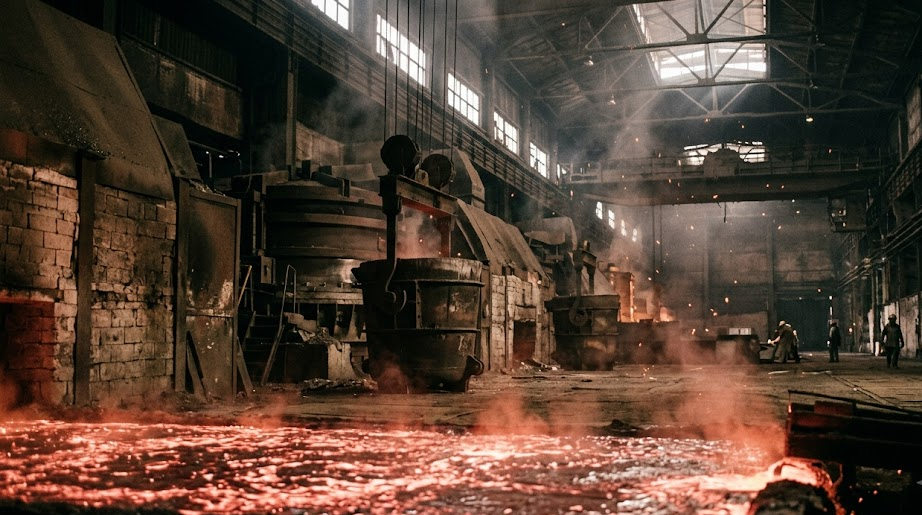
Steel Day was designated to mark the first molten iron produced from a Pohang Iron and Steel blast furnace on June 9, 1973. Fifty-three years on, the crux of operations has shifted to how to replace the blast furnace, and how the costs attached to that transition are distributed will take shape through the results of the CCfD study and the National Assembly's review of the two bills.