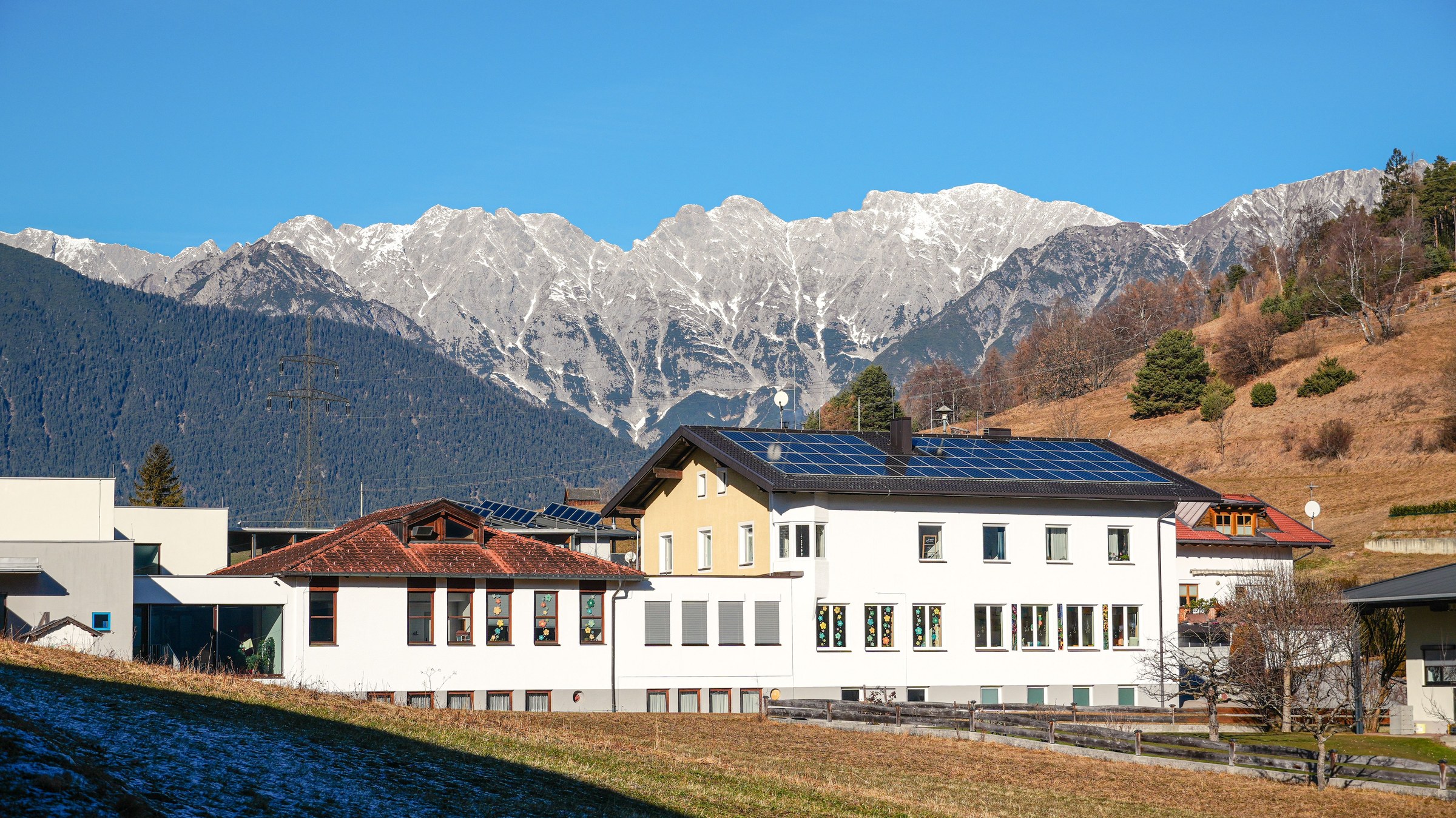
There is not a single cloud in the sky. Behind, a gray-white ridge topped with snow stretches out at length, and below it conifer forest and dry brown slopes form layers. The village sits low at its foot, and dark blue panels are spread wide across the roofs of the white-walled buildings. On the grass in the right foreground, frost remains only partly melted, and the lower part of the hill on the left is sunk in shade.
On a morning at the end of winter, the place that gets sun first in this village is the roof. And part of that roof no longer simply lets the light pass through. The same blue surface has been laid on the red tiles of the building next door, and on a lower roof a little farther off. These are roofs that multiplied in a way where one house starts and the house beside it follows.
What stands out in this scene is what has been added on top of what was already there. No mountain slope was cut away to install generating equipment, and no forest was cleared. The roofs were taking the light every day anyway, and only the decision to take that light and use it was newly made.
The mountain has been here far longer than this village, and the snow on the ridge shifts position with each season. The people who watch that change from closest by started with the tops of their own houses. Even while waiting for the big decisions, the things that can be done are usually overhead like this.
Looking at the photograph again, the brightest surface in the village is the dark blue squares set on the white walls. Beside them, roofs without panels continue.