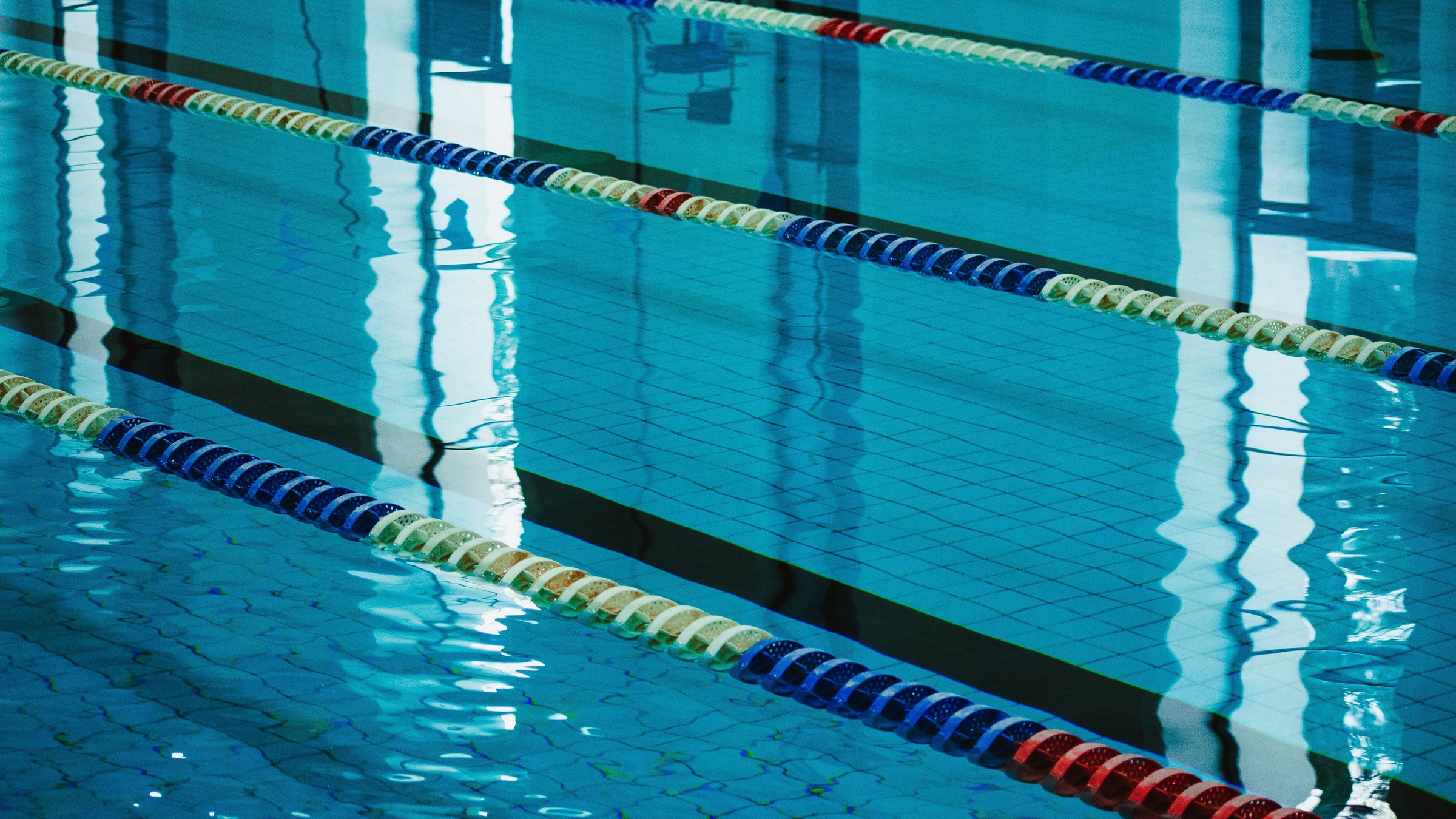
Lane ropes strung alternately in blue and red cut across the surface at an angle. The water stirs only in shallow ripples, as though no one has crossed it, and the ceiling lights stretch down and lie submerged like white columns. The grid of the tiled floor bends a little along the ripples. The coolness of the indoor air carries beyond the photograph.
Standing at water like this, the body reacts before the mind does. The soles of the feet gauge the cold of the wet tile, and the shoulders rise and fall again without being told. The eyes rest on the nearby movement of the surface rather than on the far wall. The breath drawn in runs half a beat longer than usual.
In the mind just before entering the water there is hesitation. That brief pause at the moment of having to lower the body in while knowing it will be cold. It resembles the feeling of starting a day.
Where you are now, you may lower your shoulders once, as if sinking them into water. Breathe in through the nose, and narrow the lips to let it out long, as if releasing it slowly underwater. Three times is enough, and there is no need to count.
You could also carry the same breathing to a dawn bus stop while waiting. While the cool air touches your cheek, check whether your back teeth are pressed together, whether your jaw is quietly clenched. As you lower your shoulders and narrow your lips to let the breath out long, as at the water, simply watch where the tension in the jaw gives way. If it does not give way, leave it as it is.
The water sways on its own, waiting for someone to cross it.