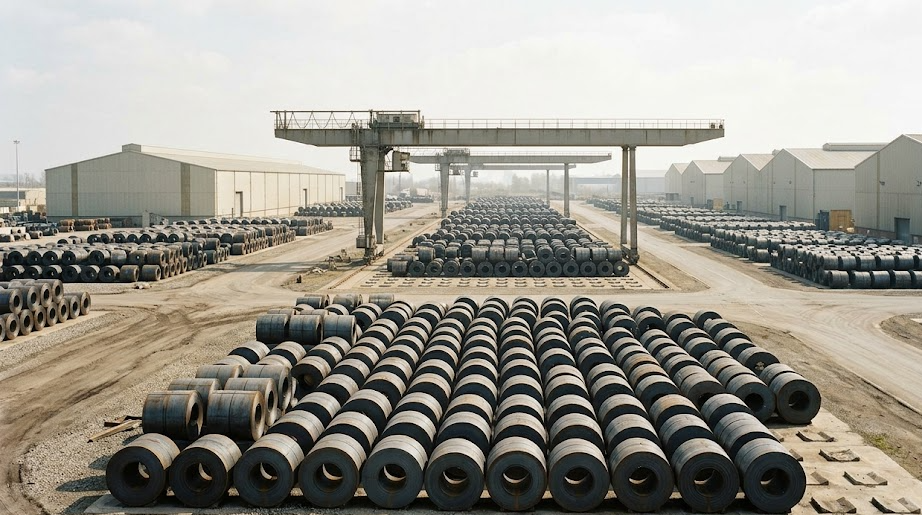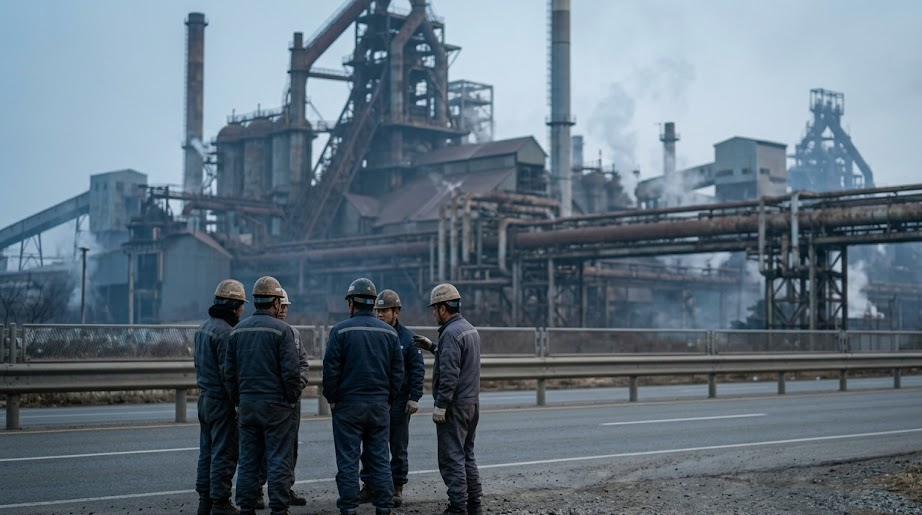
The Special Act on Strengthening the Competitiveness of the Steel Industry and the Carbon Neutral Transition, known as the K-Steel Act, takes effect on June 17. Passed by the National Assembly plenary session in November 2025, the law is built around establishing a basic plan for the carbon neutral transition, supporting low-carbon steel technology, and responding to dumping and strengthening import regulations. It is the first support legislation targeting steel alone in about 40 years, since the Iron Processing Industry Promotion Act was abolished in 1986. The Ministry of Trade, Industry and Energy announced a draft enforcement decree in April 2026 and closed the comment period as of May 11.
The exemptions contained in the law are concentrated on the corporate activity side. A low-carbon certification system, the creation of low-carbon steel special zones, a shortened preliminary review period for business combinations, and exceptions to concerted action under the Fair Trade Act along with permission to share information were written in as provisions. Industrial electricity rate cuts and a government-led business restructuring plan, which the industry had requested, were not reflected in the enforcement decree. Moon Shin-hak, Vice Minister of Trade, Industry and Energy, explained during National Assembly discussions that electricity rate support could become subject to complaints under WTO rules and also carries fairness issues with other industries.
The trade environment the law targets has shifted considerably over the past year. The United States imposed a 50% tariff on steel products in 2025, and steel exports to the U.S. from January to April 2026 came to 1.46 million tons, up 52.0% from the same period a year earlier. By product, steel plates rose 14.8% and wire rods, bars and reinforcing bars rose 1,345%. Interpretations of the pattern of volumes not falling despite the tariffs may differ between trade authorities and the industry.
The China variable moved as well. China's Ministry of Industry and Information Technology released a revised proposal in May 2026 requiring production capacity to be cut by at least one third when production facilities are replaced. According to World Steel Association figures, China's crude steel output from January to April 2026 fell 4.1% from the same period a year earlier. If production cuts continue, oversupply pressure could ease, but the effect on domestic prices will vary depending on the absolute scale of the decrease and how long it lasts.
Against this backdrop, the Steel Industry Subcommittee of the Korean Metal Workers' Union held a press conference at the Cheong Wa Dae fountain on the morning of the 1st, presenting demands to the government. The Hyundai Steel regular worker, subsidiary and non-regular worker branches, the POSCO regular worker and in-house subcontractor non-regular worker branches, the Hyundai Special Steel branch and the Hyundai BNG Steel branch took part together. The conference was held with two weeks remaining until the effective date.
The demands fall into three broad categories. The first is participation rights: that labor unions be included in the process of drawing up and evaluating the steel industry basic plan and annual implementation plans, that participation by union and regional representatives be made mandatory on steel-related committees under the direct authority of the president or under the government, and that government support criteria and evaluation results be disclosed. The second concerns the conditions of support: that employment maintenance, guaranteed total employment and a ban on layoffs be set as preconditions when supporting facility adjustments and business restructuring, and that an employment impact assessment be conducted before approving plans for workforce reductions, production cuts or process conversion. A proposal requiring companies receiving tax and fiscal benefits to consult with unions in advance and submit employment stability plans was also included here.
The third is a demand to build labor into the technology support system itself. It calls for workplace safety, maintaining skills and transfer placement to be handled together at the support, certification and follow-up management stages for low-carbon steel technology. The union claimed that workforce reductions are under way at Hyundai Steel's Incheon plant following the Pohang plant. No separate explanation from the company was issued.
Establishing grounds for government support for low-carbon transition technologies such as hydrogen-based steelmaking and electric arc furnace upgrades is cited as an achievement of the K-Steel Act. President Lee Jae-myung, during his presidential campaign, also pledged to create a Pohang hydrogen, steel and new materials specialized district, support the commercialization of hydrogen-based steelmaking, and expand investment in high value-added steel products. When facilities change, the required technology and workforce placement change as well, but neither the law nor the enforcement decree makes clear in what proportions companies, the government and workers will divide those costs.
The next point to watch is June 17. It is the day the final provisions of the enforcement decree take effect, and the day it becomes possible to check provision by provision whether the employment-related mechanisms the union demanded were in fact included. If the designation of low-carbon steel special zones and the procedure for establishing the first basic plan follow, there is room for the same issues to come up again in the process of setting support requirements.