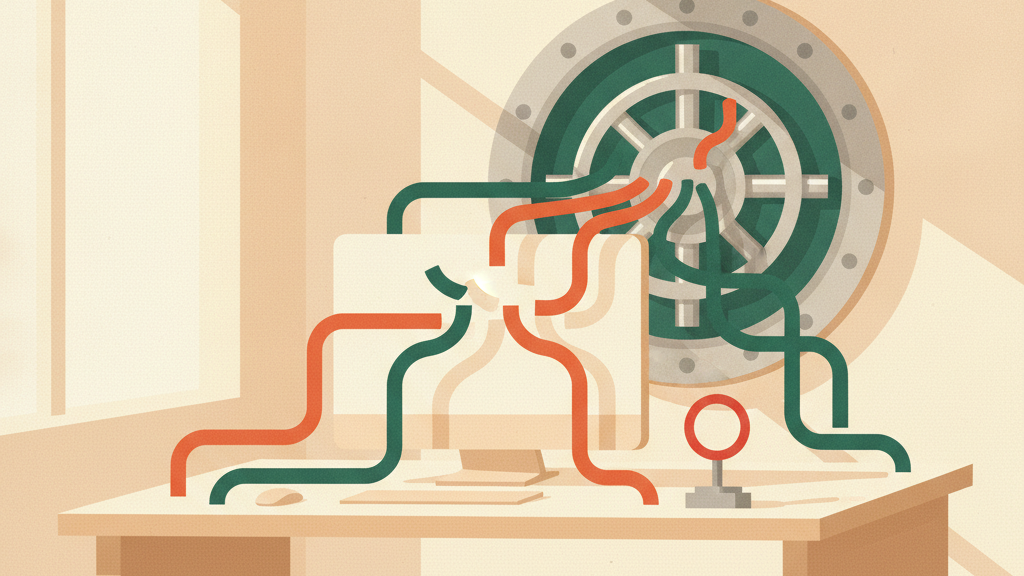

Some 60 figures in the MAGA camp who have supported President Donald Trump sent a letter to the White House demanding that testing, evaluation and verification before release, along with government approval, be made mandatory for powerful AI models. Former White House chief strategist Steve Bannon and conservative anti-AI activists Amy Kremer and Brendan Steinhauser put their names to it. The letter came to light through a May 18 (local time) report by the U.S. online outlet Axios. It is a story of the core support base of the camp that has pushed deregulation coming forward with the opposite demand.
The letter stated that AI systems capable of helping design biological weapons, penetrate critical infrastructure or manipulate financial markets must be handled at a level matching that risk. It called the chief executives of AI companies "unelected elites" and criticized them for running experiments on the public without safeguards or accountability. The signatories said such demands do not conflict with the leadership President Trump has shown during his term.
The White House has kept to an industry-promotion stance, minimizing regulation and neutralizing state-level AI bills. Then on May 4, a report said the administration was discussing a government review of new AI models before their release. Prior review refers to a procedure in which the government examines risk factors before a company puts out a model. Some observers say it is moving toward a federal licensing system.
Behind this lies the performance of the technology itself. A new model released last month by the AI startup Anthropic proved so capable of finding security holes in software that it raised concerns it could be used in large-scale cyberattacks. There is talk that the company shelved a general release of the model, but that is hard to treat as established fact. As performance rises, calls for safeguards grow along with it.
Public opinion points the same way. In an Annenberg Public Policy Center survey released last week, two-thirds of Americans said government regulation of AI has been too passive. One survey found respondents who feel more fear than hope about AI leading by 40 percentage points. Seven in 10 Americans oppose a data center being built in their own neighborhood.
The calculus on the corporate side is changing too. OpenAI backed Illinois' SB 315 along with the bipartisan Kids Online Safety Act (KOSA). SB 315 is a bill requiring companies that develop frontier-class AI models to build safety frameworks, undergo annual audits, report serious incidents and protect whistleblowers. The calculation reads as a decision to take part in designing regulation rather than avoiding it.
A signal came from China the same week. The State Council specified "accelerating comprehensive legislation to improve AI governance and sound development" in its 2026 legislative work plan. It listed data, computing power, algorithms, copyright, cybersecurity and supply chain protection as targets, the first time the authorities have written out the fields one by one like this. It has a different tone compared with the 2025 plan, which stopped at a single line about "promoting legislation for AI development," and the National People's Congress has kept an AI bill on its list of key items under review for a third year.
The premise that a country that writes laws falls behind in the competition loses its force here. Chinese firms are in fact widening the gap with their U.S. rivals in AI video generation. Since President Trump's visit to China last week, a phase in which the two countries each design their own safeguards has come into clear view. When the laws will be written and what procedures will be followed have not yet emerged.
Korea's AI discussion has long been tied to a single sentence: regulate and you fall behind. We are now watching that sentence being disproven in the United States and China at the same time. What verification the chatbots we use went through before reaching our hands, on what standards the data center in the next neighborhood was approved - when these become answerable questions, technology finally becomes part of daily life.