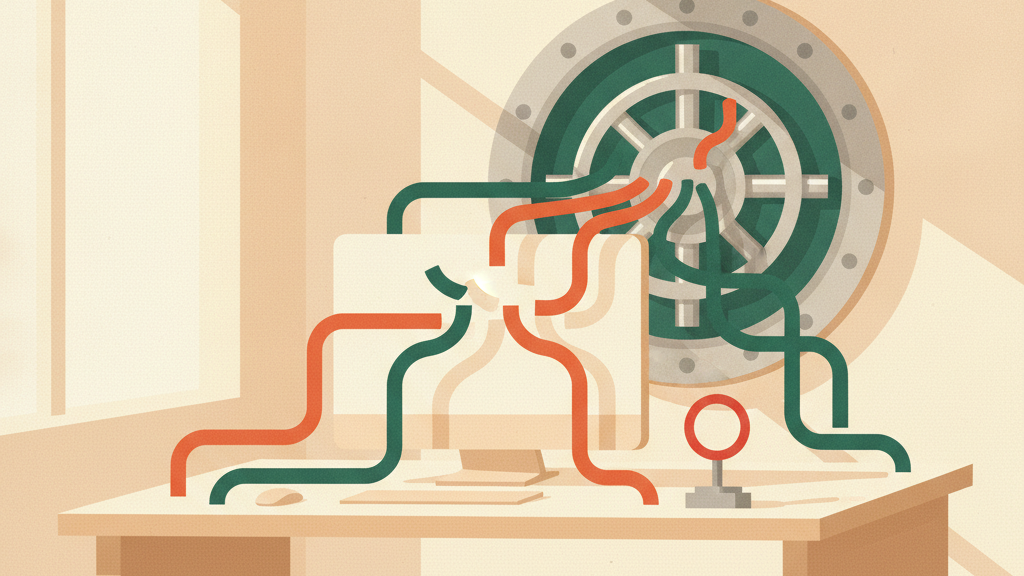
The Council of the European Union and the European Parliament announced jointly on the 7th (local time) that they had reached a provisional agreement to simplify and add flexibility to parts of the AI Act. The date on which the rules take effect for high-risk AI systems used in biometric identification, critical infrastructure and law enforcement has been pushed back to December 2027. In the same week, Korea's National Assembly passed the Special Act on the Promotion of the Artificial Intelligence Data Center Industry at its plenary session on May 7. The continents differ, but the two decisions point to the same place.
The EU AI Act, which took effect in 2024, is understood to be the world's first comprehensive framework law on AI. High-risk AI refers to systems used in areas that can directly affect people's bodies, rights or livelihoods. Systems that identify people by their faces, systems that control power grids or transport networks, and systems used by investigative agencies fall into this category. The timetable for imposing risk management, documentation and human oversight obligations on these fields has been put off.
The easing goes beyond adjusting the date. Machinery and industrial equipment already subject to separate industrial safety regulation are largely excluded from the scope of the AI Act. This reflects demands from German and French manufacturers. It also connects with the push by chief executives of European IT companies including Mistral AI, ASML, Siemens, SAP and Ericsson, who have called for regulatory relief in joint statements.
Some parts were tightened instead. So-called "nudifier" tools that generate sexual images without consent are banned, and AI-based generation of child sexual abuse material is prohibited outright. An obligation to attach watermarks and labels to AI-generated content is also introduced. It is an arrangement that reads as blocking uses that harm people directly while giving time to AI that goes into industrial sites.
Korea's special act is a case of writing processing deadlines into the system. AI data center operators can apply for multiple permits at once through an integrated window at the Ministry of Science and ICT, and if the relevant agencies do not respond within a set deadline, the permits are deemed to have been processed. This is the so-called "timeout rule." The previous approach, under which operators had to wait when reviews ran late, is reversed, and silence turns into approval.
The easing on the power side stands out more. Where an AI data center below a certain size is newly built or expanded outside the Seoul metropolitan area, or an existing center is converted to AI-only use, the power system impact assessment is waived. The assessment is a procedure for examining in advance how much burden a large facility places on the power grid.
Standards for elevators, attached parking lots and the installation of artworks under the Building Act will also be relaxed by presidential decree. Given estimates that more than 60-70% of the country's data centers are concentrated in the metropolitan area, the stated aim of encouraging dispersal is clear.
The burden does not disappear. Waiving the assessment does not reduce the amount of electricity a data center will draw. The cost simply moves toward grid operation, local residents and later bills.
Similar developments have followed in the United States. The Trump administration removed the AI safety assessment and reporting obligations introduced by the previous administration, and a report on May 4 said a plan to establish a government review procedure before models are released is now under discussion along with an executive order forming a working group. Whether it has been signed is not known.
With loosening and tightening mixed together within a single year, companies find themselves having to read the rhythm at which rules change rather than the rules themselves. Anthropic's decision to provide its "Mythos" model only to a handful of critical infrastructure companies without a general release is not unrelated to this environment. DeepL's recent tie-up with AWS, along with its notice to paying customers that it will not process data solely on its own servers, was likewise a choice to adjust the promise between expansion and promise.
The EU agreement still has formal approval procedures ahead, and Korea's special act will take effect in February 2027 after a Cabinet resolution and promulgation followed by a nine-month grace period. In the meantime, the actual deadlines under the timeout rule and the threshold for waiving the power system impact assessment will be set by presidential decree. A single line of an enforcement decree can shake a region's power situation and a city's skyline more than the text of the law.
The change users feel will come quietly. Behind a translator that answers faster, video that does not stall, and an AI assistant used more often, there is a building that went up on some site outside the metropolitan area and the electricity that building draws. The bill for a more convenient day comes back a few years later as an electricity invoice or an item on a village meeting agenda. That is when it will become clear what was brought forward and what was put off.