
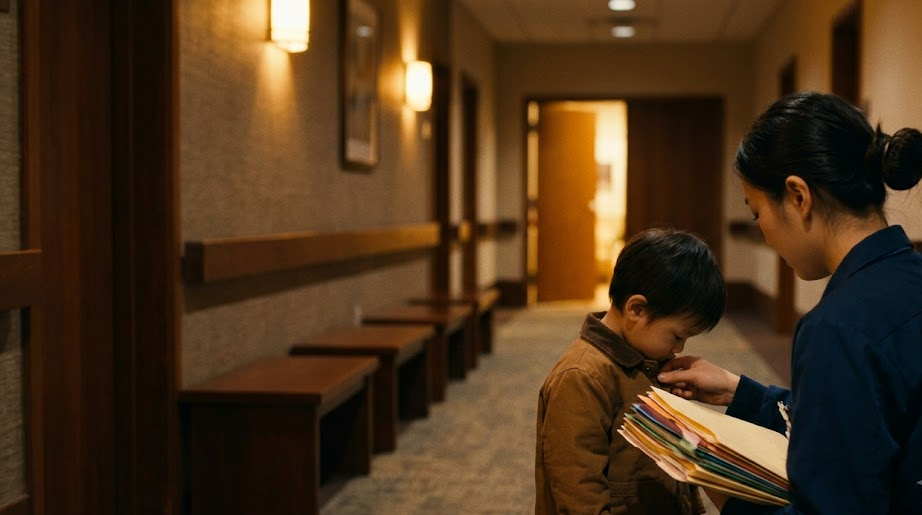
The Ministry of Health and Welfare said it has selected 479 young interns as participants in its "Care Assistant Workforce Support Program for Social Welfare Facilities" and will place them at major welfare facilities across the country. Five types of facilities with high demand for social care are covered. The funding was secured through the 2026 supplementary budget.
The number of placements varies widely by facility type. Extended-hours evening childcare facilities account for 343, more than seven tenths of the total, followed by 59 at mental health care facilities and 40 at regional elder protection agencies. Twenty will go to shelters for older people who have suffered abuse, and 17 to independent living support agencies.
Participation is open to people aged 19 to 34. Depending on conditions such as region and facility type, the door opens to age 39 or 45. Pay is about 2.15 million won a month before taxes, and the work period runs from the hiring date to December 2026.
The duties cover administrative work in general. Preparing for the operation of in-house committees, drafting documents, settling allowances, and assisting with government budget accounting are included. Before starting work, participants must complete remote job training from the Korea Human Resource Development Institute for Health and Welfare.
The 343 heading to extended-hours evening childcare facilities have a somewhat different role. They also take on care assistance, checking at 10 p.m. or midnight whether a child has gotten home safely. It means the hand passing documents and the hand holding a child's hand belong to the same person.
The shortage of people in care work is an old story. At many facilities, there are not enough staff to cover the night, and one person has been doing the work of two. Setting that shortage and youth joblessness against each other in one place is the design of this program.
Something remains to be pointed out about the size of the vessel. The actual number of months worked changes depending on when the hiring date falls, and that schedule has not been fixed. Care takes time for faces to become familiar, and the contract may end around the time a child starts calling out a name.
One mechanism is in place to keep this experience from scattering. Hands-on field experience is recognized as career experience in later hiring at social welfare facilities. Even when the contract ends, a line remains on the résumé, and that line is used to open the next door.
Application methods and recruitment schedules by facility type can be found on the websites of the Korea National Council on Social Welfare and the Korea Mental Health Care Facilities Association, and on the National Center for the Rights of the Child's "Jarip Jeongbo ON." Anyone considering applying should first look at which channel handles the facility type they are aiming for. What remains in the corridors 479 people passed through can be counted this December, when the time comes.