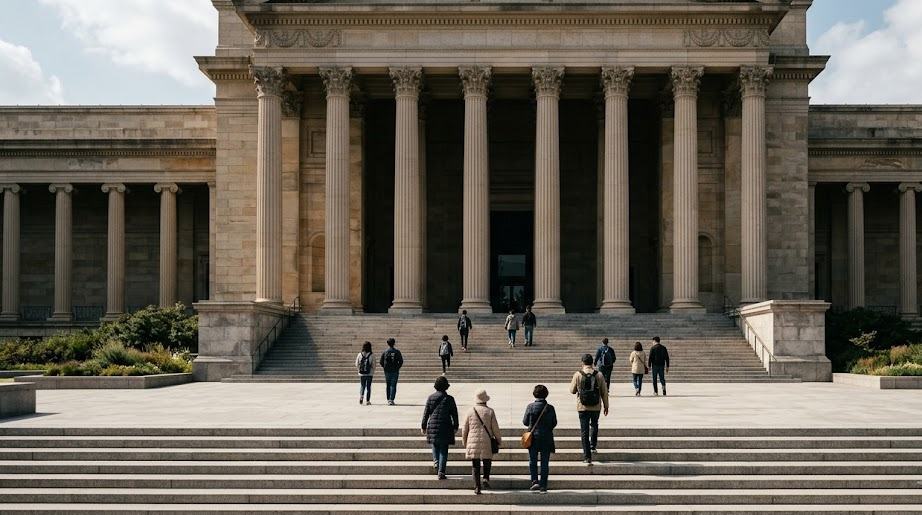
The granite steps on a Saturday morning are not slippery but cool. The sound of sneaker soles meeting stone, the rattle of a stroller wheel crossing a joint, and between them a child runs up. No one takes a ticket out of a pocket. The threshold of the permanent exhibition hall at the National Museum of Korea is that low, and that lowness is the whole of today's story.
Talk that it has passed London's old museum in visitor numbers is going around in several places these days. It is welcome news. But it is hard to see that record as having been built by the strength of exhibition planning alone. Erase the condition that admission is free and the rest of the explanation does not fill even half.
So what should be examined next is the threshold rather than the rankings. Where it stands in the world can be overturned again in a few years, but an exhibition hall that opens without asking a price is far harder to restore once it closes. How to keep the public promise that made this achievement, that is where the discussion should start.
The argument for charging has solid grounds too. When viewing is free, the number of people who book and do not come rises, weekend exhibition halls are crowded, and the funds for conservation treatment and curatorial staff always fall short. That is why proposals to put a price on special exhibitions and raise the money that way keep coming. There is also the rule of thumb from the field that visitors who have paid stay longer.
Even so, free admission to the permanent exhibition hall should be kept. Before it is a source of funds, an admission fee works as a filter. Three thousand won and five thousand won are a rounding figure to one person, and to another they become the line that decides whether to go today. The arithmetic of charging again to come and see objects the state holds in trust is hard to sustain.
Money earned from goods, cafés, and brand collaborations can be one way of holding up that free admission. But once merchandise starts pushing out the exhibition, the story changes. When the souvenir counter is brighter than the artifacts and the waiting line grows longer toward the shop, viewing becomes an accessory to consumption.
The boundary is simple. Earn the money outside, and leave the inside of the exhibition hall a place that does not ask a price.
This does not mean cultural events that charge have no public value. The 31st Busan International Film Festival runs for ten days from October 6 to 15, centered on the Busan Cinema Center, and the full lineup of invited works will be released on September 1. It is a theater you must buy a ticket to enter, but announcing in advance what opens and when is itself a way of opening the door to audiences. Public value is not something that can be measured by a price tag alone.
The air in the exhibition hall is dry and slightly cold. Beyond the glass the surface of the celadon looks wet but does not reach the fingertips, and each time the lighting changes the green settles into gray. The fact that nothing was paid to step into that room is barely noticed throughout the visit. Not being noticed is the mark of a well designed public good.
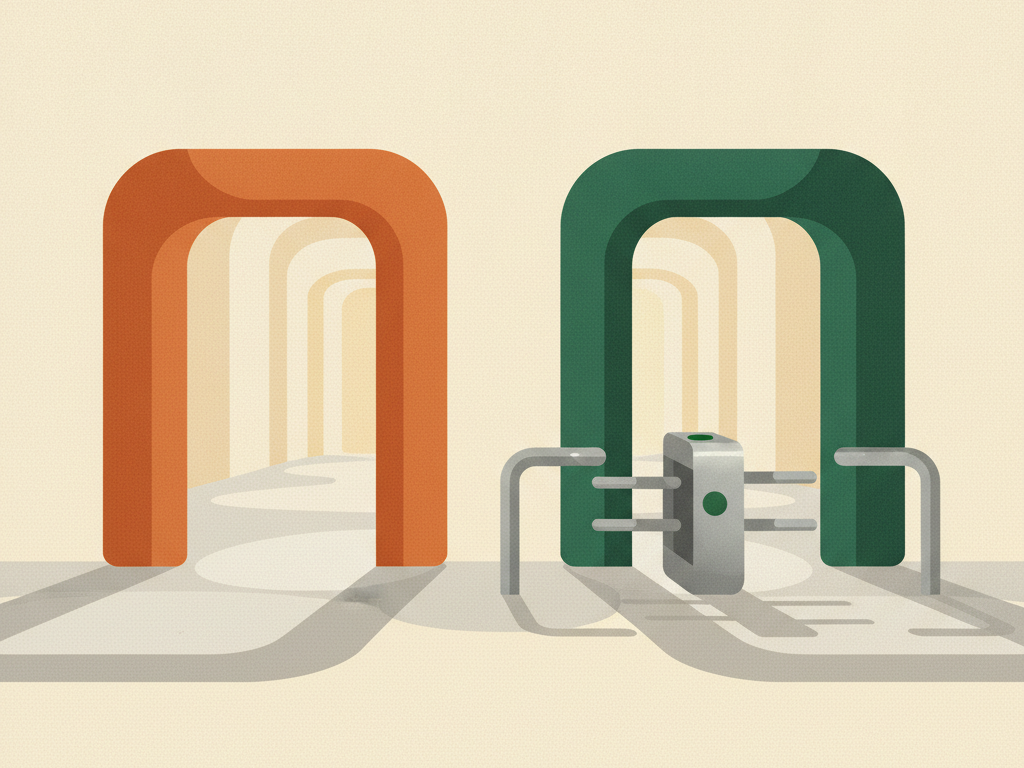
It is worth climbing the steps once before spring is over. Keep those few seconds of passing through without taking out a ticket in the body, and you will know by feel what the coming debate over admission fees touches. In autumn there is also the option of buying a ticket in Busan and sitting in a theater seat. Checking for yourself how a door opened for free and a door opened by paying each work belongs to the rights of the audience.