On March 9, Brent crude hit $119.50 a barrel. It is understood to be a fresh high, set after the price crossed the $100 line for the first time since the Russia-Ukraine war. Every time fossil fuel prices swing like this, the case for renewables grows. But the case growing and the transition speeding up were not the same thing.
A report released on the 12th by the Korea Institute for Industrial Economics and Trade (KIET) took on that gap directly. Park Yu-mi, a researcher at the Industrial Carbon Neutrality Research Division, assessed that the Middle East crisis has clearly brought out the need for a renewable energy transition, but that a short-term shock is unlikely to translate straight into a faster transition. It is an account of the conditions that sit between the window the crisis opened and actually passing through it.
The Middle East war that began on February 28 led to a blockade of the Strait of Hormuz and disrupted oil and gas supplies. Gas prices jumped more than 40% in Europe and more than doubled in Asia. Operations also stopped at Ras Laffan, the world's largest LNG facility. The Bank of Korea said downward pressure on growth has increased as a result and that this year's growth rate will come in below its earlier forecast, and it projected that energy prices will keep climbing even after the war ends because of uncertainty over restarting facilities and normalizing supply.
The first condition is the price of money. Rising fossil fuel prices push up inflation, and inflation pushes up interest rates. Renewable energy, though, has a large share of upfront facility investment and is unusually sensitive to the cost of raising capital.
The analysis found that a 2 percentage point rise in interest rates raises renewable power generation costs by about 20%, while gas generation rises 11%. This is where the conflict arises, with the crisis raising the need for renewables and at the same time shrinking investment in them.
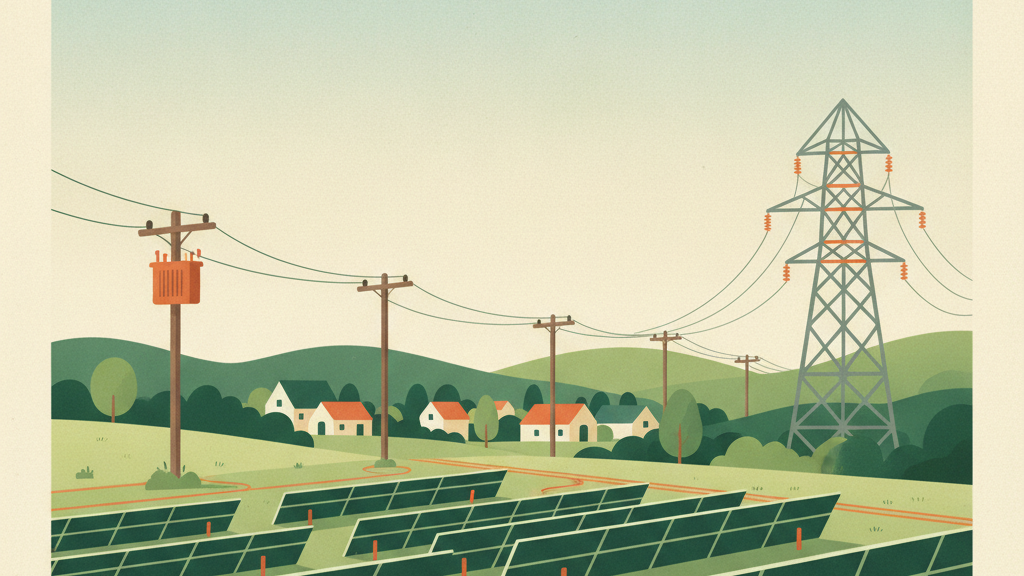
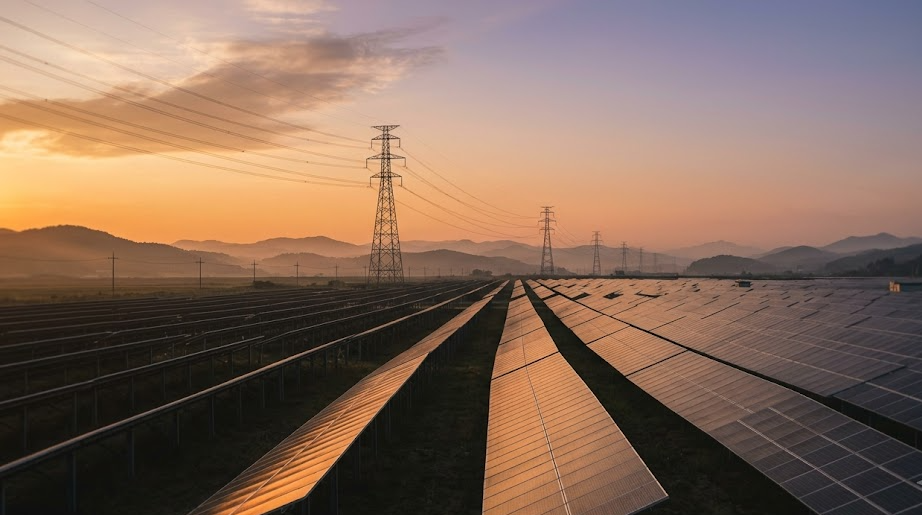
The second condition is the path the electricity travels. Building the facilities is not enough, and grid expansion, system integration costs such as storage and backup, and institutional work including permitting have to proceed together. In the United States, data center electricity use is expected to more than double by 2030, and rather than waiting for grid expansion, a trend of choosing gas generation, which is quicker to build, is appearing.
The third is materials. Copper supply is projected to fall 30% short of demand by 2035, and putting new mines and refineries in place can take from several years to several decades.
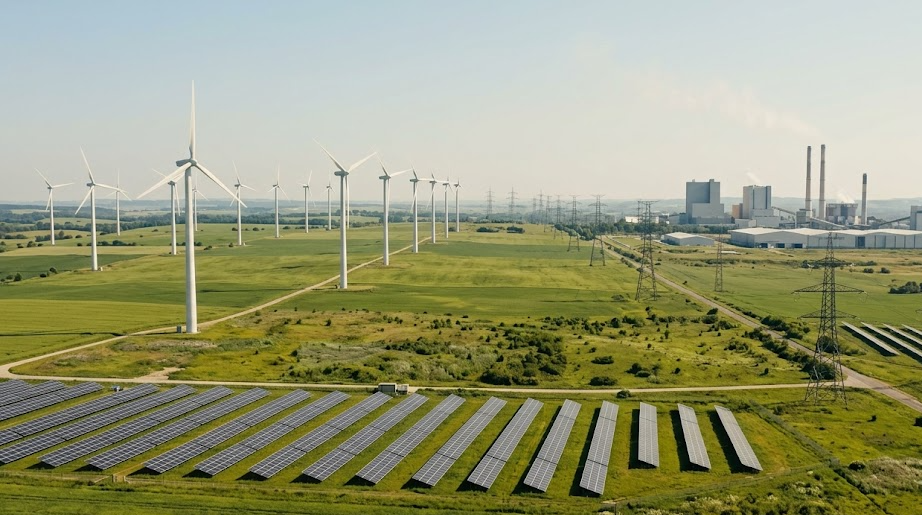
The more fundamental point the report raised is that the expansion of renewables so far has not reached a 'replacement' that pushes existing energy out and has stayed at an 'addition' that props up growing demand. A real transition holds only if cutting total demand and curbing fossil fuel use come first. In fact, since the Middle East events, international coal futures prices have risen 13.2% in Asia and 14.2% in Europe, and Korea lifted its cap on coal-fired power output.
It is not that there are no ways to respond. The report proposed stabilizing investment conditions through contracts for difference (CfD), long-term fixed-price contracts and risk mitigation via policy finance, while pursuing resource diplomacy and supply chain diversification for procuring and stockpiling critical minerals. Building grid infrastructure, tightening energy efficiency standards for buildings and industry, expanding investment in public transport and expanding electric vehicle adoption were also included as specific measures. It added the caveat that managing the supply stability of fossil energy is still needed during the transition period.
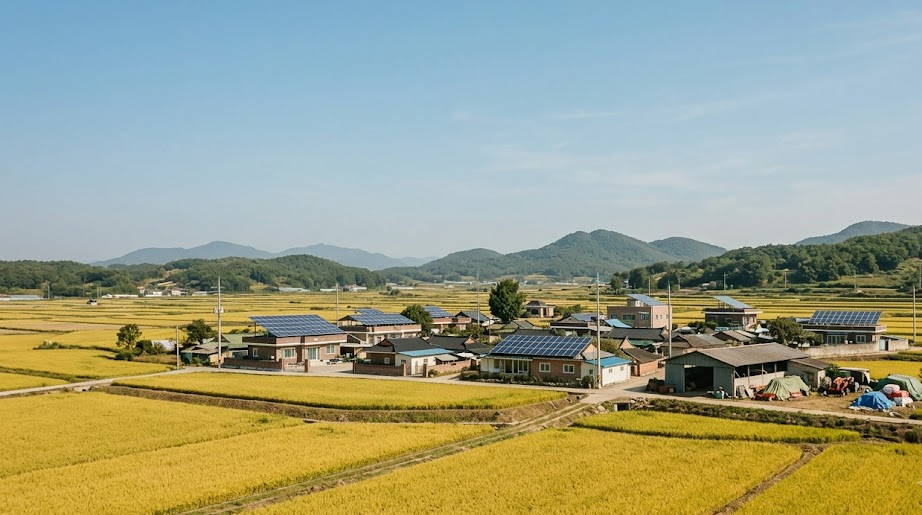
On the 6th the government announced a major energy transition package built around expanding renewables, fostering green manufacturing and balanced regional development in the energy transition. It includes a target of raising the share of renewable power generation to more than 20% by 2030. As of 2024 the domestic share of new and renewable energy was 10.6%, some distance from the OECD average of around 30%. The Ministry of Climate's supplementary budget of 616.2 billion won was also concentrated on expanding renewables, and the detailed allocation has not been disclosed.
UN Secretary-General António Guterres called for a faster transition, saying sunlight and wind cannot be blockaded or weaponized. After the Russia-Ukraine war the European Union put forward the REPowerEU plan, which combines energy savings, diversification of import sources and clean energy development, and major countries including the United Kingdom have said they will double their renewable energy investment on grounds of energy sovereignty. After a crisis pulls the trigger, what has been prepared decides the outcome.
At home, too, there are things that can be done right away. The government is running an expanded refund rate of 30% on public transport use through September. Choosing to leave one car parked and shift to the subway and buses cuts an individual's transport costs and is also the smallest unit of the 'cut in total demand' the report describes. The habits that will remain after the oil price graph comes back down are made on that side.