West Texas Intermediate was trading at around $67 a barrel as late as the end of February 2026. On March 31 its intraday price passed $106. In little more than a month, close to $40 a barrel was added on. It is the result of the war between the United States and Iran closing the Strait of Hormuz and narrowing a passage through which 27% of the world's crude oil, about 20 million barrels a day, used to pass.
The shock came down to domestic industry at once. One securities firm's analysis found that raw material inventories at refining and petrochemical companies would run out as early as mid-April. The government is releasing stockpiled oil. What happens when a single sea route is blocked in a country that brings in most of its energy by ship is being tested for real right now.
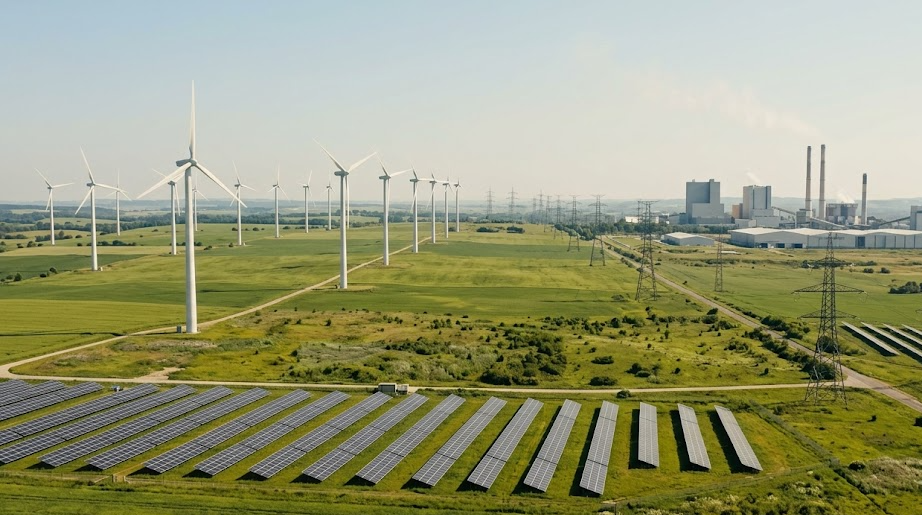
So the way renewable energy is viewed is changing. Until now, solar and wind have been treated mainly as an item of climate response costs. In a phase where oil prices swing, electricity made at home and used at home becomes supply stability itself. Power sources that do not import fuel have a simple but powerful property: their prices do not move with geopolitical risk.
President Lee Jae-myung pointed to the risks of fossil energy dependence at a town hall meeting on Jeju Island in March and stressed a rapid transition. The explanation from the policy side runs the same way. Lee Ho-hyun, Second Vice Minister of Climate, Energy and Environment, in a lecture at the 14th K-ESG Alliance meeting of the Federation of Korean Entrepreneurs held on April 2 at FKI Tower in Yeongdeungpo-gu, Seoul, put forward the simultaneous achievement of energy security and carbon neutrality, and named a decarbonized energy mix, next-generation power grids, process electrification and low-carbon fuel conversion as the means. He also stated an intention to strengthen the green finance support system.
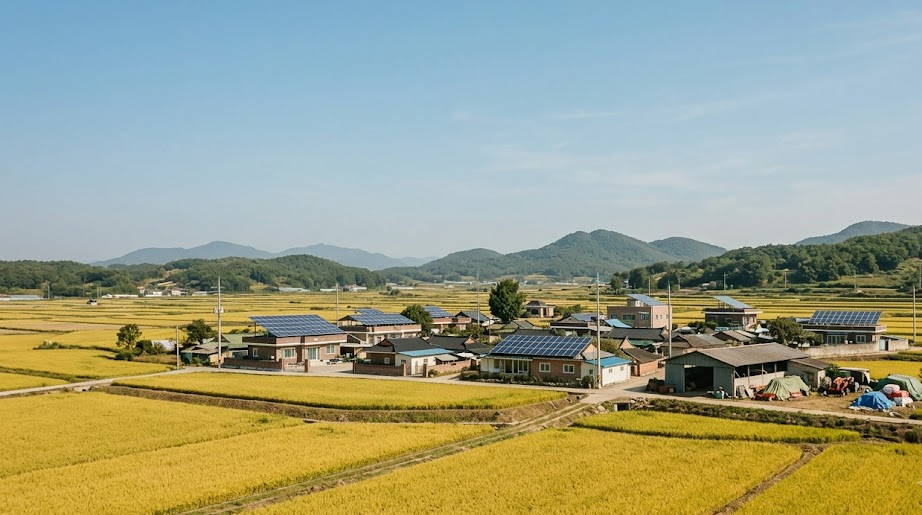
The flow of money is moving as well. The Ministry of Climate, Energy and Environment has drawn up 524.5 billion won in its 2026 supplementary budget bill. Adding 220.5 billion won for renewable energy financial support, it will lend money for sunlight income villages and for the installation of solar and wind power facilities on long-term, low-interest terms, and with 62.4 billion won in deployment support it will extend solar power to home verandas and to buildings, schools and traditional markets.
Also included are 58.8 billion won for distribution grid energy storage systems, 90 billion won for electric freight vehicle purchase support, 5.6 billion won for the electrification of home heating and 1.3 billion won for the electrification of social welfare facilities. As a bill that must go through National Assembly deliberation, the final scale has not been fixed.
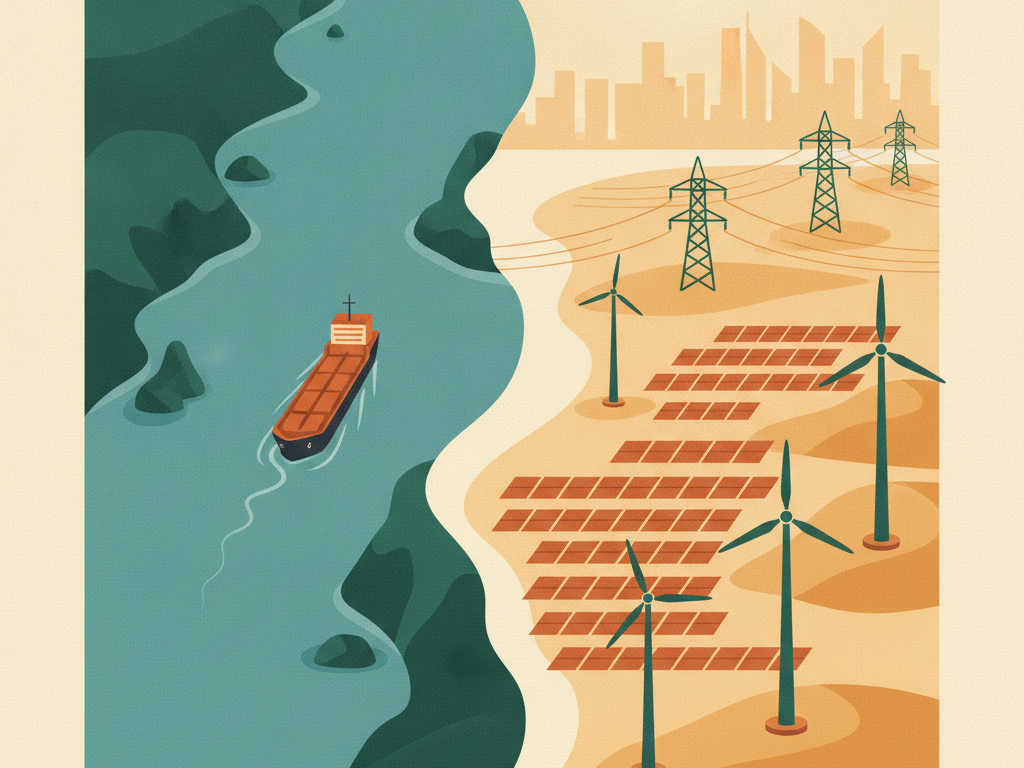
The shape of the expansion is specific too. The government will increase sunlight income villages from 150 to 700, and will use direct lending together with interest rate subsidies to add financial support of about 400 billion won. Jeongeup City in North Jeolla Province held an inaugural ceremony for its sunlight income village task force and a residents' briefing on April 2, and in a preliminary demand survey 17 villages in the city expressed an intention to take part. Sharing generation revenue by village is also a thread toward reducing conflict over sites.
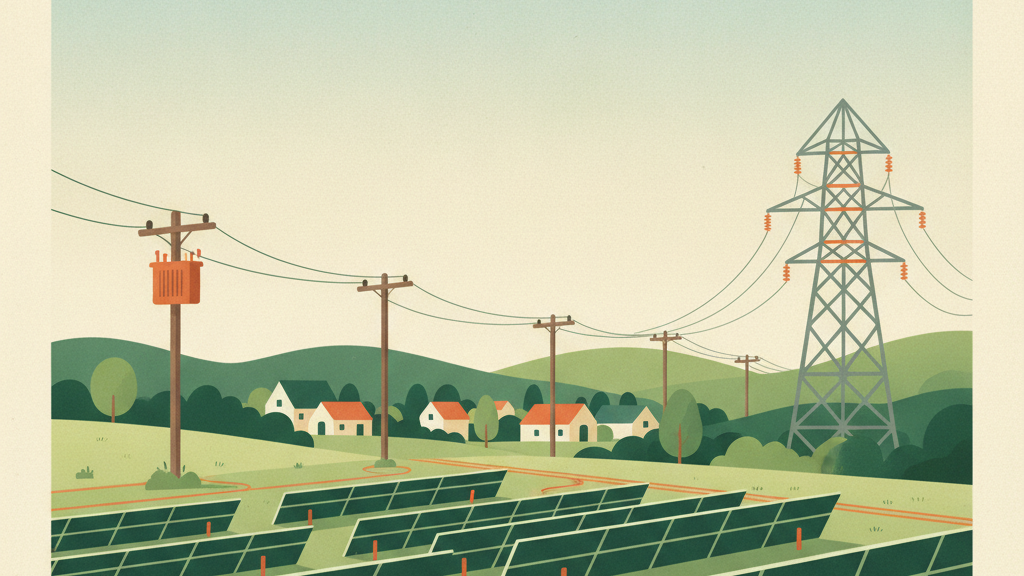
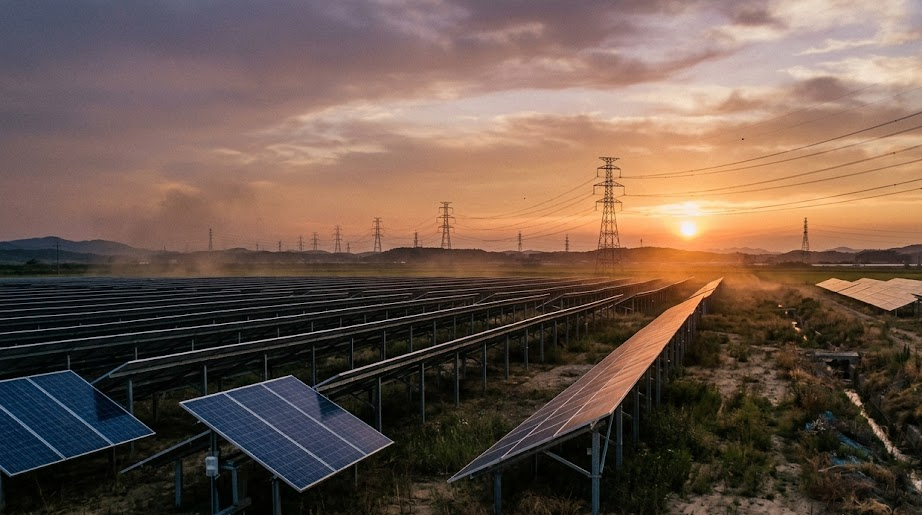
The power grid is a separate task. Domestic renewable energy facilities stand at about 34GW, and the government has set a plan to increase this greatly by 2030. The 100GW accommodation target for 2030 set out by the Ministry of Climate, Energy and Environment comes with the construction of local-production, local-consumption distributed power grids and the reinforcement of interregional transfer lines. Building power plants and weaving the net that will take in that electricity have to move together.
The temperature on the corporate side is split in half. In a Korea Chamber of Commerce and Industry survey of companies participating in the emissions trading scheme, 57.3% of 403 companies answered that carbon neutrality is "a difficult but necessary path," while 42.7% said it is "realistically difficult." In terms of competitiveness, the response that it is a crisis came to 74.2%, far ahead of opportunity (25.8%). At the same time, 64.8% said they are responding or planning to respond.
What companies want is clear as well. Among urgent policy tasks, support for reduction investment at 36.7%, development of decarbonization innovation technology at 31.0% and construction of renewable and hydrogen energy supply infrastructure at 15.1% ranked at the top. Participation in initiatives such as RE100, by comparison, accounted for only 9.3% of what they are doing in response.
Amid a trend in which export markets demand the use of renewable energy, policy that pushes investment capacity and infrastructure together becomes the key to the transition. Moves by the United States and Europe to push out Chinese solar and wind products are both a variable and an opportunity for domestic supply chains.
Oil prices will come down someday. Whether this phase is left behind as a passing commotion, or as a period that raised power facilities and the grid by one step, depends on the decisions of the next few months. As it happens, the threshold for veranda solar power and village-level generation projects is lower than in past years. Even asking your apartment management office or your city or county energy department once about the application procedure for veranda solar deployment moves the last digit of that 34GW figure a little.