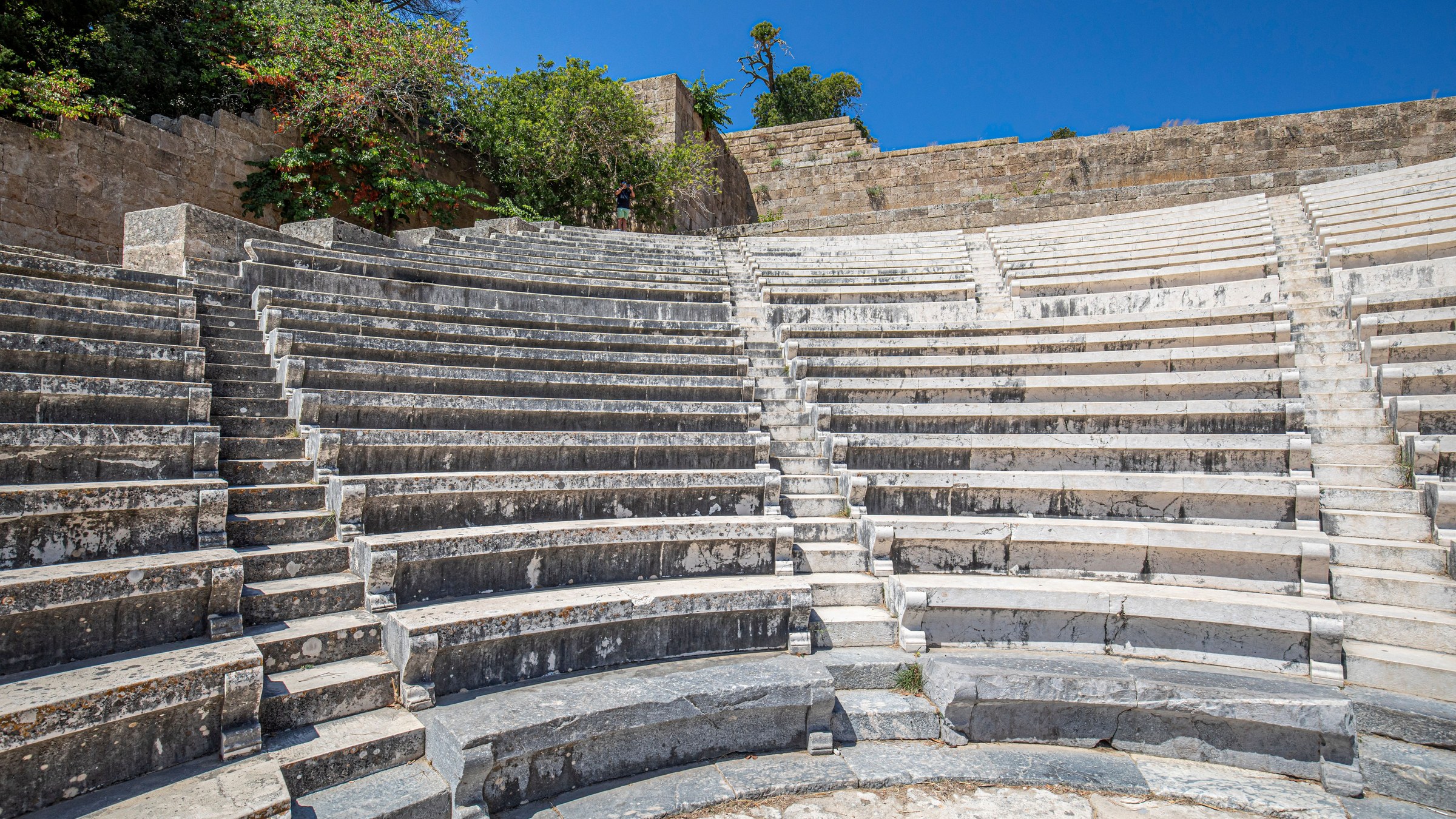
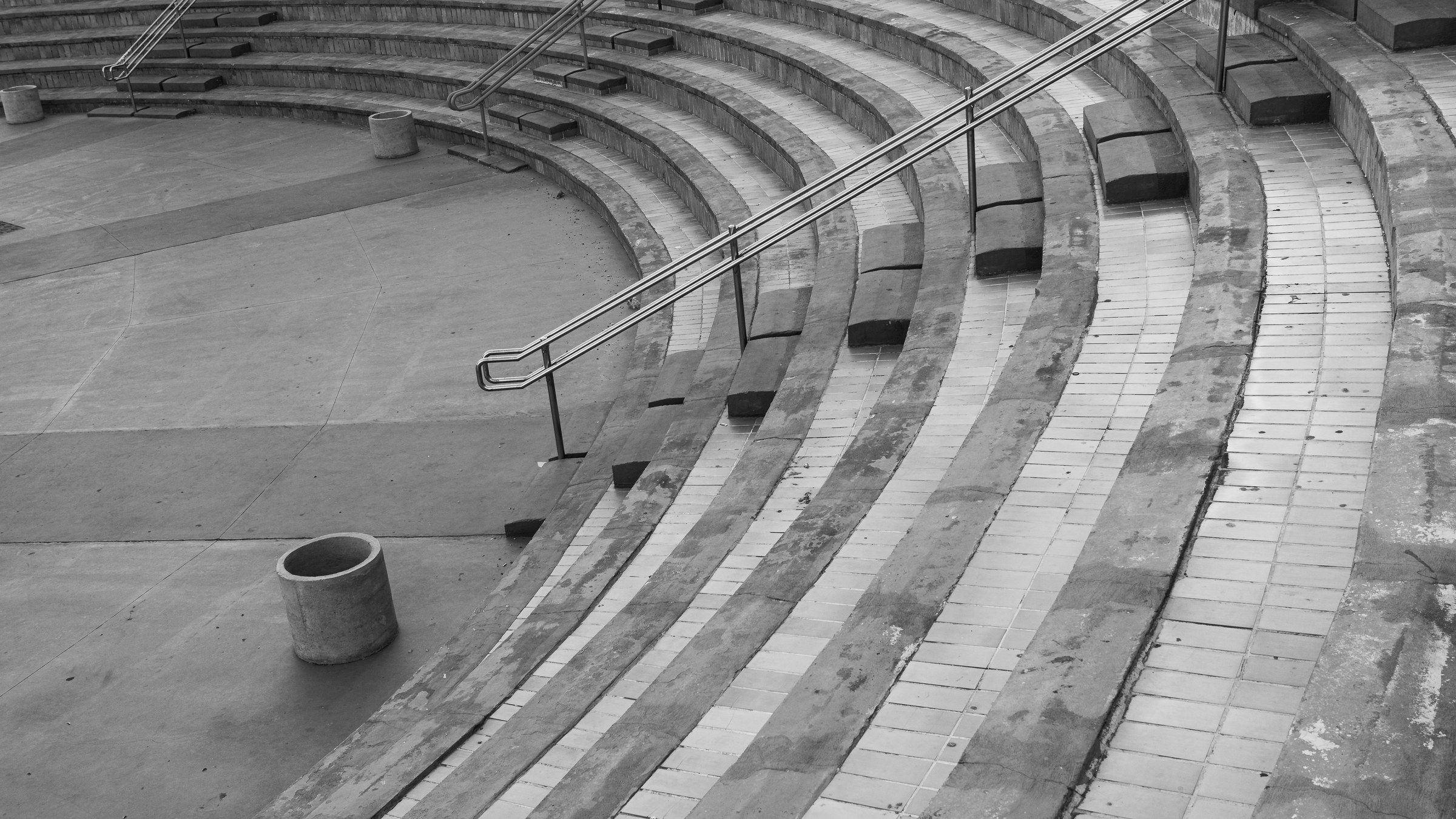
A gray staircase curves down in a wide arc. Each tile carries a faint stain where water dried, and the slender handrail catches the light in a single long gleam. No one is in sight. The shadows lying low say the sun has begun to sink.
At the sight of stairs like these, the body starts counting ahead of you. Before you can work out how many steps there are, the calves tighten and the shoulders rise a little. The breath shortens, and the eyes jump their focus to the very top.
That is where the habit of putting rest off until after arrival lives. The promise to rest once you have climbed it all, once the work is done, mostly goes unkept.
Before climbing, try simply sitting down around the third step. Touch the cool of the stone with your palm, set your soles fully on the ground, and wait until your breath lengthens on its own. Three minutes is plenty. The stairs are not going anywhere in the meantime.
The same three minutes turn up at a stop where you are waiting for a bus. While you stand looking up at the route board, you might take a quiet look at the tension in your jaw. It is an observation that goes only as far as noticing whether the back teeth are pressed together, whether the lower jaw is drawn back, whether the tongue is pushing against the roof of the mouth. It does not matter if you change nothing after noticing. On an afternoon when the shadows are stretching, waiting is time spent staying put anyway.
One step of a curving staircase becomes a chair as it is for whoever sits on it. Stone has never learned how to hurry.