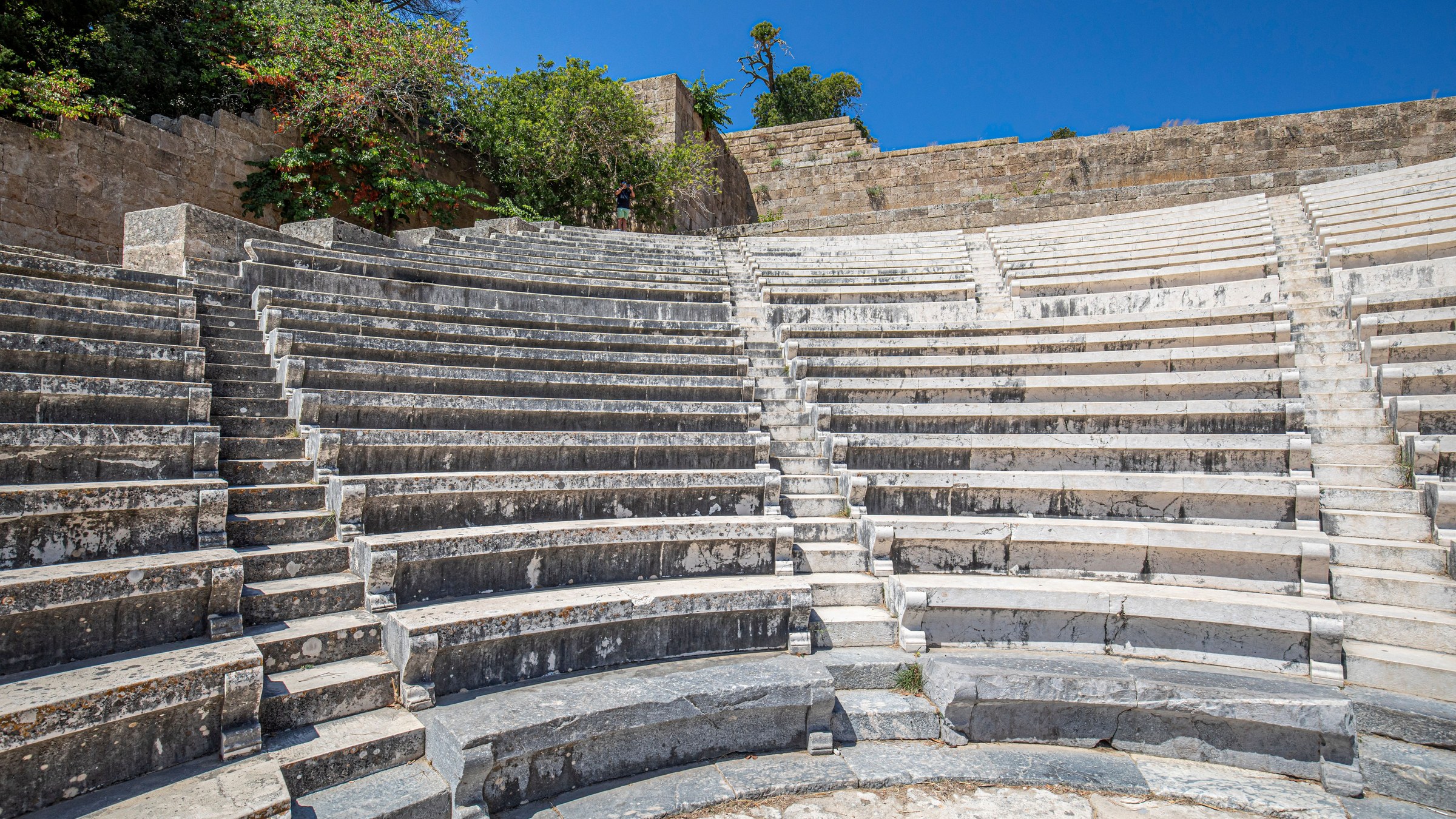
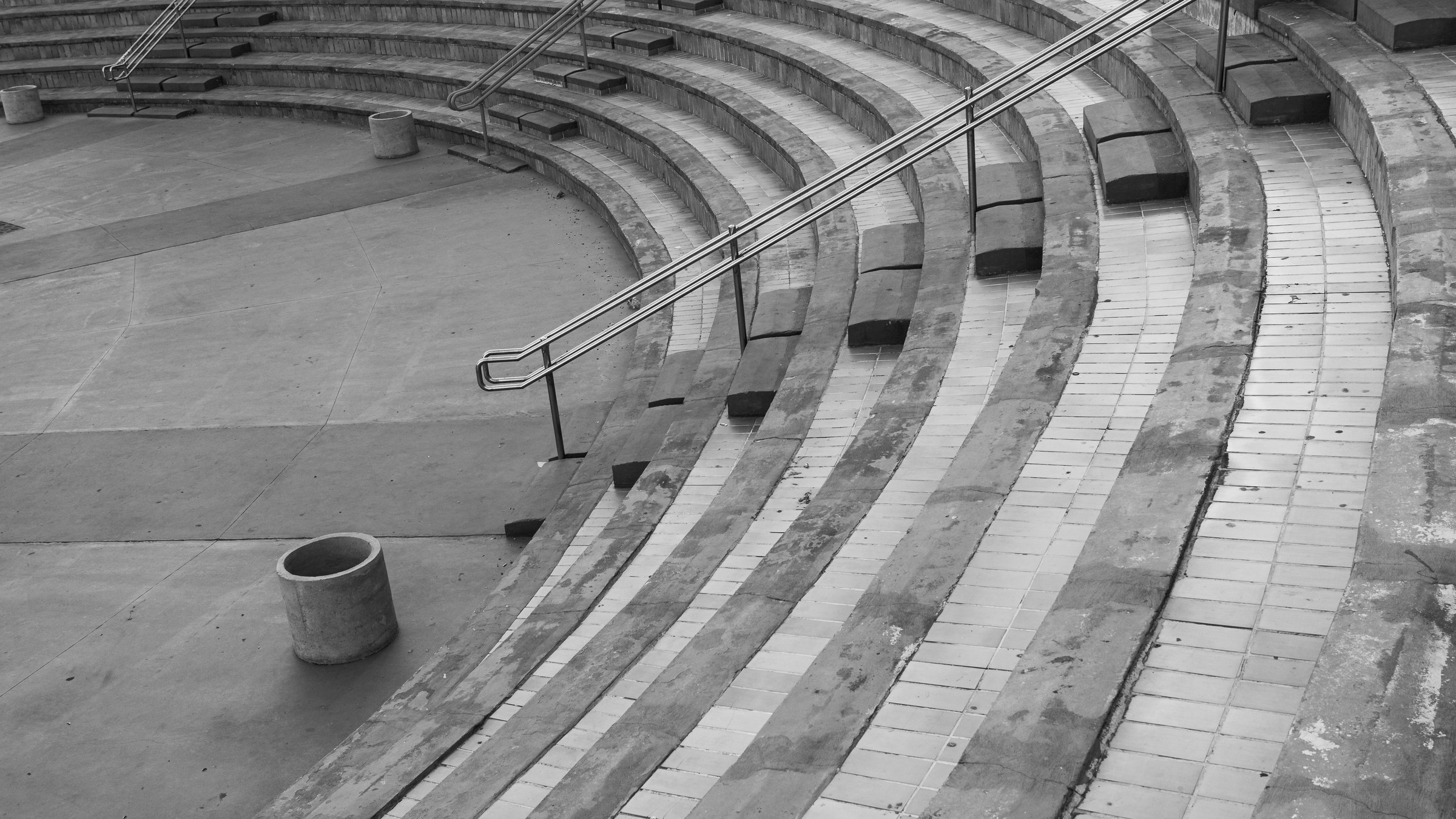
Gray stairs curve like a bow across the frame. Tiled steps and steps of bare concrete alternate in turn, and above them a metal railing catches a thin light as it slants down. There are no people, and a single empty flowerpot sits on the flat ground below, pulling a short shadow behind it.
Facing stairs like these, the body usually counts from the top. The shoulders rise a little, and the soles already tilt to the angle for stepping on the first stair. The eyes focus on the last step, and the breath grows shallow by that much.
What shows itself there is close to impatience. Once the place to arrive comes into view, every step passed along the way becomes nothing more than a point of passage.
If you meet a staircase somewhere today, it would be fine to sit down once on any step before climbing. While the coolness of the stone touches your palm, breathe out about three times, and what if you looked straight ahead once in place of upward.
On days without stairs, the inside of an elevator serves a similar purpose. During the few seconds after the doors close and the floor numbers change one by one, it is enough just to check what height the shoulders are hanging at. Whether they are near the ears or have come down a little, whether both are on the same line. Even in the short interval of waiting to arrive, the body is holding a posture of its own, so noticing it seems not much different from sitting on the stairs.
Stairs are a way up, and they are also wide, as if made for sitting.