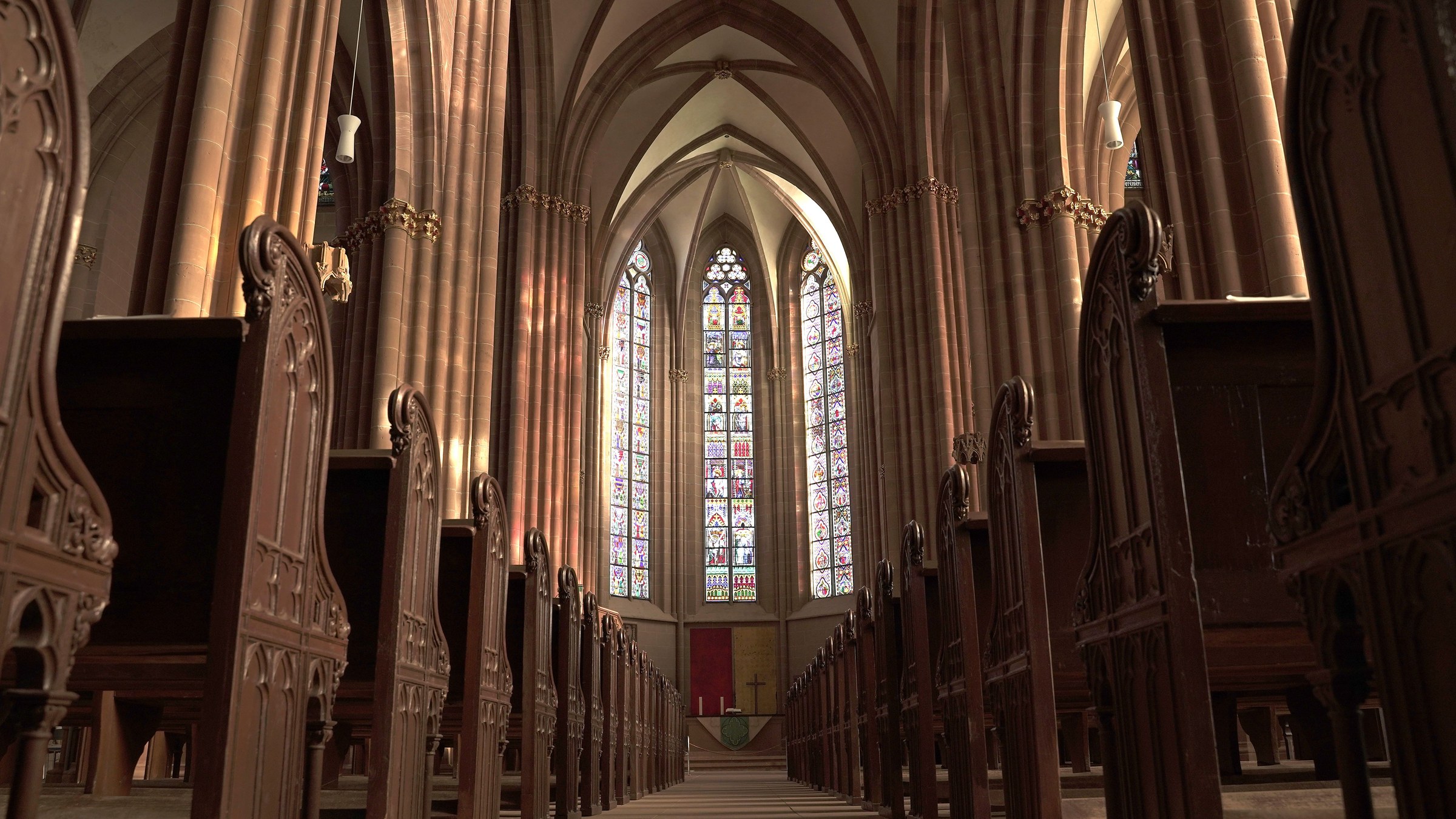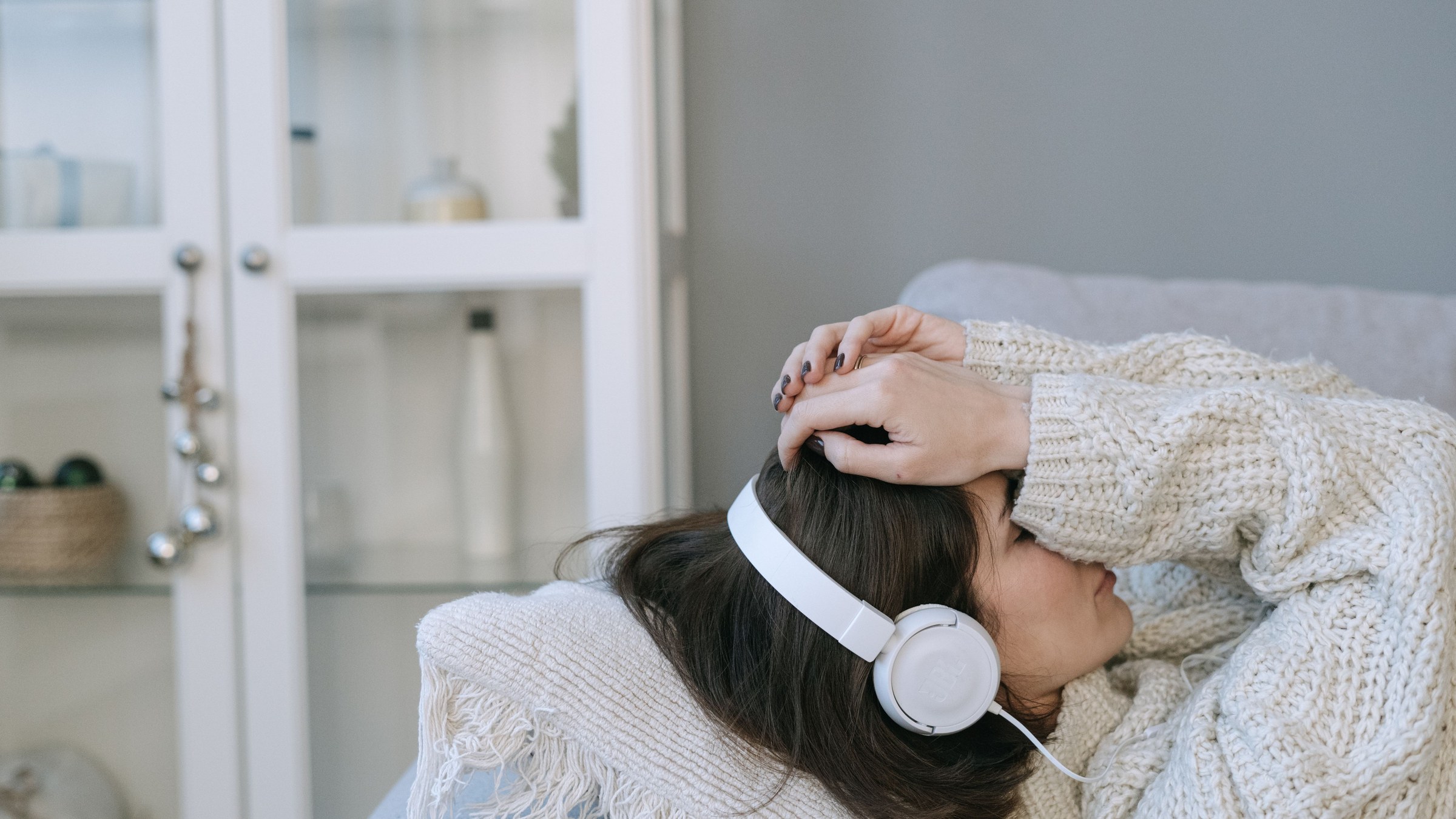
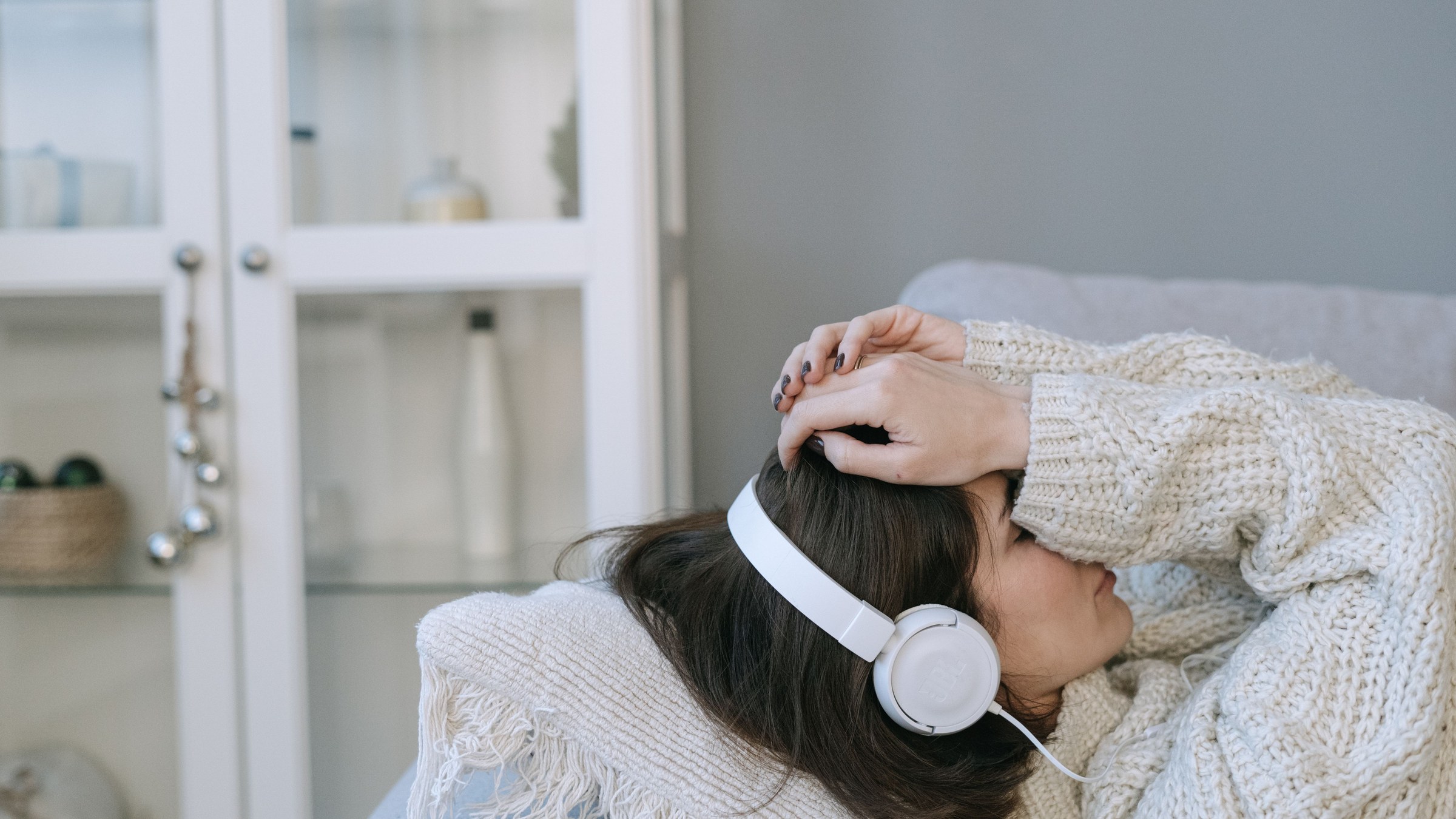
The light of an overcast afternoon passes the glass-doored cabinet and spreads thinly as far as the sofa. A cream knit sweater, a tasseled blanket and white headphones are soft at the same temperature. The person resting her head against the sofa back has one hand laid on her forehead and her eyes closed.
Watching that scene, your eyelids grow heavy first. With nothing left to focus on, the muscles around the eyes let go, and the shoulders move a little away from the ears. The breath stops breaking off in short pieces and travels long from the belly instead of the chest.
While the eyes are open, the mind keeps trying to check something. The screen, the clock, an expression, the tasks left. The moment they close there is nothing to check, and it becomes clear how unfamiliar the state of not having to check had been.
Sitting where you are now, close your eyes and count up to five of the sounds that reach you. The hum of the refrigerator, cars outside the window, the brush of a collar, even your own breathing. Looking for the fifth, the mind usually stops at three.
The same counting is worth trying at a bus stop. If it is hard to close your eyes while waiting for the bus, rest your gaze on your toes, and as you count the sounds that reach you, the air of the overcast afternoon feels a little cold at the tip of your nose. What to look at here is only which is longer, the breath in or the breath out. Do not try to change the length, it is enough just to notice what length it is now.
When you open your eyes again the room is the same, but the sounds you just counted stay quietly behind.