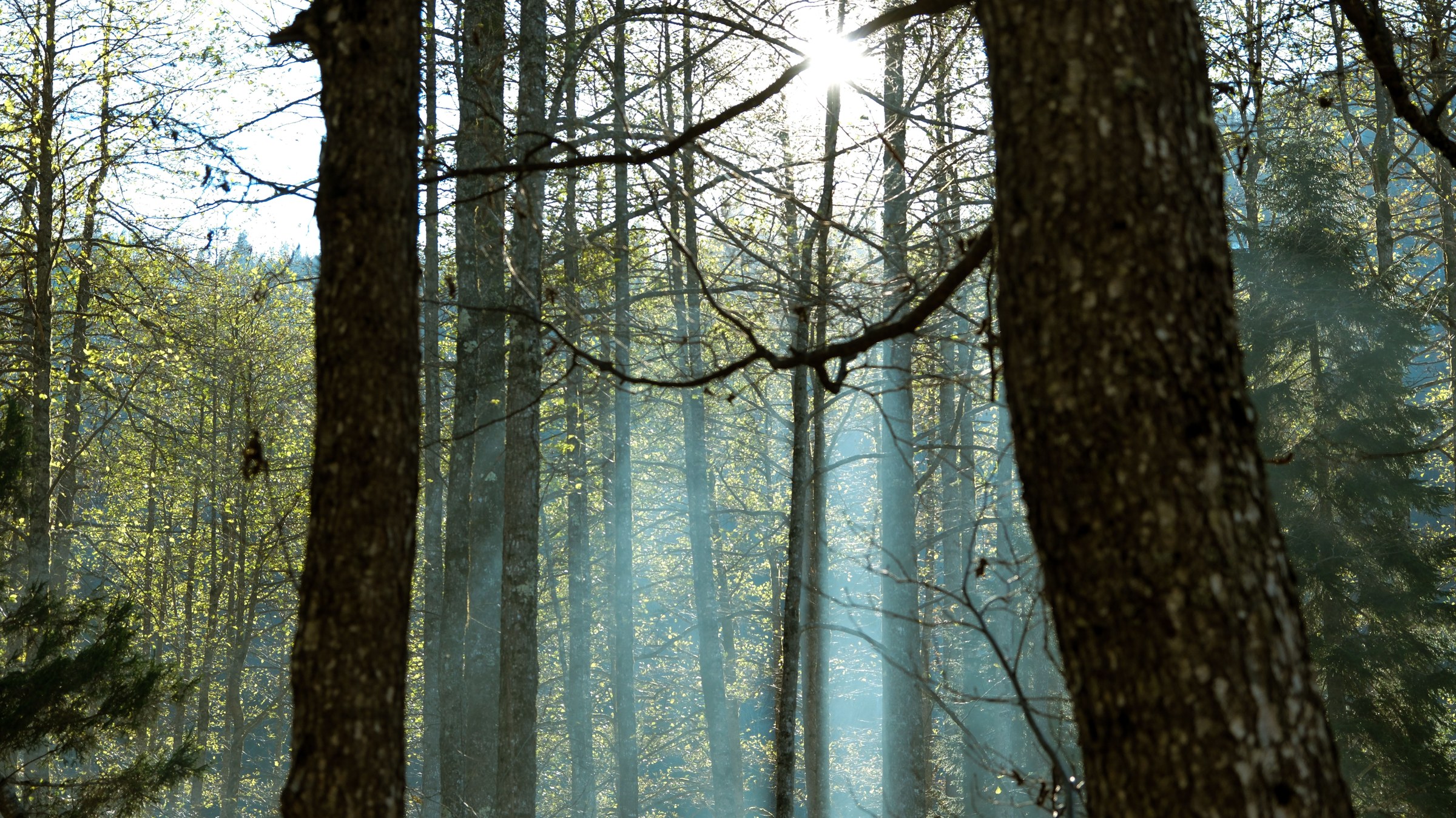
The sun still hangs low. Light bursting from a single point between the trees passes through the net of branches and pours down at an angle, and that path catches on the thin mist and becomes a visible column. The two thick trunks in front stand dark, and behind them slender trees recede in layers and disappear into the pale blue mist.
The column of light is visible because water droplets are suspended in the air. Moisture rising from ground and leaves that cooled overnight, the cold air of a valley not yet warmed. A forest makes its own climate. Trees draw up water and release it through their leaves, that vapor becomes mist, and the mist wets the soil again.
At the same hour the leaves begin something else as well. From the moment light reaches them, the work of catching carbon from the air and turning it into a body. Each pale green new leaf in the photograph is a site of that work. Outside the calculations and equipment we pile up while talking about carbon neutrality, the forest has long been doing this work without sending a bill.
So protecting forests is a choice that adds up, not sentiment. Filling in the places that were cut, using wood again and again rather than burning it, increasing shade on the land left in cities. What can be done today is small in scale, but the direction is clear.
Look at the photograph once more. The column of light looks like a passage, but it is air. The same air we are breathing now, made overnight by this forest and put out in the morning.