Carbon emissions of 655kg·CO₂/kW or less. This is understood to be the line a solar module must cross to clear the threshold for tax benefits. With the revision to the Enforcement Decree of the Restriction of Special Taxation Act containing this standard taking effect today, design, manufacturing and installation technologies for low-carbon solar modules have newly entered the scope of new growth and source technologies. In the same week, an amendment to the New and Renewable Energy Act passed the National Assembly, and a task force to handle power grid innovation measures has also scheduled its launch meeting.
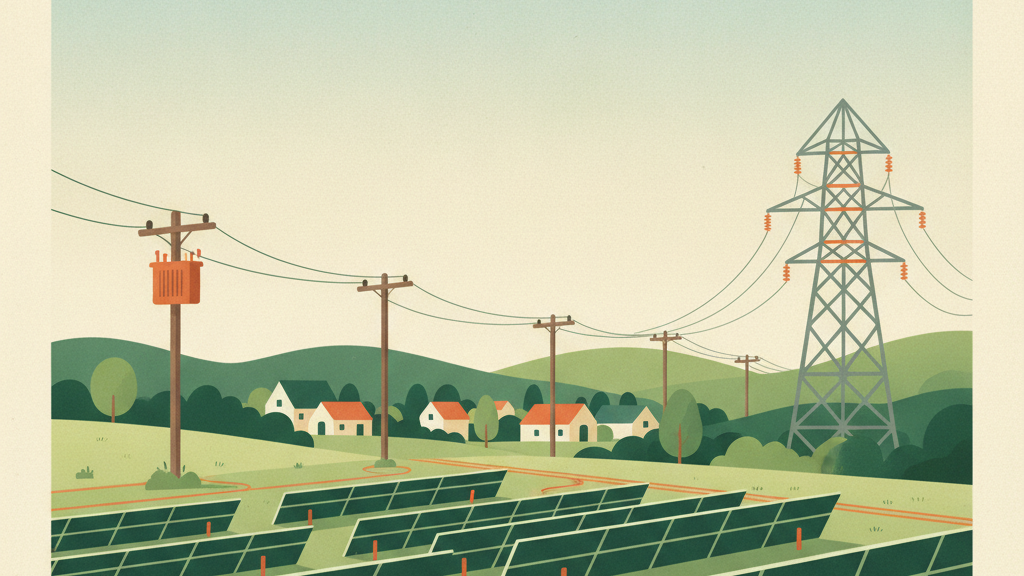
It is not common for three strands to proceed together in a single week. Until now, taxation, siting regulations and grid connection have moved to different beats in the solar industry. Even when an incentive to build a factory arises, a site cannot be secured, and even when a site is secured, generation does not begin if it cannot be connected to the power grid.
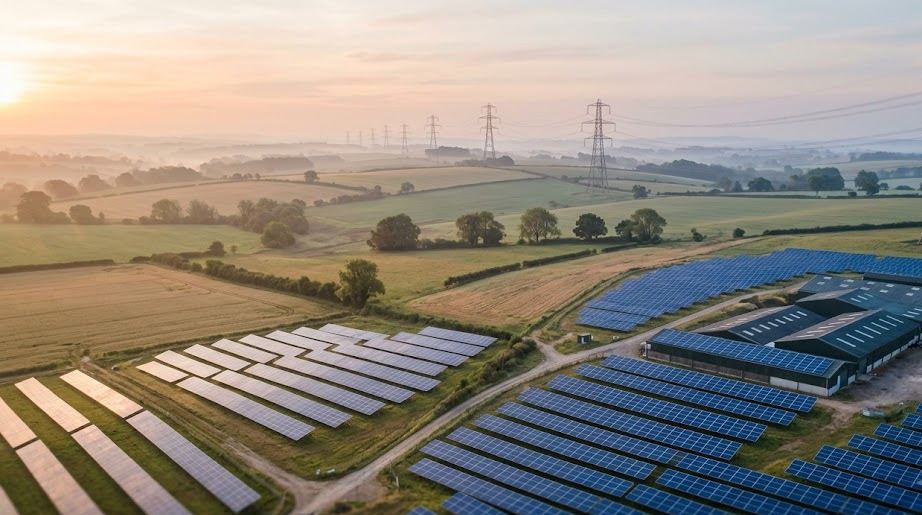
The key change on the tax side is the scope of application. In addition to manufacturing facilities that produce low-carbon solar modules, a method is being pursued under which investment in power generation facilities applying that technology also falls under the facility investment tax credit. Applying a new growth and source technology level credit to power generation facility installation costs is the first case across all energy sources, according to the Korea Renewable Energy Federation. Details such as the credit rate and the applicable tax year have not been finalized.
On the legislative side, the rationalization of separation distance regulations has been reflected in the system, establishing national-level standards and exception provisions. Grounds for organizing the framework for new energy and renewable energy have also been created. The Korea New and Renewable Energy Association and the Korea Photovoltaic Industry Association issued statements welcoming this revision.
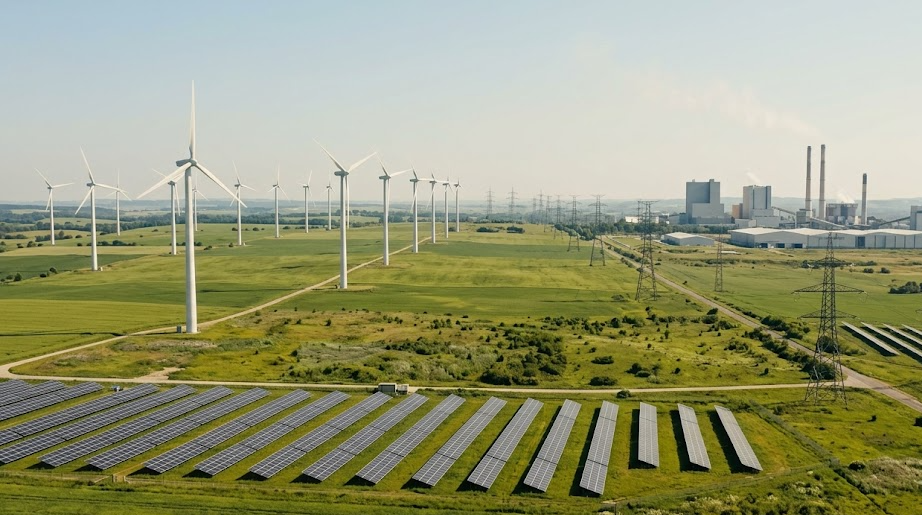
The remaining axis is the power grid. The Ministry of Climate, Energy and Environment scheduled the launch meeting of the power grid innovation measures task force in Yongsan-gu, Seoul on the 24th, joined by the Korea Electric Power Corporation, the Korea Power Exchange and experts. The goal is to produce measures by the first half of this year for building a grid that can take in 100GW of renewable energy by 2030. Lee Jae-sik, Director General for Power Grid Policy, defined the 100GW expansion as a core government task.
The list of tasks under review contains the same bottlenecks that have been repeated in the field. Preparing regional grid maps, activating the planned siting system, improving the first-come-first-served connection method, using connection lines from retired coal power plants, and shared connection infrastructure for offshore wind have been placed in the institutional category. On the operations side, expanded flexible connection and non-expansion alternatives for the power grid are under discussion, and on the construction side, diversification of construction methods and local acceptance measures such as support for resident solar projects along national trunk line routes.
Of course, a list is not the same as a result. Whether the tax credit leads to actual factory expansion, and how the separation distance standard is applied in the regions, depends on implementation over the coming months. An industry request to introduce a US-style system that gives direct incentives to manufacturing companies is also awaiting a government response.
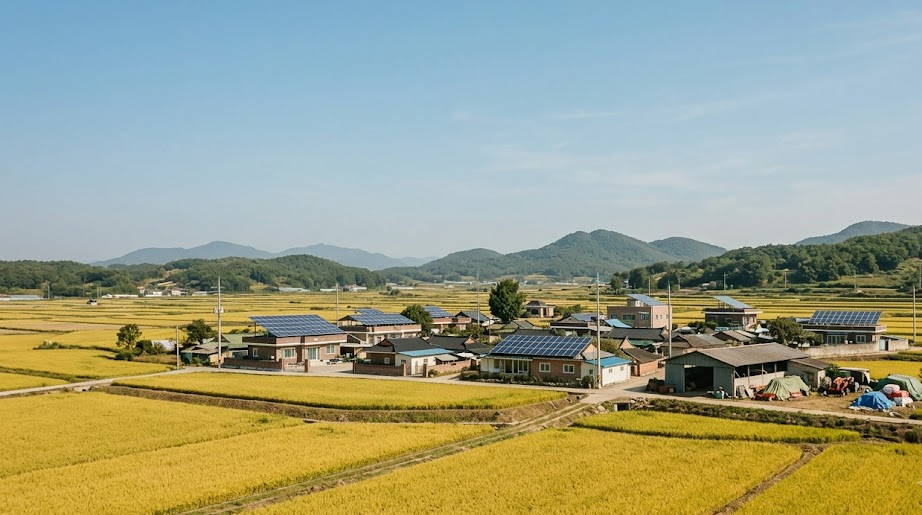
Still, this is a rare moment in which the rules built around solar power no longer point in different directions. Anyone who has been weighing whether to put panels on a rooftop or in a yard would do well to check once within the first half of the year how their local government is revising its separation distance ordinance. In regions where ordinances change after the national standard is set, a path may open to put panels back on land where installation has been blocked. The outline of the grid measures will emerge before summer.