For three days, from March 1 to 3, Jeongwol Daeboreum festivals will be held at village-level venues across the country. In Seoul, Geumcheon-gu and Nowon-gu have each prepared events, and outside the capital region so have Incheon and Daegu's Dalseo-gu, while Daejeon is setting up at 46 sites at the same time. Unlike the approach of gathering people at one large stage, these are scattered across neighborhood open lots and streamsides.
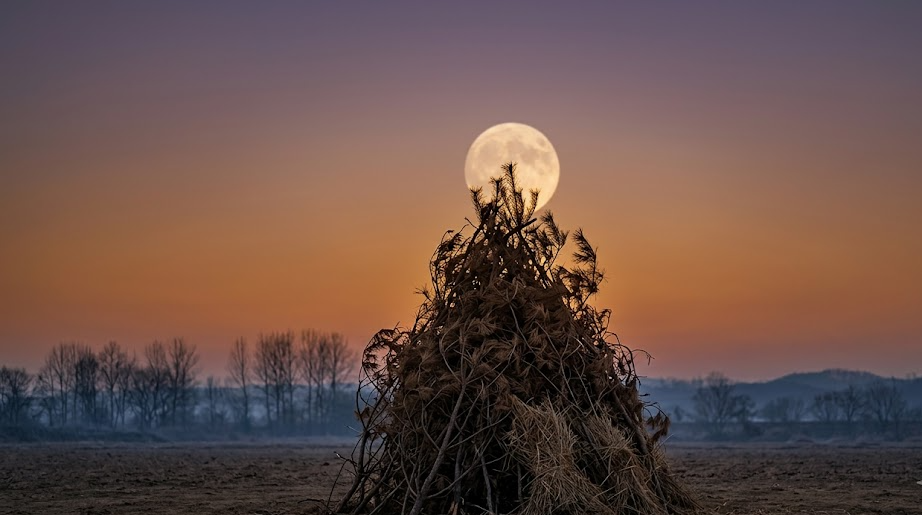
The most striking item on the program is the daljip burning. When fire is set to a pile of fresh pine branches and bamboo tied into a cone, the dry leaves catch first, acrid smoke rises, and the bamboo joints trapped inside burst one after another. The old reckoning behind this custom was that those bursting sounds drove off evil spirits.
During the daytime, a traditional games festival is laid out alongside. Spreading a yut board, kicking a jegi, jumping on a neolttwigi seesaw, these games use simple equipment, so even a child picking them up for the first time gets the feel of them in a few minutes. The fact that what lands in your hand is wood, straw and cloth is also a sensation you find only at events like this.
There is an interesting point in the path by which seasonal customs have survived until now. Daeboreum was a seasonal marker attached to the farming calendar, so in cities where the fields have disappeared it is an event that should long since have lost its rationale. That the festivities are nevertheless set up every year in densely residential areas like Geumcheon and Nowon is probably because the wish for a good harvest has shifted into time spent learning the faces of neighbors.
Daejeon's approach of splitting the event across 46 sites shows this change clearly. It means the city chose to light a small fire in each neighborhood instead of gathering in one place. The circumstance that older residents and children come out together only when the event is within walking distance is also part of this.
The tension between preservation and use always trails events like these. For games that involve lighting fires, the scale and the hours are adjusted every year because of air quality and wildfire risk, and in that process the procedures closest to the original form are sometimes reduced. Yet replacing it with a Daeboreum without fire removes the channel for learning with the body what this custom was. It is a contest neither side can easily win.
If you plan to go, checking the notices from your district or dong office is the surer route. Even within the same three days, the starting times and the detailed order of events are arranged differently by area. Since the program includes the handling of fire, it is safe to keep your distance and watch as the on-site staff direct.
The Daeboreum fire dies down within an hour, and by the next day only ashes remain. The fact that neighborhood residents gather pine branches and raise the timber for days beforehand, all for that short span, is closer to the substance of this custom. For the first three days of March, we suggest walking to the open lot nearest your home.
Event information
Dates: Sunday, March 1 - Tuesday, March 3, 2026
Venues: Geumcheon-gu and Nowon-gu in Seoul, Incheon, 46 sites in Daejeon, Dalseo-gu in Daegu and other village-level sites nationwide
Main programs: daljip burning, traditional games festival