Integrated medical and long-term care, which allows older adults in need of care to receive medical, care and welfare services in the homes where they live, is scheduled to begin nationwide on March 27. Fewer than 40 days remain until the start date. Ahead of the nationwide rollout, local governments have been holding program briefings and capacity-building training for staff in charge.
Sangju in Gyeongbuk held training on the integrated care program on the 11th in the main conference room at city hall, bringing together some 60 staff from the city government, the public health center and eup-myeon-dong offices. It was an arrangement that seated staff from three tiers in one place. The makeup of the participants shows that this program does not end as the work of any single department.
The training was built around four items. Understanding the policy direction and the system of integrated care, establishing the work procedures and roles of the city government, the public health center and eup-myeon-dong offices, use of the integrated care system and the flow of practical processing, and discussion of field application through a question-and-answer session. The first two were time spent explaining the system, and the latter two are parts that field staff must learn by hand.
It is worth noting that "establishing roles" was set as a separate item in the curriculum. When one older adult needs home-visit medical care, long-term care and daily living support at the same time, who designs that combination and who takes responsibility for it becomes the quality of the service. Sangju said it would use this training to lay a field-centered foundation for the program and strengthen the system of cooperation among departments and agencies.
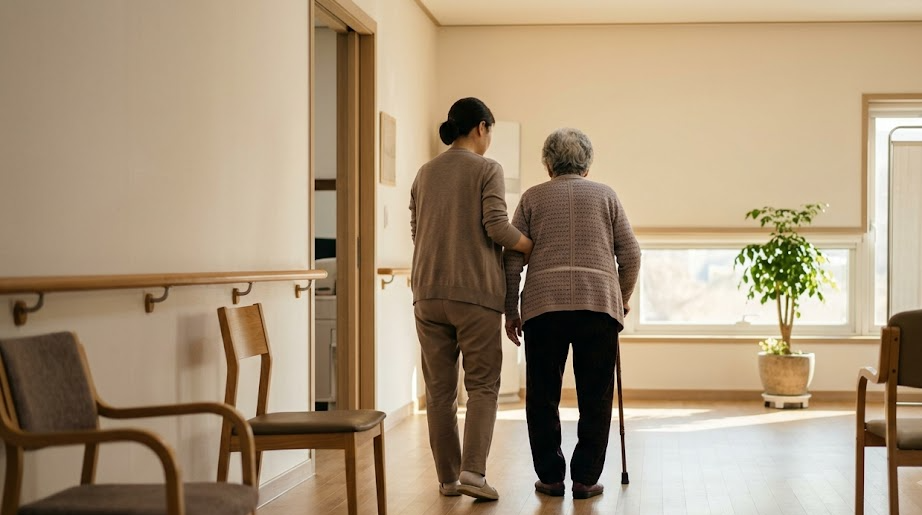
The point where integrated care diverges from existing welfare services lies in the fact that recipients do not have to move. Until now, older adults had to apply for medical care at a hospital, long-term care at a care institution, and living support at yet another office. Under integrated care, the administration takes on those connections.
The list of services also includes home repairs and meal delivery. It is easy to think only of medical services, but lowering a threshold and installing a handrail prevents one fall and cuts the path by which that fall leads to admission to a care facility. Application requirements and support limits are in the stage of being finalized by region.
Designs tailored to local circumstances are also emerging. Hongseong County in Chungnam is pursuing a "Hongseong-style integrated care" model that reflects local characteristics. With rural and urban areas, aging rates and the distribution of medical institutions all differing, it judged that there are gaps a single nationwide manual alone cannot fill.
In the end, what residents meet is not a policy document. It is one staff member at an eup-myeon-dong office. How well that staff member knows the system, and how often they call the department next door, changes the winter of one older adult.
After March 27, the first question older adults and families who want to stay in the homes where they live should ask is simple. Who at our neighborhood community service center is in charge of integrated care.