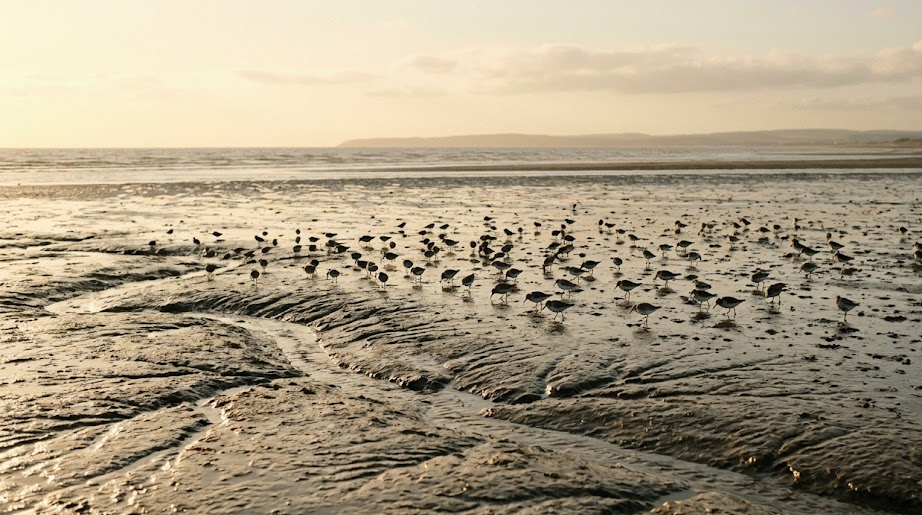
The Phase 2 extension of 'Korean Tidal Flats' was confirmed on July 25, 2026. The decision came at the 48th session of the UNESCO World Heritage Committee. Seosan, Yeosu, Goheung and Muan were newly added. In Yeosu, the Yeojaman tidal flat was included.
Among Korea's 15 World Heritage properties, this is the first time a boundary has been widened and rewritten. Buildings and royal tombs have their form fixed the moment they are inscribed. On tidal flats the water comes in and out twice a day, and the sediment layer changes thickness with each season.
Lazare Eloundou Assomo, director of the UNESCO World Heritage Centre, said the case was one in which a property was enlarged, not reduced, five years after inscription.
When Phase 1 was inscribed in 2021, the committee attached a condition. It designated the Incheon and Gyeonggi tidal flats as an area, and it also wrote in a deadline of the 48th session. It was a grace period of five years.
Yet Incheon was not among the areas confirmed this time. The places recommended and the places actually filled in did not match, and only the deadline was met.
The tidal flats of Incheon's island areas, including Ganghwa, Yeongjong and Songdo, cover about 728㎢. They are the widest after South Jeolla Province, accounting for 29.3% of all tidal flats in the country. Opposition from fishermen has continued, centered on Ganghwa County, and a Phase 3 inscription is not among the pledges of Incheon Mayor Park Chan-dae.
The International Union for Conservation of Nature (IUCN) recommended inscription in June as it completed its review of Phase 2. The recommendations carried a line strongly advising an application for further phases including Phase 3. The committee's decision of July 25, by contrast, wrote nothing about Phase 3, neither whether it would be pursued, nor the areas involved, nor a deadline.
On the same day at BEXCO in Busan, the Korea Heritage Service, together with UNESCO and the World Coastal Forum, held a seminar titled 'The Journey of Migratory Birds Across Borders.' There the 'Busan Declaration on Cooperation for the Conservation of Yellow Sea Tidal Flats and Coastal Wetlands' was adopted. The participating countries agreed to standardize the methods for monitoring tidal flat ecosystems and migratory birds and to share the data. Control of invasive species such as Spartina, known in Korea as English cordgrass, and climate change adaptation strategies were also placed on the agenda for joint research.
The declaration also carries traces of practical work. The participating bodies agreed to convene a first technical coordination meeting within 12 months so that their work does not overlap with existing international organizations such as the Ramsar Convention or the EAAFP. At the level of the plenary, the 'Busan Declaration of the World Heritage Committee', which makes 'cooperation' the sixth strategic objective, had been adopted earlier.
Heo Min, administrator of the Korea Heritage Service, in his congratulatory address defined the Yellow Sea tidal flats as a space of multinational solidarity linking South Korea, North Korea and China. He also said conservation of the tidal flats is a common task for the international community. There is ground for these words. China inscribed the 'Migratory Bird Sanctuaries along the Coast of Yellow Sea-Bohai Gulf of China' in 2019, and North Korea placed the 'West Sea Coastal Wetlands', centered on Sindo and Mundok, on its tentative list early this year.
The extension was presented in the form of tying the tidal flats of nine local governments into one. The list of those nine places did not come out beyond the address.
Bringing monitoring methods into line with a standard, counting each year the areas where cordgrass spreads, and sitting down with fishermen whose fishing grounds are shrinking do not end with a single sheet of decision text. Conservation is the side that mounts the heritage as a specimen, and use is the side that protects people's livelihoods.
The 48th session closed on July 29. The government's policy on Phase 3 was left as a share to be settled after that.
Busan calls people again this autumn. The 31st Busan International Film Festival runs from October 6 to 15, centered on the Busan Cinema Center, and the full lineup of invited films is released on September 1. If, past the summer when the declaration was adopted at BEXCO, you have reason to head for the same city, it is worth going a little farther west.
At Yeojaman, when the water goes out, the ground underfoot is black and slick, and the salt smell lingers. It was that way before it was called heritage.