18.4 gigawatts. That is the total capacity of AI data centers the government says it will build by 2035. At the public briefing on the "Three Mega-Projects for Korea's Great Leap Forward" held on June 29, plans to foster semiconductors, physical AI and AI data centers were unveiled together. At the briefing the government promised to reach 100GW of renewable energy ahead of schedule, and said it would expand renewables, nuclear power and transmission and distribution networks alike under the vision of an "electricity nation leading the AI era."
It is a declaration to grow power-hungry industries while cutting carbon. This is the first announcement to put both goals in a single sentence.
For the southwestern region, a plan to build a 800 trillion won semiconductor production base was presented. Details such as who will invest and when the money will be spent were left to be filled in by follow-up plans. Even so, electricity lies behind the choice of the southwestern region as the site.
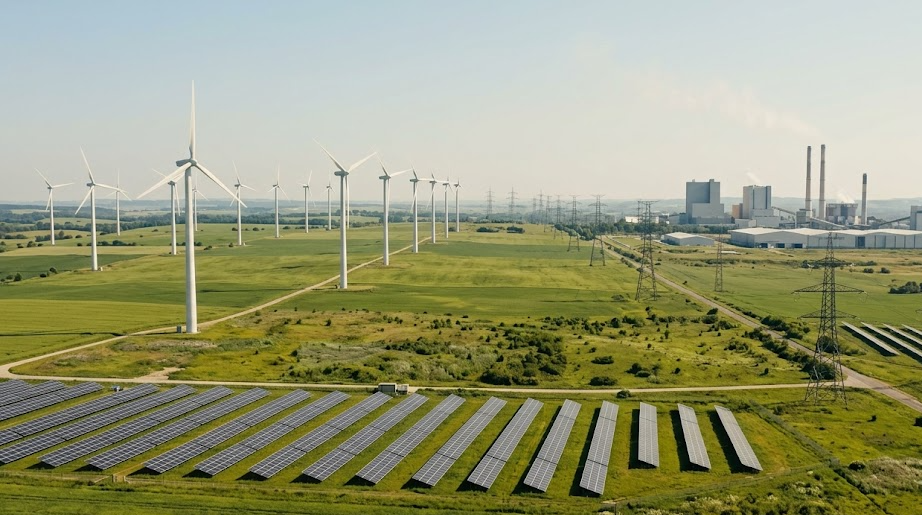
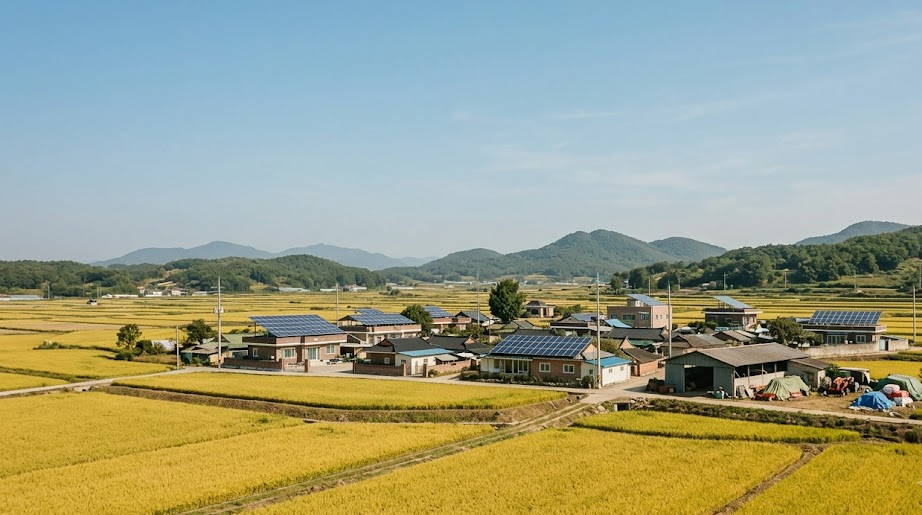
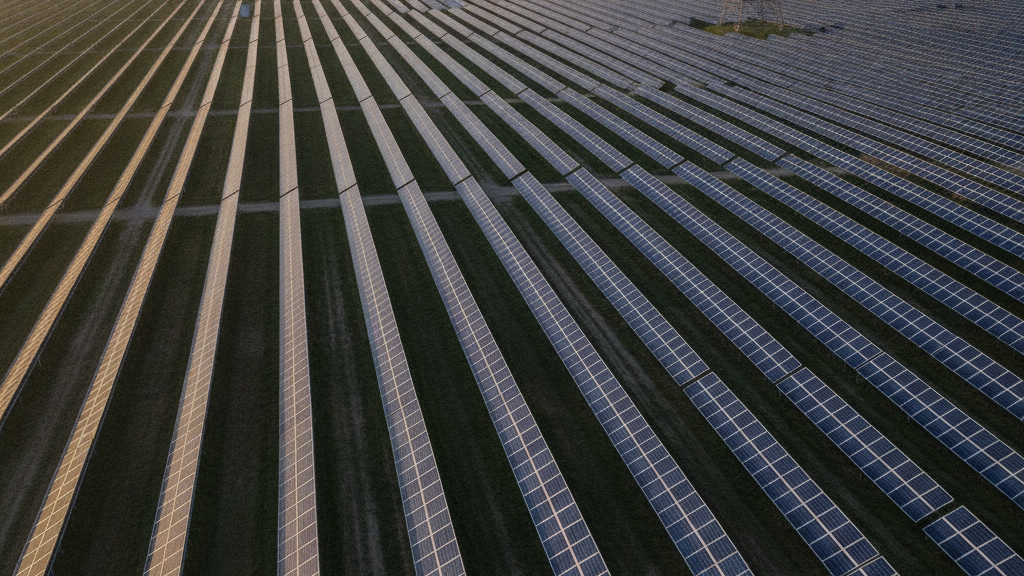
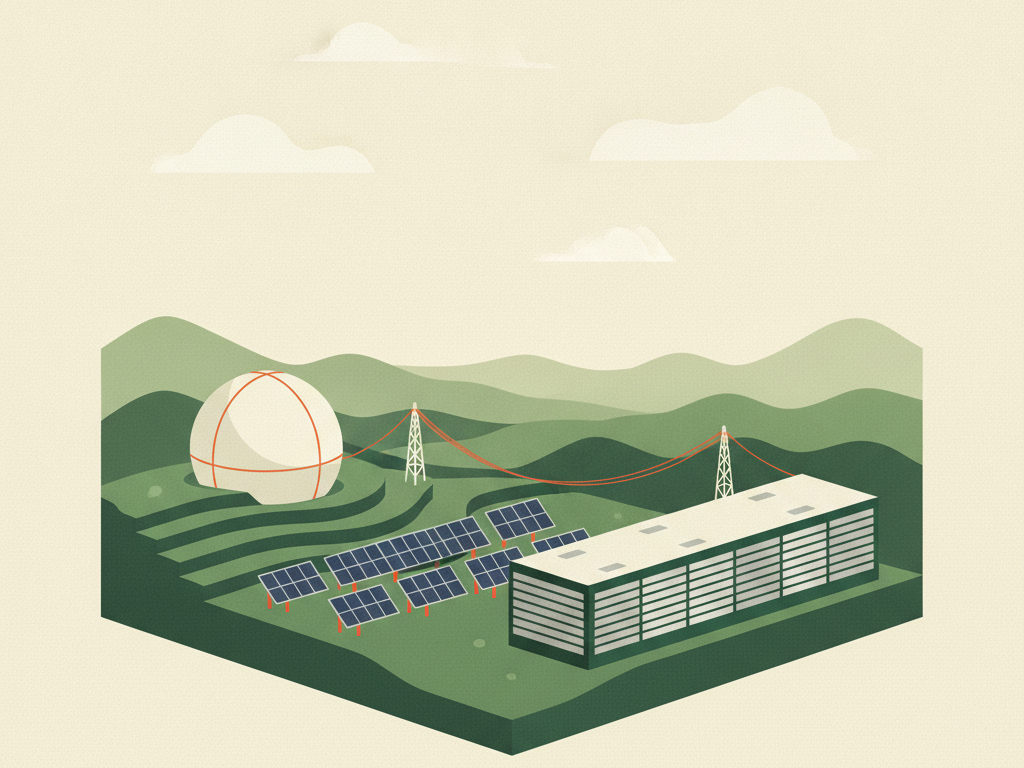
According to Korea Electric Power Corporation (KEPCO) statistics, solar power nationwide stands at about 32GW, and Honam accounts for 11GW of that, more than a third. The Hanbit nuclear plant in Yeonggwang adds about 5GW. Honam's generating capacity, nuclear and renewables combined, is more than three times the electricity the region uses. The idea is to place industries with large power demand in a region with surplus power.
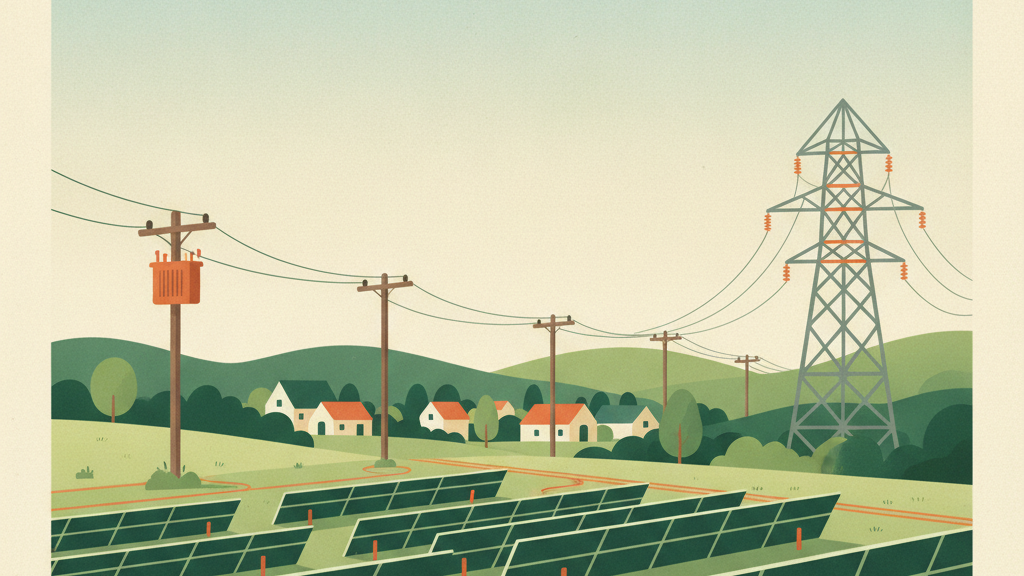
The sticking point is the lines. The Korea Power Exchange has projected that 12 of the 13 transmission lines in the Honam region will reach saturation by 2030. If the channels for carrying surplus electricity are blocked, expanding generating capacity is of no use no matter how much is added.
The government has decided to build additional transmission lines in Honam by 2030. For data centers, which need power that never cuts out around the clock, this construction schedule becomes the business schedule.
Assessments differ on the variability of renewables. On one side is the concern over whether semiconductor fabs can run on electricity that only comes when the sun is up, and on the other is a proposal to absorb that variability on the demand side. A literature review paper submitted to the international journal "Renewable and Sustainable Energy Reviews" by a research team of Professor Yu Sun-bin of Sungkyunkwan University, Professor Choi Sung-jin of the University of Minnesota and Professor Kim Do-hyung of Kyushu University pointed to the latter. It is "carbon-aware scheduling," which shifts work that is not time-critical, such as training AI models, to daytime hours when solar power is pouring in.
Market pressure is already at work. Apple said in 2020 that it would run its entire product manufacturing process on 100% renewable energy by 2030, and from 2022 it included efforts to use renewable energy among the main criteria when selecting component suppliers. More than 300 suppliers, including Samsung Electronics and SK hynix, have pledged to secure more than 20GW of renewable energy.
In the United States, Google, Microsoft and Amazon are signing long-term power purchase agreements with generators and applying the same standards to their partner firms. For Korean companies, renewable energy is closer to a condition that must be met to win orders.
Europe walks this road a little ahead. In 2025 the share of renewables in EU electricity generation was 47.3%, up 0.1 percentage point from the previous year. Wind was the largest at 37.5%, followed by solar at 27.5% and hydro at 25.9%.
Solar grew 24.6% in a single year, while hydro fell 11.8%. Denmark has risen to 92.4%, while Malta remains at 16.2%.
Criticism has also emerged. The Institute for Green Transformation pointed out that the announcement left out principles on how big tech will secure renewable energy and how data centers will reduce their cooling water consumption. By the institute's estimate, if 8.4GW of data centers are running by 2029, cumulative greenhouse gas emissions through 2035 will reach 85 million tons.
The figure comes with the caveat that it applies an optimistic emissions factor. The EU's mandate to disclose data center electricity and water use, and Germany's introduction of a provision requiring 100% renewable energy supply, came out of the same concern.
What decides the outcome is not so much the 100GW target as by when, over which lines and to whom it arrives. In the second half of the year, follow-up plans on power supply and demand will be discussed one after another. If the sections and capacity of Honam's transmission lines are disclosed in that process, it will become clear whether this declaration was a slogan or a blueprint.
Do the cloud services and search companies you use disclose where they procure their electricity. Once the list splits into companies that disclose and companies that stay silent, that list pushes the next policy forward.