
The Korea Heritage Service has selected the Korean National Commission for UNESCO as the implementing body for its project on "Building Climate Change Response Capacity for Cultural Heritage in Greater Accra Region, Ghana." The subject is the UNESCO World Heritage site "Forts and Castles, Ghana." Six sites, including James Fort and Ussher Fort in the southeastern Greater Accra region, fall within the scope of this partnership. Through 2030, over roughly five years, the two organizations will support condition surveys and the drawing up of climate change response measures.
Ghana's forts and castles were built along the Atlantic coast between 1482 and 1786. Twenty-eight castles and forts are scattered across a stretch of about 500 km from Keta to Beyin. In 1979, this coastline was the first site Ghana placed on the World Heritage List.
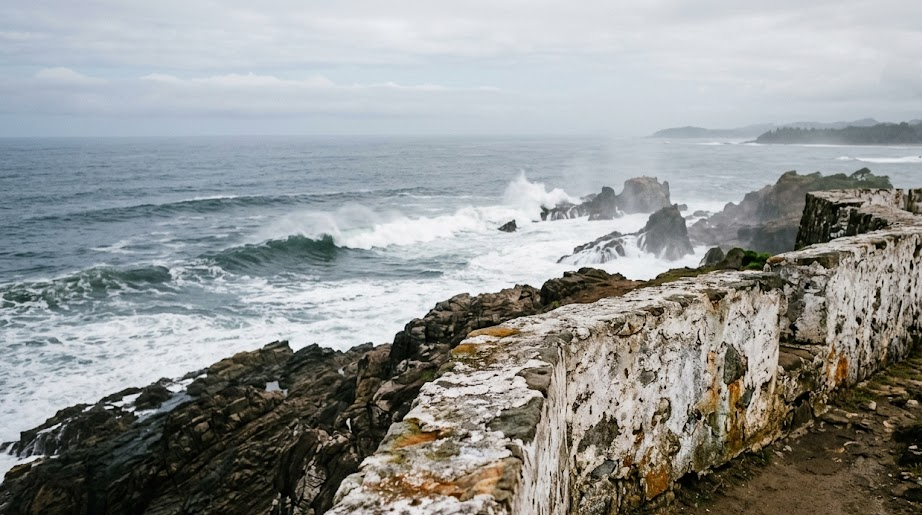
The walls, laid in stone and lime, have stood on the Atlantic coast for more than four hundred years. Part of a roof was torn off and blown away by high winds in 2019, and in the heavy rains of 2021 and 2022 outer walls collapsed or were submerged. Neither the extent of the damage nor the cost of repairs has been disclosed.
The warnings did not appear suddenly. According to the Korea Heritage Service's terms of reference, reports that rising rainfall, rising water levels and the frequency of high winds seriously affect the preservation of the forts have been coming in since 1996. Observations accumulated over nearly thirty years became the starting point for this project.
The project includes drawing up climate change risk forecast maps and setting up a standing monitoring system. It is work that gauges in advance which walls get wet fastest in which season, and which roofs cannot hold at which wind speeds. Rather than repairing after a collapse, the aim is to act before one happens.
The Korean National Commission for UNESCO described the project as the first case in which Korea's cultural heritage official development assistance has been attempted in the field of climate change. Until now, Korea's heritage assistance has concentrated on surveying, repair and training. With climate entering as a variable, preservation has become hard to treat as something that ends within one country.
With only six of the twenty-eight sites falling within this scope, the question of who will examine the condition of the remaining sites, and in what order, remains. The division of roles between the Ghanaian lead agency and the Korean side has not been settled. Making sure the forecast maps do not become grounds for pushing particular sites off the priority list will be the practical crux of the work.
Choi Hwi-young, Minister of Culture, Sports and Tourism, met Director-General Khaled El-Enany at UNESCO headquarters in Paris on the 16th, local time, to discuss expanding cultural heritage cooperation, and the 150th anniversary of the birth of Kim Koo, designated a UNESCO anniversary, was mentioned at the meeting. The 48th session of the UNESCO World Heritage Committee will be held in Busan next month.
The launch ceremony in Ghana is set for this coming August. In October and November, on-site staff who manage the forts will visit Korea for training. The experience of the managers who have watched over the 500 km stretch from Keta to Beyin is to be reflected in the discussions at the Busan meeting in July.