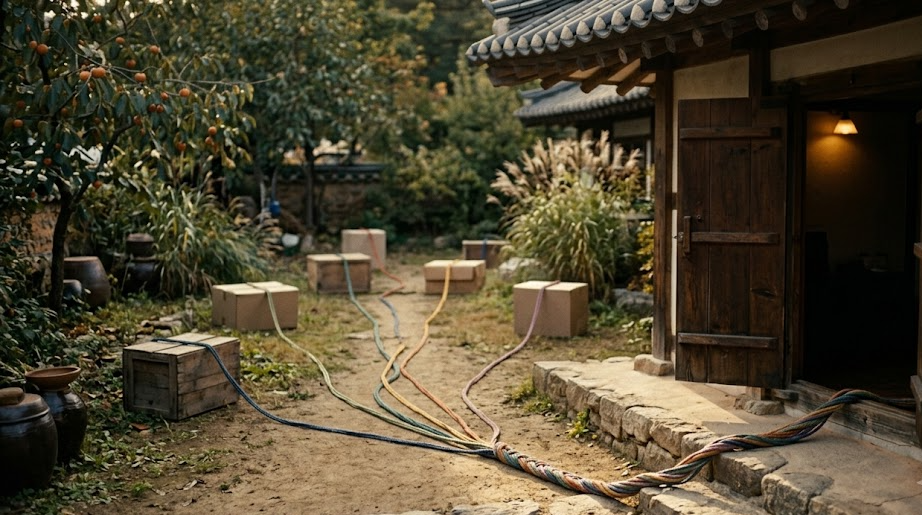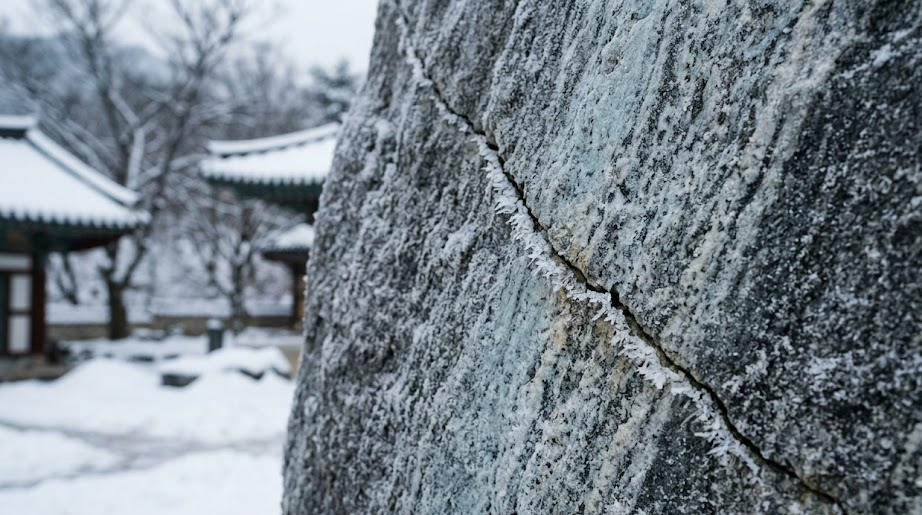
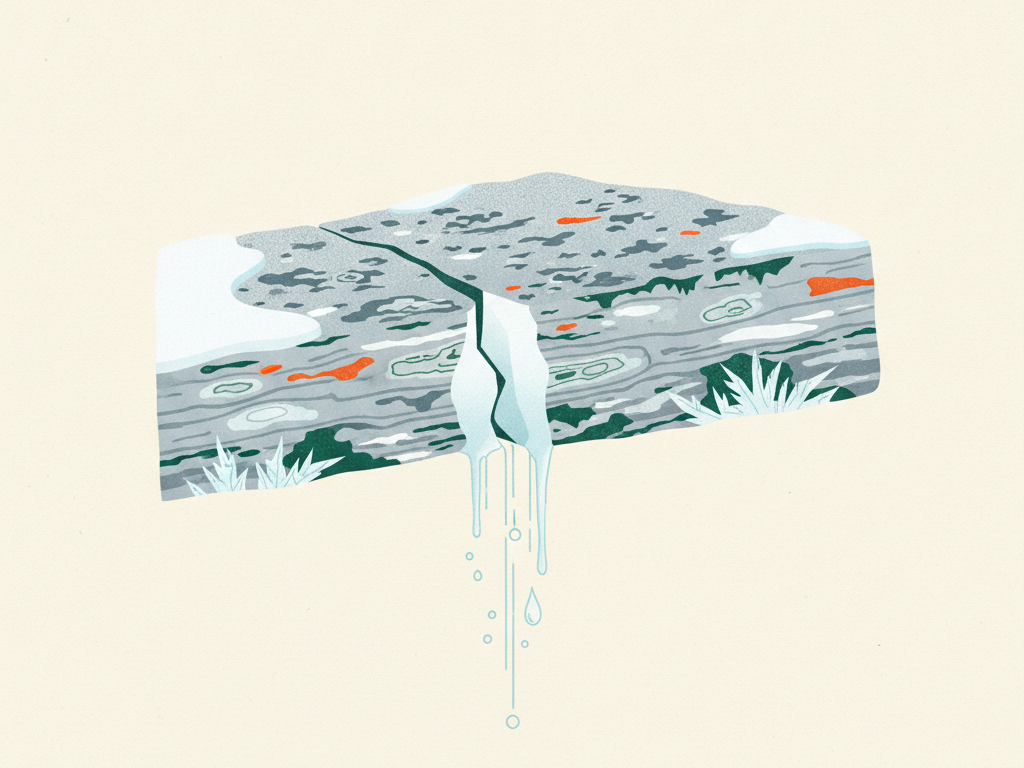
The cracking of a stele that has endured a thousand years does not come like a bolt of lightning, but proceeds over many winters. Water that seeps in overnight freezes and expands in volume, and fine cracks accumulate along the grain of the granite. The news that the Nangwon Daesa Stupa Stele at Bohyeonsa Temple in Gangneung has entered dismantling conservation means that all that time has finally surfaced as visible cracks.
The stele is made of grayish-white granite, and its surface has been wetted and dried over and over. Faced with the fissures that have opened in that body, the heritage authorities chose dismantling and repair. It is the right measure. But the question this raises does not stop at the condition of a single stele.
Climate disaster does not exist only inside forecast models. As cold waves and heat waves come and go, water moves in and out of the stone, and the repetition of freezing and thawing breaks down a thousand years of strength in a few years. Heritage has become a recording medium for the climate, while our conservation system still rushes in only after the cracking. Rather than stopping at improving repair techniques, conservation has to be moved into the domain of forecasting.
The counterargument is not easy to dismiss. The principle that leaving things untouched is the best conservation came out of long experience with failure, and with budgets and staff limited, there is a logic of its own in the order that deals first with objects whose damage has been confirmed. There have been many cases where hasty intervention in the name of prevention lost the original form.
But prevention is different from laying hands on the object. Placing a thermo-hygrometer beside the stone and counting the days of freezing, recording the width of hairline cracks season by season, and clearing the fallen leaves piled in the drainage channel do not touch the original form. If a cracked stone is dismantled and rejoined, the shape comes back, but the body that was one mass for a thousand years does not come back. The fact that repair has a high success rate cannot be grounds for putting off observation.
The tension between conservation and use cannot be glossed over either. If the gates are shut, heritage becomes safe but is forgotten, and forgotten heritage draws neither budget nor people. If people are called in instead, footsteps and handprints and the cost of upkeep every winter pile up together. Observation has to be made close and regular before the extent of opening is decided.
If it is hard to travel all the way to Bohyeonsa, one can pick an old stone in one's own neighborhood and compare its condition in winter and in summer. Checking whether the surface is flaking like powder, or whether a hairline crack has grown longer than last year, is possible without specialist equipment. There is that much to record before the next cold wave arrives.