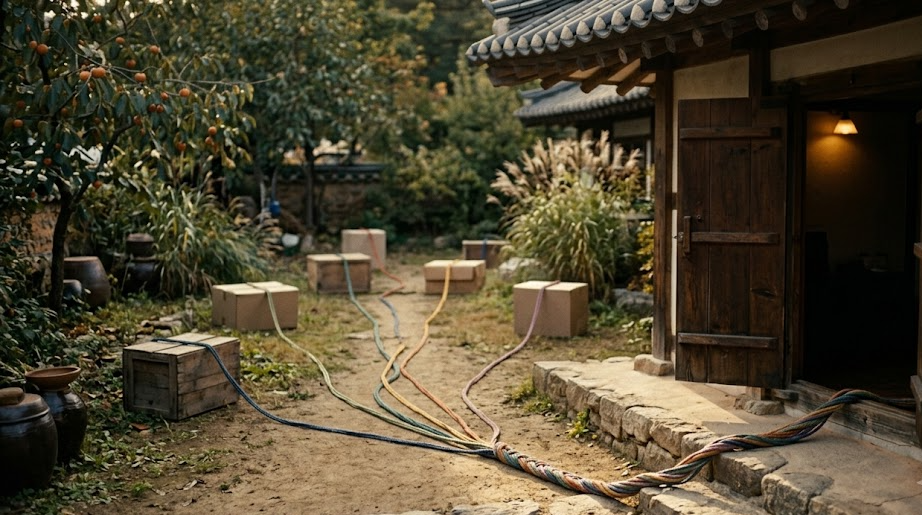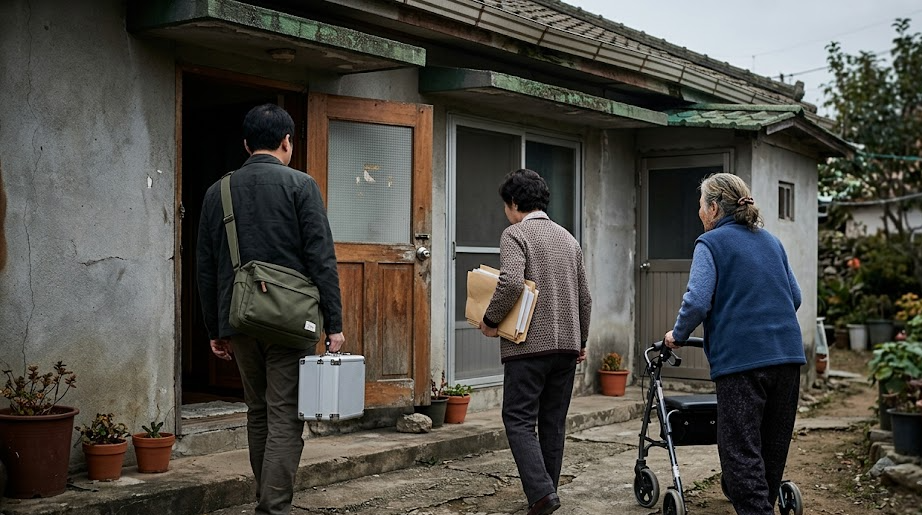
Three people visit the home of an elderly person with limited mobility over the course of a week. One takes a blood pressure reading, one arrives with an application form, one helps with bathing. The three have never met one another, and each leaves a different record about the same person. It is the person living in that home who repeats the same story three times.
Several developments came one after another in this week alone. A plan to increase the number of home medical care centers was announced, a briefing session reviewing the results of public care was held, and in between came voices pointing to conflict between professions. Sentences about budgets and the number of institutions and sentences about awkwardness between people appeared together in the same week.
The success or failure of integrated care does not rest on the number of centers alone. Without the habit of doctors respecting social workers' assessments and medical staff accepting as record the changes that care workers have observed, the system operates only on paper.
The counterargument is clear and strong. Words like trust cannot be measured, and in the end nothing happens without budget and staff. It is a valid point. Care that runs on good intentions without infrastructure is sustained only by grinding down someone's devotion.
Even so, there are more cases on the other side. Even in regions where home visits by doctors are available, welfare officials do not know they exist and the referral breaks down, and observations from long-term care sites do not reach the consulting room, so the same tests are repeated. This is not a gap created by a shortage of resources. It is a gap created because existing resources are invisible to one another.
Reading conflict between professions as individual pettiness leads nowhere. Each profession was trained under different laws and different evaluation standards, and each takes responsibility in a different way. If they are gathered under one roof while it remains unclear who decides and who is accountable, defensiveness comes before cooperation.
Increasing the number of meetings is therefore not enough. A channel through which three professions can view and revise the record on one person together, and an agreement set in advance on whose word takes precedence when opinions diverge. These things are hard to list as line items in a budget, but without them the rest of the budget scatters.
The thing to watch is not how far the number of home medical care centers rises. It is whether those centers start out with rules that seat them at the same meeting table as local welfare and long-term care staff. Those rules are not yet fixed, and they depend on the choices of the people designing the system now.