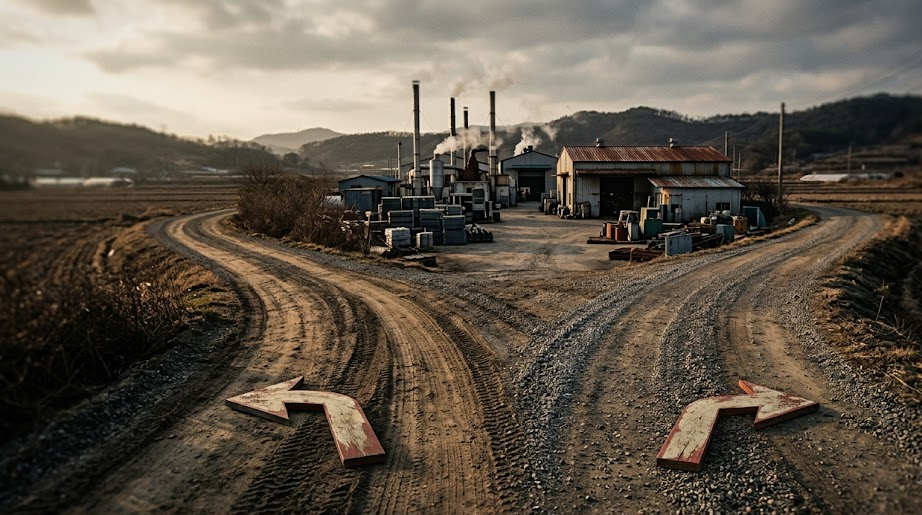
The U.S. Securities and Exchange Commission (SEC) has begun the process of fully repealing its rules mandating corporate climate disclosure. During the same period in Korea, a proposal to place sustainability disclosure on the footing of the Financial Investment Services and Capital Markets Act and write it into law was raised at a public seminar, and midsize exporters held a meeting to argue that European Union (EU) regulations amount to a non-tariff barrier. As disclosure rules move in different directions from country to country, the nature of the burden borne by companies is also changing.
The Korean government has adopted sustainability disclosure as a national policy task. The ESG disclosure roadmap presented through the Financial Services Commission in February 2026 applies disclosure obligations to KOSPI-listed companies with assets of 30 trillion won or more starting in 2028 (fiscal 2027), and to listed companies with assets under 30 trillion won starting in 2029, and makes Scope 3 disclosure mandatory starting in 2031. The roadmap for the Korean Sustainability Disclosure Standards (KSSB) is scheduled to be released as early as June 2026, with the announcement expected next month.
The KSSB is a standardized reporting norm requiring domestic companies to disclose ESG-related risk and opportunity factors to investors. At present there are no standards or disclosure grounds, leaving companies to decide on their own, and it has been pointed out that there is also no means of sanctioning false disclosure. Information released in the absence of a norm gives investors little basis for comparison.
Chung Jun-hyuk, a professor at Seoul National University, said at an international seminar held by the Korea Accounting Institute on May 28, 2026, at the Conrad Hotel in Yeouido, Seoul, that the Financial Investment Services and Capital Markets Act should be used as the foundation for legislating sustainability disclosure in order to secure both international alignment and corporate acceptance. The view that separate standard-setting and interpretation bodies are needed was also presented at the seminar. The EU is implementing the Corporate Sustainability Reporting Directive (CSRD), and the ISSB standards are settling into place as the basis for disclosure systems in major countries.
The side that actually feels the burden is the middle tier of the supply chain. The Korea Federation of Middle Market Enterprises held a "Midsize Enterprise ESG Response Meeting" with the Ministry of Trade, Industry and Energy on May 28 at the Nine Tree Premier Rokaus Hotel in Yongsan, Seoul. Midsize companies supplying automotive, electronics and machinery parts, including Seoyon E-Hwa, Dong-A Eltek and Dain Precision, attended and reviewed supply chain ESG risks.
The participating companies said that EU regulations such as the Carbon Border Adjustment Mechanism (CBAM), the Corporate Sustainability Due Diligence Directive (CSDDD) and the CSRD, along with the institutionalization of mandatory domestic ESG disclosure, have arrived at the same time, increasing the burden of data, personnel and operating costs. They asked for practical tools such as standard report formats and due diligence checklists. The federation's policy division head noted that Japan and Australia are also pushing ahead with the introduction of ESG disclosure systems.
The government's response rests on sector-by-sector support. Under the Comprehensive Sustainable Management Policy (2026-2030), the Ministry of Trade, Industry and Energy selects key sectors such as shipbuilding and defense each year and provides ESG information, level assessments and consulting as a package. In 2026 it plans to provide supply chain ESG due diligence consulting to 500 small and midsize enterprises. In the public sector, ESG-related items in the integrated disclosure system (ALIO) have increased to 41.
An assessment was also presented that gradually mandating external assurance (third-party verification) to guarantee the reliability of disclosed information is an international trend. The stages and scope of application of the U.S. repeal process have not been settled, so how the outcome will come back to Korean exporters depends on the conditions. In the stretch where EU regulations and the domestic mandatory timetable overlap, the less a company has established a data collection system, the narrower its capacity to respond.
Looking only at the domestic timetable, the next turning point is the KSSB roadmap. Whether this document, slated for release in June, keeps the phased dates of the February roadmap intact, and how it draws the scope of Scope 3 application, will determine the preparation period for parts suppliers. The companies seated at the meeting table asked for reporting formats rather than a grace period.