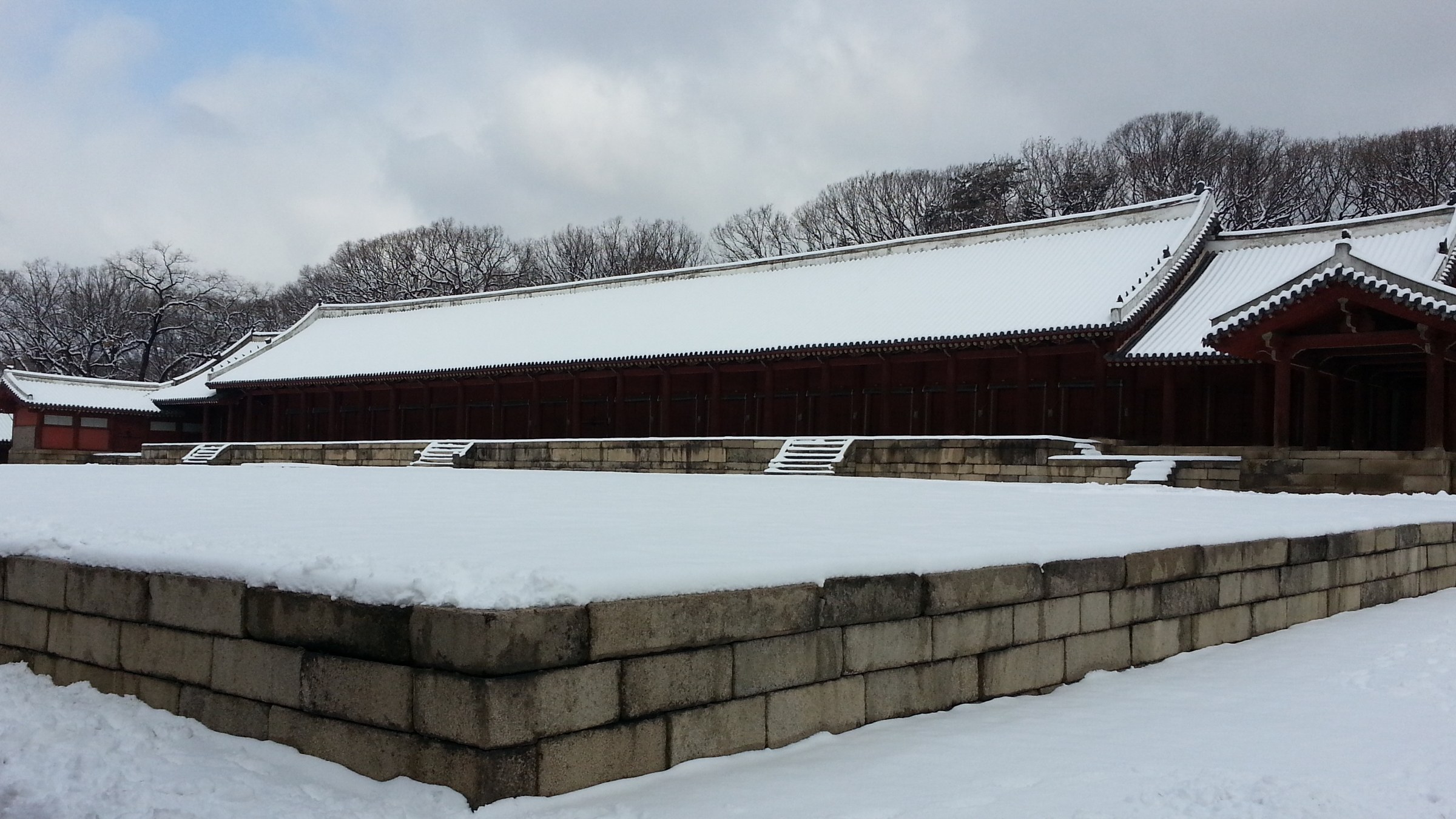
The roof of Jongmyo's Jeongjeon hall was extended one bay at a time, so its end is hard to make out. Step onto the stone-paved courtyard and a dry rasp rises from underfoot, and after the rain clears, the smell of wet wood and earth settles low. Follow the dark red pillars, painted without ornate dancheong, upward with your eyes and there is the long line of gray roof tiles, and above it nothing but sky. That sky is now before the courts.
The Korea Heritage Service ordered a heritage impact assessment for the redevelopment plan on the block across from Jongmyo, and Seoul Housing and Communities Corporation filed an administrative lawsuit contesting the order. It is an unfamiliar situation for a public corporation to answer a heritage authority's compliance order with a lawsuit. What is at stake here goes beyond the height of a few buildings. At issue is who decides what will be visible beyond Jongmyo's wall.
The boundary of heritage does not end where the wall ends. What makes Jongmyo Jongmyo is as much the low terrain the building sits on and the empty space with nothing placed above the roof line as it is the Jeongjeon hall itself. The moment that emptiness is assumed to be tradable for development profit, what remains is an exhibit confined within the wall.
The argument on the other side is not weak either. The area across from Jongmyo is an old downtown left to decay for years, housing is short, and holding heights down destroys the economics of the project. That is why the rejoinder comes: is the demand to turn an entire city into a taxidermy specimen?
But an order to undergo an assessment is different from a bar on building. Preservation is not the work of stopping time either. A heritage impact assessment does not decide for anyone what to build or how high, and is closer to a procedure for measuring in advance what changes will occur to the landscape and putting it on record. A wall that goes up skipping that procedure cannot be undone later.
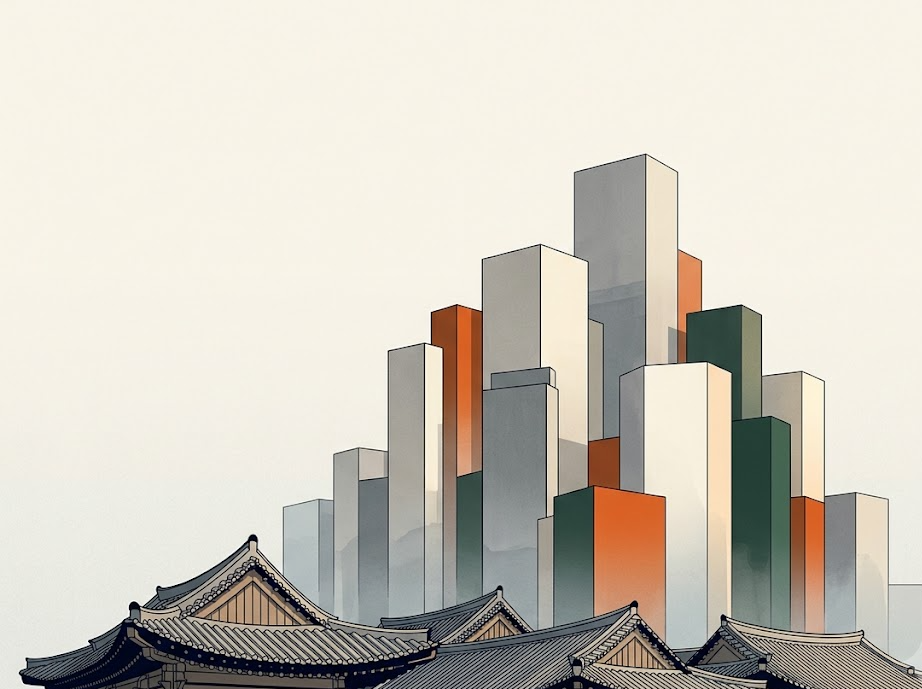
That irreversibility is what separates this dispute from ordinary administrative conflicts. A badly built housing complex can be rebuilt decades later, but for those decades the sky seen from the courtyard is a different sky for good. The belief that World Heritage inscription protects the site on its own is only half right.
Inscription is not a certificate received and set aside. It is closer to a promise to keep protecting, and if the surrounding landscape is not managed, that promise is the first thing to falter.
The dispute will drag on, and design work continues in the meantime. It is better not to forget that some lines harden before the ruling comes down.
Jongmyo can be walked around in one circuit. Walk along the wall, stand in the middle of the Jeongjeon's stone courtyard, and look up once above the roof line. The width of the sky open there is the physical thing now in dispute. The more people who remember whether that width is the same a few years from now, the more the ending of this case changes.