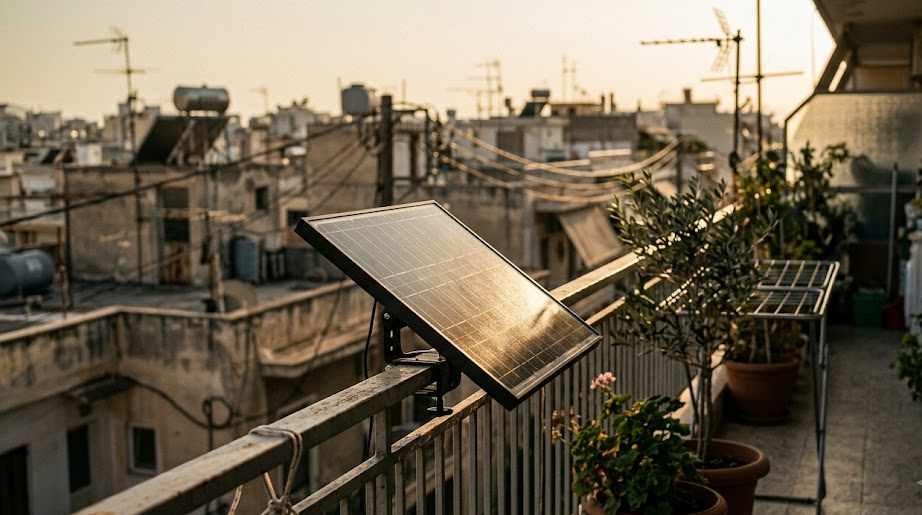
A single panel hangs from the railing of a 12th-floor apartment balcony. The homeowner, who says she installed it out of fear of summer cooling bills, says it has cut a few thousand won a month. It is no great power plant. But in that home, electricity has changed for the first time from something bought into something made.
The government has released its first basic plan for renewable energy. Its backbone is 100 gigawatts of renewable energy capacity by 2030 and investment on the scale of 268 trillion won. Inside it is one item that draws less notice. Balcony solar for two million households.
The measure of this plan is not whether it fills 100 gigawatts. It is how many people it makes feel the benefits of the transition as their own. The government sets the targets, but the strength that sustains the transition comes in the end from the people who share in those benefits.
Two things have always held it back. There is not enough grid to carry the electricity, and it is hard to win the consent of the areas where the facilities would go. Neither bottleneck is solved by technology or budget alone. What is at stake is the feelings of people living in villages that transmission lines must pass through, and on farmland that would face a solar complex.
The objections are clear, and they have grounds. Even if all two million households of balcony solar are filled, their share of the overall capacity target is not large. The point is that against the enormous construction of grid expansion, small-scale generation amounts to a symbol. It is also close to fact that a national power grid cannot be held up by balconies.
Still, the reason this item matters lies somewhere other than generation volume. People who have made electricity in their own homes do not regard transmission lines and power plants as someone else's business. Only as more citizens come to know by feel who pays the cost of the transition and why will the debate on acceptance shift from confrontation to negotiation. Generation models in which local residents share the benefits also gain persuasive force only on top of that feel.
At the same time there is something to watch out for. To say that a single balcony panel solves the climate crisis is an exaggeration, and it is also dangerous to put small facilities forward for publicity while putting off grid investment. The 100 gigawatts and the two million households are not a matter of choosing one. The two hold each other up.
Balcony solar subsidy programs are open in every local government. Before summer comes, it is worth starting by looking up the support notice where you live. A single panel will not change the world, but the person who installed that one panel will sit with a different expression at the next grid briefing session.