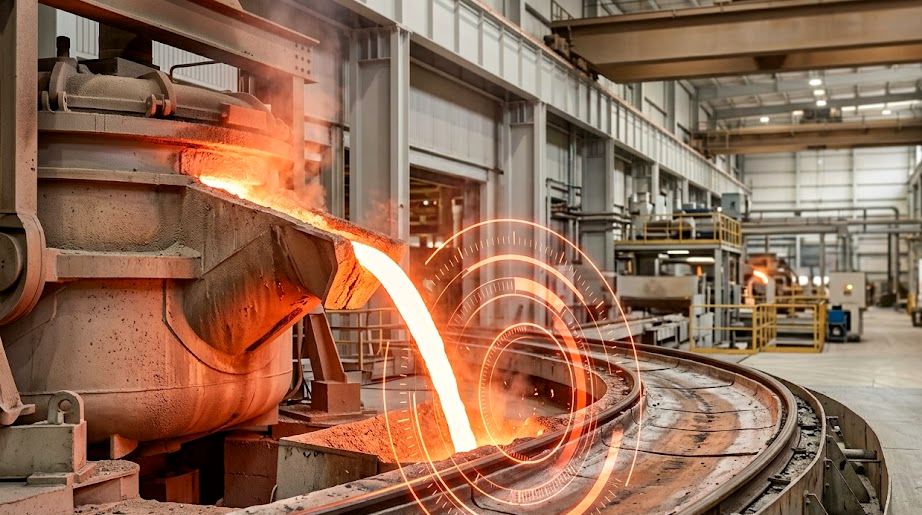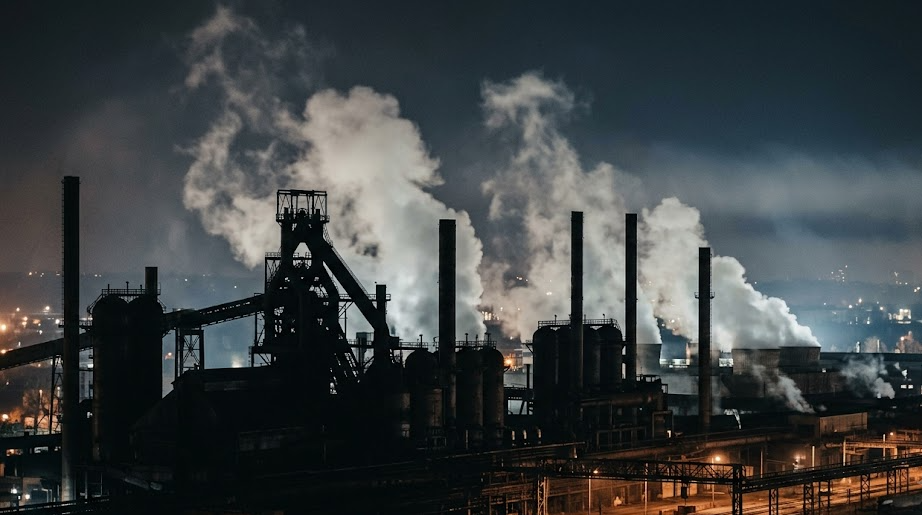
POSCO will start up a new electric arc furnace at its Gwangyang Works in June 2026. It has an annual capacity of 2.5 million tons and applies a molten-metal blending technology that mixes hot metal from the electric arc furnace with hot metal from the blast furnace. The company's own estimate is that the facility will cut up to about 3.5 million tons of carbon dioxide a year compared with the existing blast furnace method. The investment is understood to be around 600 billion won.
The startup date falls in the same period as the regulatory calendar. The Special Act on Strengthening the Competitiveness of the Steel Industry and the Transition to Carbon Neutrality, known as the K-Steel Act, is set to take effect the same month. The law defines steel scrap as a "recycled iron resource" and covers collection, sorting and processing, the building of distribution infrastructure, import diversification and strategic stockpiling, and workforce training.
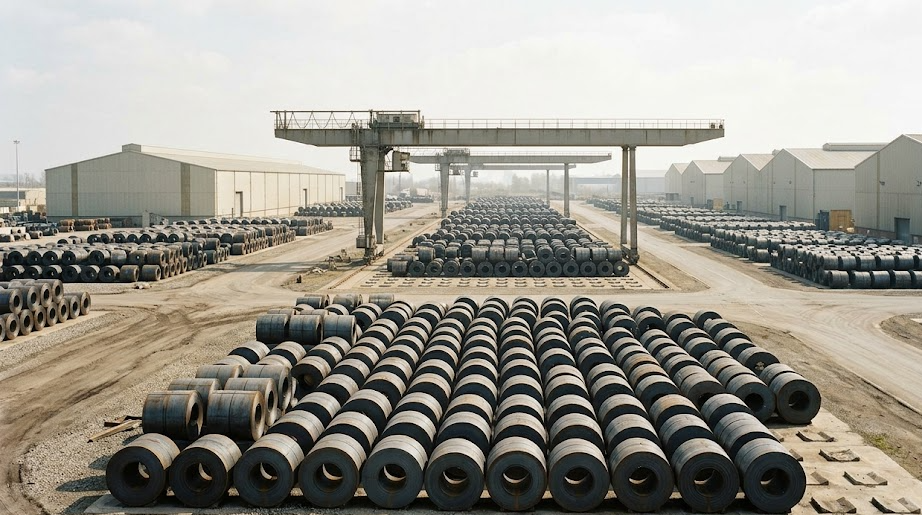
Even as the facility and the law move together, the raw materials market is going the other way. Materials Hyundai Steel presented at its first-quarter earnings announcement show that the price of high-grade steel scrap (Heavy A) rose from $355 per ton (about 529,000 won) in March 2025 to $397 (about 592,000 won) in April 2026. Over the same period coking coal, a blast furnace input, fell from $231 per ton (about 344,000 won) to $183 (about 273,000 won), and iron ore fell from $111 (about 165,000 won) to $108 (about 161,000 won). That means only the raw material for the low-carbon process is getting more expensive.
Product prices have not kept up. Over the same period the wholesale distribution price of H-beams rose only from $1,050 per ton (about 1,566,000 won) to $1,080 (about 1,610,000 won), and the construction benchmark price of rebar (SD400) rose only from $810 (about 1,208,000 won) to $830 (about 1,238,000 won). Hyundai Steel swung to a loss with an operating loss of 72.5 billion won on a separate basis in the first quarter of 2026, citing a rise in input costs driven by a sharp jump in the exchange rate and strong raw material prices.
Domestic procurement conditions are also tight. According to Korea Iron and Steel Association figures, domestic steel scrap generation in 2025 was about 20 million tons against demand of about 22 million tons, a shortfall of some 2 million tons. From May 12, 2026, Hyundai Steel raised the price of steel scrap delivered to its Incheon plant and Dangjin Works by 15 won per kilogram. International market prices and domestic purchase prices use different bases and are hard to compare directly, but the two indicators clearly moved in the same direction.
Facility investment across the industry is continuing. Hyundai Steel, which has a system of 12 million tons of blast furnace capacity and 12 million tons of electric arc furnace capacity a year, started up a combined electric arc furnace-blast furnace process for the first time in the world in 2026 and completed certification for 25 steel grades, with plans to expand to 53 grades within the year. For its integrated steel mill in Louisiana in the United States, it selected Italy's Danieli as the key equipment supplier and decided to install two electric arc furnaces, secondary refining facilities, and two each of continuous casters and reheating furnaces for heavy plate slabs. Dongkuk Steel is developing a Hyper electric arc furnace that cuts power-on time by more than five minutes, targeting commercialization in 2028.
A more fundamental transition will take longer. Hydrogen reduction steelmaking, which POSCO and Hyundai Steel are pursuing as a state-funded project, still needs time before commercialization, so the expansion of electric arc furnaces is proceeding alongside it. HyREX, the Korean technology, passed a preliminary feasibility study in June 2025, and a demonstration plant will be built in Pohang starting this year. Steel accounts for about 17% of domestic greenhouse gas emissions, and the two companies together emitted close to 100 million tons in 2024.
Discussion of who will share the cost is only beginning. Low-carbon steel costs more to produce than existing products, and there are no rules on how to divide that difference. Big Wave, a youth climate organization, held a citizen participation forum called the "Green Steel 100-Minute Debate" at Heyground Seoul Forest in Seoul on May 9, assigning participants six roles: producing company, purchasing company, public investor, private investor, worker, and local community.
The same issue came up on the policy side. The Federation of Korean Entrepreneurs and Seoul National University's Institute for Future Strategy held the "K-GX Strategy Seminar" at the FKI Tower on May 12. Kim Byung-hoon, deputy head of the K-GX planning group at the Ministry of Climate, Energy and Environment, presented GX as a new growth engine, GX for all citizens, and sustainable GX as the basic pillars, and Professor Yoon Je-yong of Seoul National University named expanding the power grid and creating a market for low-carbon products as the key tasks for making this work on the industrial floor. The K-GX public-private task force was launched on January 28, and a government strategy announcement is scheduled.
External pressure is also growing. The European Union's Carbon Border Adjustment Mechanism, the strengthening of the United States' Foreign Pollution Fee Act, and low-price offensives from China are cited as factors pressing the domestic industry to make the transition. In the National Assembly, bills on special reductions in industrial electricity rates have been introduced one after another.
Next month the two currents fall in the same period. POSCO plans to finish final work including facility stability testing at the end of May and then enter mass production, raising output in stages, and the K-Steel Act takes effect at the same time. The reduction effect will be tallied in tons, but which of the raw material buyers, the product buyers, or public finances bears the extra cost of making those tons will become clear at the enforcement decree and budget stages. Gwangyang's first hot metal will come out before that cost sharing is settled.