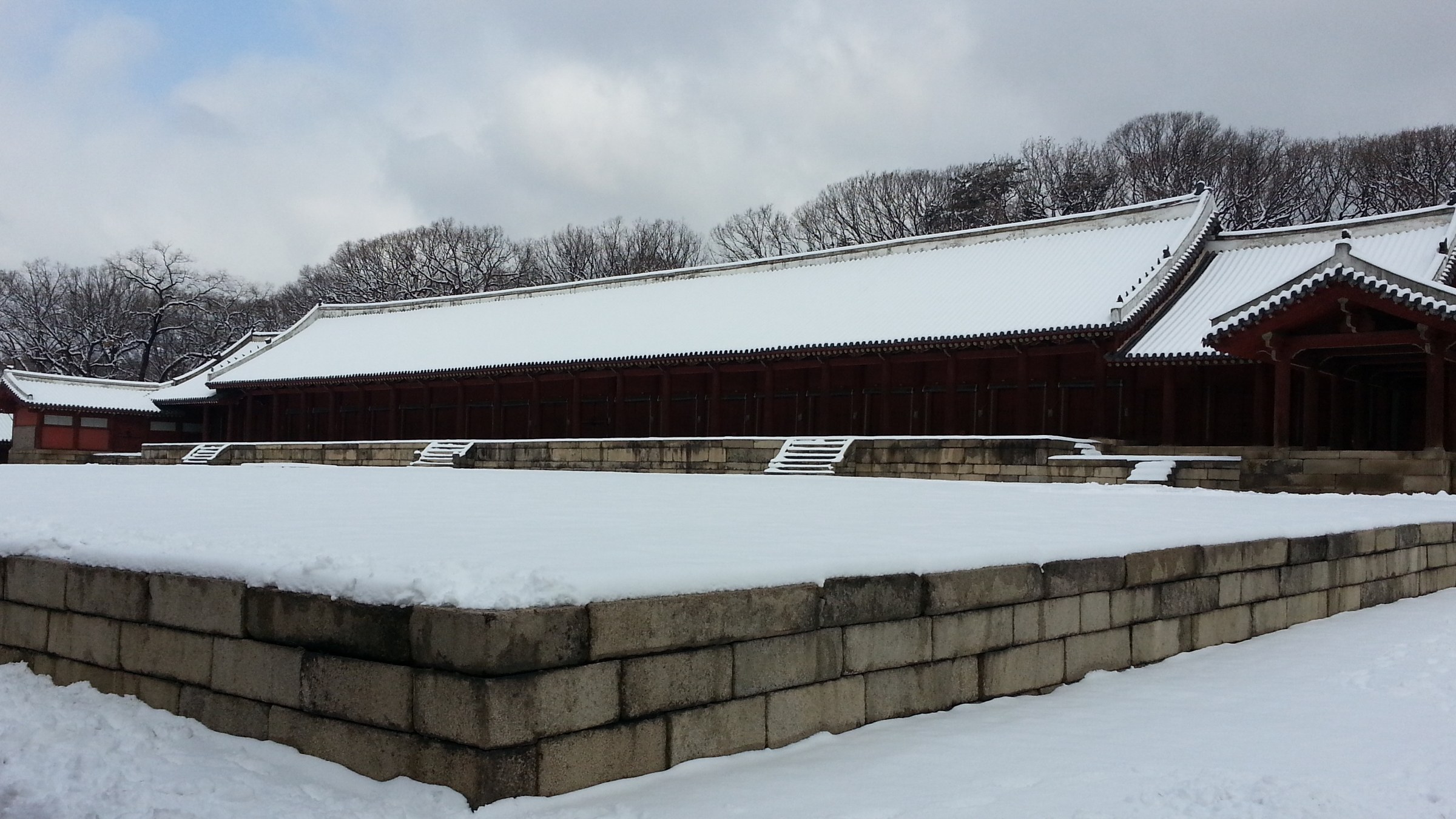
Step on the flagstones and the sound of dry stone meeting stone rises from underfoot. The columns of Jongmyo's Jeongjeon hall bear no dancheong paintwork. Dark red wood, white plaster walls, and low-pressed roof tiles stretch the length of the courtyard, and the day after rain the smell of wet earth lingers long between the stones. What rests above it is only the sky.
At what price will this sky be reckoned? The Korea Heritage Service and the Seoul Metropolitan Government have collided over downtown redevelopment facing Jongmyo. The Korea Heritage Service issued its first formal compliance order, and within two days the administrator's expression of regret followed. Disagreements once exchanged in meeting rooms have moved into documents and public statements.
Read as a win or loss in administrative procedure, this matter shrinks at once. Whether to trade away the skyline of a space where rituals have gone unbroken for 600 years in exchange for development profit is a choice about what a city treats as property. Once height goes up, it does not come down.
Jongmyo's architecture does not make dignity out of height. Lying low and long, it uses the whole of the empty space above it instead. Even if the buildings are not damaged by a single handspan, once the backdrop is filled in, that experience disappears. It means the value of a World Heritage site does not end inside the wall.
The opposing logic is by no means weak. The downtown across from Jongmyo has long been run-down, and to the people who live and do business there, preservation sounds like a demand to shoulder the cost alone. It is true that an entire city cannot be put in a glass case. The longer the regulation lasts, the more the losses pile up only on the people at certain lot numbers.
Yet easing height limits has never been the only path to reviving an aging neighborhood. Options remain: shifting density to other blocks, redrawing public contributions, and having society as a whole share the cost of compensation. A deal that gives up the least reversible thing first because those options are troublesome cannot be a profitable one. Buildings can be built again, and skylines cannot.
Now that the clash has moved into public view, the issue is not who wins. It is whether the mediation process is open, and whether citizens can see what is gained in return for the easing. If the negotiations are sealed off behind closed doors, whichever way the conclusion falls, the city will meet the next case having learned nothing.
On a Sunday morning, pass through Oedaemun gate and stand on the Jeongjeon terrace. Measure with your eyes how far the sky opens empty above the wall. A few years from now, standing in the same place and looking up, you will know without explanation what the city chose in the meantime.