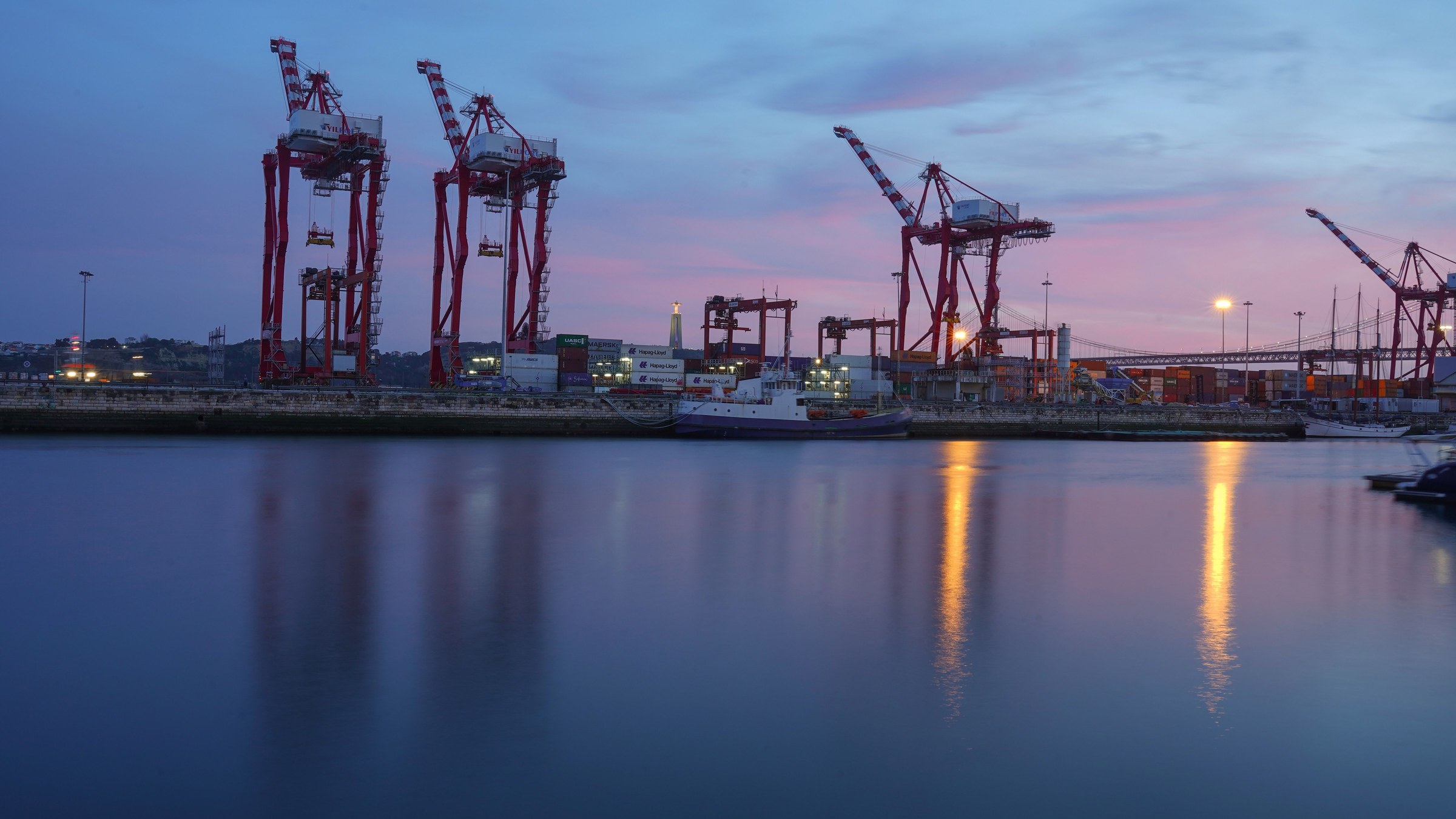
As the sky after sunset shifts from pink to blue, four red gantry cranes stand on the wharf. Their booms are all folded upward, and below them containers are stacked low by color. The water is calm and windless, stretching out the red of the cranes and the orange of the streetlights.
The raised booms mean no ship is berthed here at the moment. Ports are said to run without rest, but in practice they turn on a rhythm in which people and equipment move all at once to match a ship's arrival time and then stop all at once. This photograph is the comma in that rhythm.
The stacked containers generate costs even during that comma. They take up space, they carry insurance, and the goods inside remain someone's inventory until they are sold. How quickly containers leave the wharf becomes a port's measure of skill and the body temperature of the industries it connects.
A small tugboat in front of the wharf, and the bridge and lights running off to the right, tell us this scene is part of a city. That is also why where the power comes from, what moves the cranes, and what is burned while a ship is berthed are named as a port's next tasks.
Looking at the photograph again, what holds the eye longest is not the cranes but the strands of light stretched over the water. The moment those strands begin to waver is the time a ship comes in.