Officials in charge of urban regeneration work in Jeonbuk visited Gangjin County, South Jeolla Province. It was a schedule covering two sites, Byeongyeong-myeon and Gangjin-eup, and the visit was reported as having taken place as of Aug. 28. What they saw was not a picture of newly built buildings drawing in population. It was the way empty houses were opening their doors again.
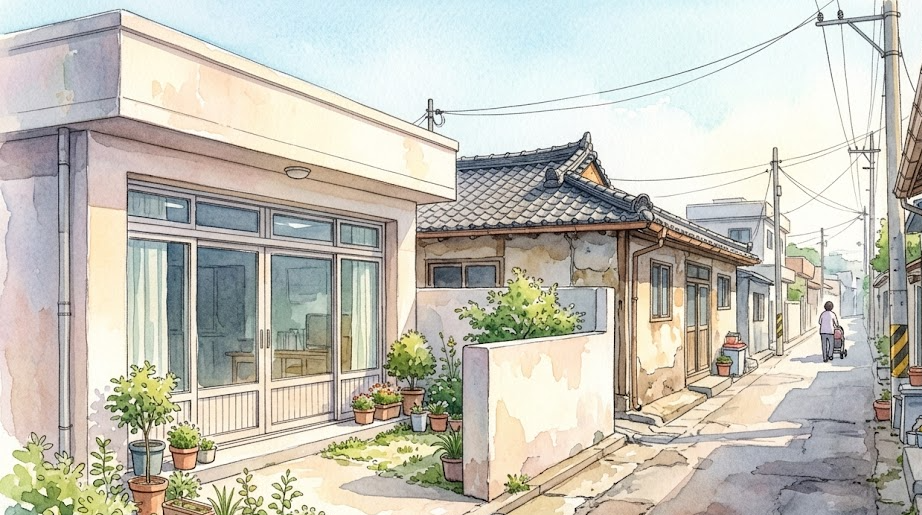
What was presented in Byeongyeong-myeon is a case in which the urban regeneration project and the local extinction response fund were tied together to turn empty houses into a village hotel. Run on their own, the two programs tend to end with one building or one line of subsidy. Here the two were joined to make a space where people stay for several days. How many houses were converted, and how much the project cost, fall outside what has been made public.
Using that space, a youth local-living program called "4 Days City, 3 Days Country: Byeongyeong Stay" is being run. Four days are spent in the city, three in the countryside. Instead of asking people to give up city life and move down, it is designed to let them try living in both places.
A disused grain warehouse in Byeongyeong-myeon is being used as the "Hamel Brewery." A warehouse where grain was piled up has become a place where liquor is brewed. Cases connecting empty houses and idle buildings to youth start-ups, settlement and the local economy were shared during this visit.
Responses to local extinction have long been assessed by population inflow figures. How many people moved in was the report card, and those who filed a move-in report and then left again were not counted on that sheet. The Byeongyeong-myeon approach sidesteps that arithmetic. Ahead of bringing people in, it chose the order of preparing a place for them to stay and work for them to do.

At the site, a village with an average age of 27 was introduced as the youngest village in the country. Which area it is, and when and by what standard the figure was calculated, cannot be confirmed. Even so, it is rare in itself for the average age of a rural village to come down to this level.
Hwang Jong-gyu, a professor at Dongyang University who took part in the screening for the youth village project, said that because this project is a policy with no precedent, short-term results should not be pressed for. It reads as a concern that demanding results on a short cycle will leave visible buildings behind but not people. The village hotel and the brewery alike become empty houses again once guests stop coming.
With discussion of a basic income for farming and fishing villages and the response to local extinction moving along together, the two tracks are different in character. One supports the livelihoods of people living in the area, and the other creates room to try living there. Either one on its own will not get young people to unpack.
What those who visited Byeongyeong-myeon will transplant in Jeonbuk is not known. What needs to be carried over is not so much the form of a village hotel as the decision to reuse what was empty rather than discard it. In Gangjin's old warehouse liquor is still aging, and the young people who return after four days spend three days in the house next door.