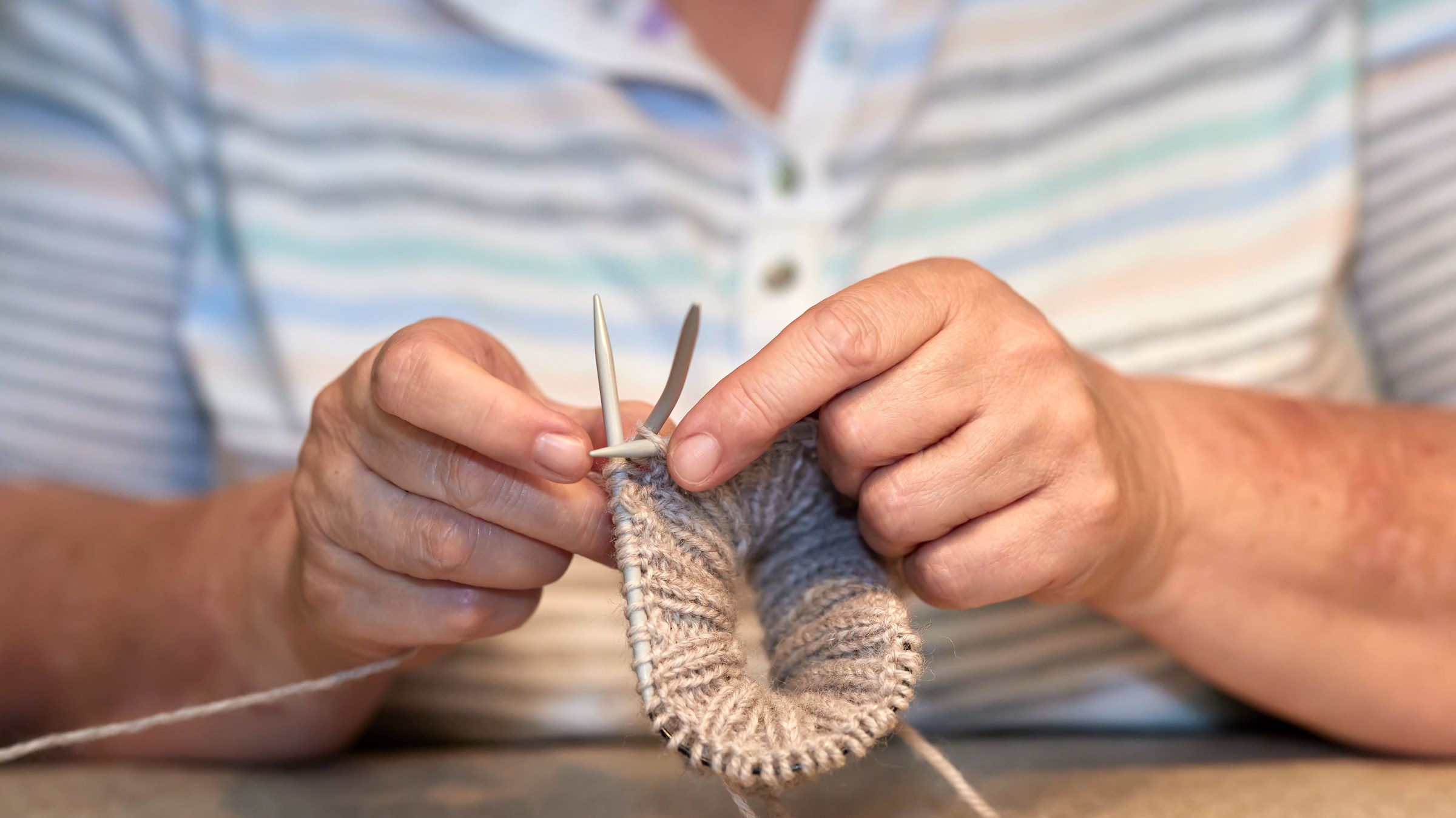
Two hands in a striped shirt hold up a piece of gray knitting. Two wooden needles go in and out between the stitches, and the finished section has become a thick ribbed cuff curled at the wrist. Light from the window falls evenly on the creases of the back of the hand and on the fuzz of the yarn, and a single strand trailing across the desk is as long as the afternoon.
Look at a photo like this for a while and your shoulders come down on their own. As your eyes focus on the single point at the needle tip, your breath grows a little longer, and your fingers move lightly, as if they remember their turn. The soles of your feet go quiet where they rest on the floor.
The more someone's mind is always calculating something, the longer they miss this kind of repetition. There is nowhere for the thoughts to run ahead to, because knitting one stitch carries you forward by exactly one stitch.
What if you handled one thing within reach for just three minutes. You do not need knitting needles. Fold a dry towel, sharpen a pencil, wipe a cup, and leave your body to the order your hands know.
You could also move those same three minutes to the end of the evening dishes. As you stand the shaken-off plates up one by one, look at how much force is in the fingers gripping the rim of the dish. Whether you were holding tight for fear it would slip, or barely supporting the weight. It is enough to quietly compare that force with the hands that were slipping stitches over.
There is plenty of yarn left, and the few rows knitted today are still there.