

Picture a youth center at three in the afternoon on a weekday. There is newly laid flooring, the meeting rooms run on a reservation system, and program notices are posted on the wall. And tens of thousands of young adults in that same neighborhood have never once opened that door. So this article argues for counting why what has been built fails to reach people, rather than choosing what else to build.
This is the season when local governments finalize their 2026 youth policy implementation plans. Every year the number of programs grows, budget line items are added, and new spaces open. In a city where 100,000 young adults live, if a program meets 400 people, it reaches one person out of every 250. For the remaining 249, that program may as well not exist.
This does not happen because the policies are bad. The better the program, the smaller the enrollment, and the smaller the enrollment, the more deeply it can engage participants. Because the engagement was deep, the program survives into the following year, and the surviving program is again run with a small enrollment. A program that runs well and a program that reaches widely are not the same thing.
So the yardstick for measuring performance has to change. Instead of how many programs were opened and how much budget was spent, what goes on the first line of the plan is what percentage of the target young adults were reached. If the reach rate falls short of 1 percent, it may be a well-designed pilot program, but it is hard to call it policy. This is not an argument for blaming the people in charge.
The opposing logic is not easily dismissed. Needs only surface once something has been built, and there are cases where a program that started small took root several years later. Policies that address 100,000 people from the start generally converge on handing out cash, and the point that this alone does not change a young adult's day has been made for a long time. Both are valid points.
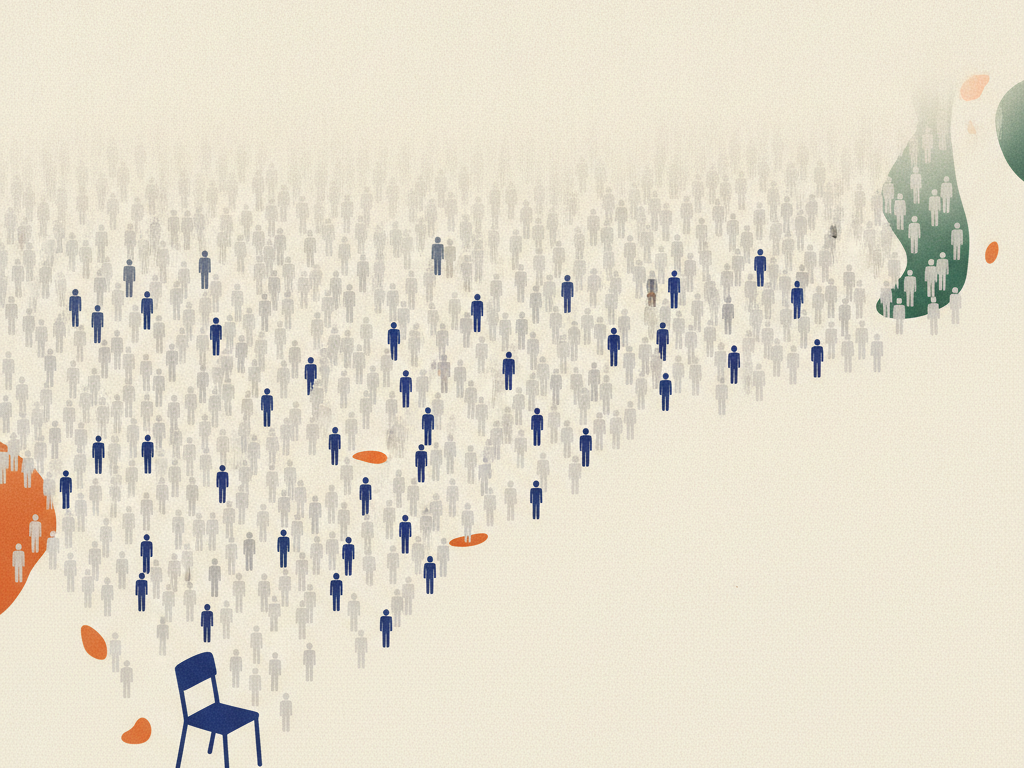
Still, there are questions to put back. Can a young adult working shifts come to a program that only opens on weekday afternoons? Does support requiring five or six documents reach the people who need help most? The claim that word will get out in time is only true for people who can afford to wait that long.
The reasons it fails to reach people are mostly ordinary. To someone with no reason to look at the screen where notices are posted, a notice may as well not exist, and someone who has been rejected once skips the next notice. Being unable to apply because you did not know, and giving up even though you knew because your eligibility was unclear, call for different solutions. It is worth checking how many localities have counted the two cases separately.
The people who are not reached have faces. There is the person who finished school and stayed in their hometown, the person who has been rewriting a resume for months, the person who cannot free up time for an information session because they are caring for a sick family member. Before they are subjects who must prove eligibility, they are neighbors the policy should go out to find. The fact that someone did not submit an application does not mean there is no need.
Once plans are finalized they are made public, and anyone can read them. When opening this year's plan, it is enough to check two figures together. How large is the young adult population this program addresses, and how many of them did it meet last year? If even one plan comes out that counts the people who did not come in, instead of counting the empty chairs, this year will be a different year from last.