The 25th Gwangyang Plum Blossom Festival opens March 6 in Gwangyang, South Jeolla Province. In its twenty-fifth year, the festival is changing how it is run. Rather than packing everything into a date set in advance, it is moving to a "sustainable" model that adjusts the pace of its programs according to how far the blossoms have opened.
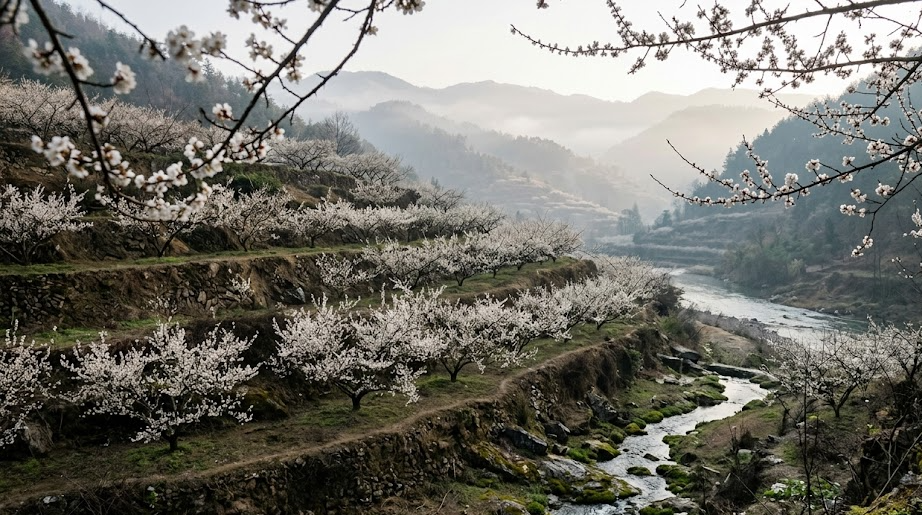
The plum blossom is a flower in a hurry. In late February or early March, while the wind is still cold, the flowers open straight from bare branches before the leaves appear. The petals are thin and white as paper, and if you bring your face close to a branch, a faint sweetness rises through the chilly air. The soil underfoot is still hard, and the sound the branches make as they sway is dry and light.
The problem is that the timing changes from year to year. As the climate shifts, blooming comes early in some years and late in others. A festival with its dates nailed down first ends up taking place where the flowers have already fallen, or beneath branches that for now hold nothing but buds. The decision to use the bloom rate as the standard returns the human timetable toward the rhythm of nature.
There is a tension in this shift. A festival is a matter of drawing people in, and drawing people in requires a date. On the other hand, the plum tree is both a sight to see and a crop that yields plums, and branches trampled or broken come back in the following year's harvest. Adjusting operations to the blooming means shifting a little weight toward the trees' circumstances, between that and the convenience of visitors.
It is uncommon for a spring flower festival to rework its timetable itself for reasons of climate. That is why Gwangyang's decision stands out. If people cannot hasten the speed at which flowers open, the only method left is for people to learn how to wait.
Anyone planning a visit would do better not to set their dates by the opening day alone. This year, the state of the blooming serves as the festival's schedule. The makeup and timing of individual programs will be arranged ahead of the opening.
On March 6, the smell of winter will still linger on the riverside slope. How many white blossoms have opened above it will write the first sentence of this year's festival. Looking up at the branches and counting the progress of the flowers is itself the way this year's festival addresses its visitors.
Event Information
Date: Opens March 6, 2026
Venue: Gwangyang, South Jeolla Province