

Imagine a power plant that has been built but cannot be switched on. The panels take in sunlight, the blades turn in the wind, and the generation figure on the display rises. But if the path out for that electricity is narrow, part of the power produced is simply discarded. Building equipment and making electricity flow are not the same job.
Three moves came at once this week. Renewable energy results began to be reflected in public institution management evaluations for the first time, KEPCO put forward measures to raise grid hosting capacity, and discussion of a legal amendment covering priority grid connection for village communities came up alongside them. Once the evaluation sheet changed, the first response from institutions was to secure sites. It is a response that starts by asking where to build.
But the bottleneck now is not land. In a phase where finding places to build is moving faster than connecting them, a plan that only increases installed capacity is closer to the outward form of a transition. Before adding indicators, the real order is to loosen the bottlenecks in connection and the grid.
The opposing logic has plenty of force. If something is not in the evaluation, no one moves, so pressure is needed to produce results, whether in sites or in capacity. In practice, the new indicator put a long deferred matter on the meeting table. There is no reason to deny that effect itself.
The question is where the pressure points. If unconnected equipment piles up, the results on the evaluation sheet rise while the electricity actually carried on the grid does not. What is left then is performance on paper, and idle assets that only surface some years later.
Voices announcing the end are also overstated. Talk that equates equipment already built with results deserves just as much caution.
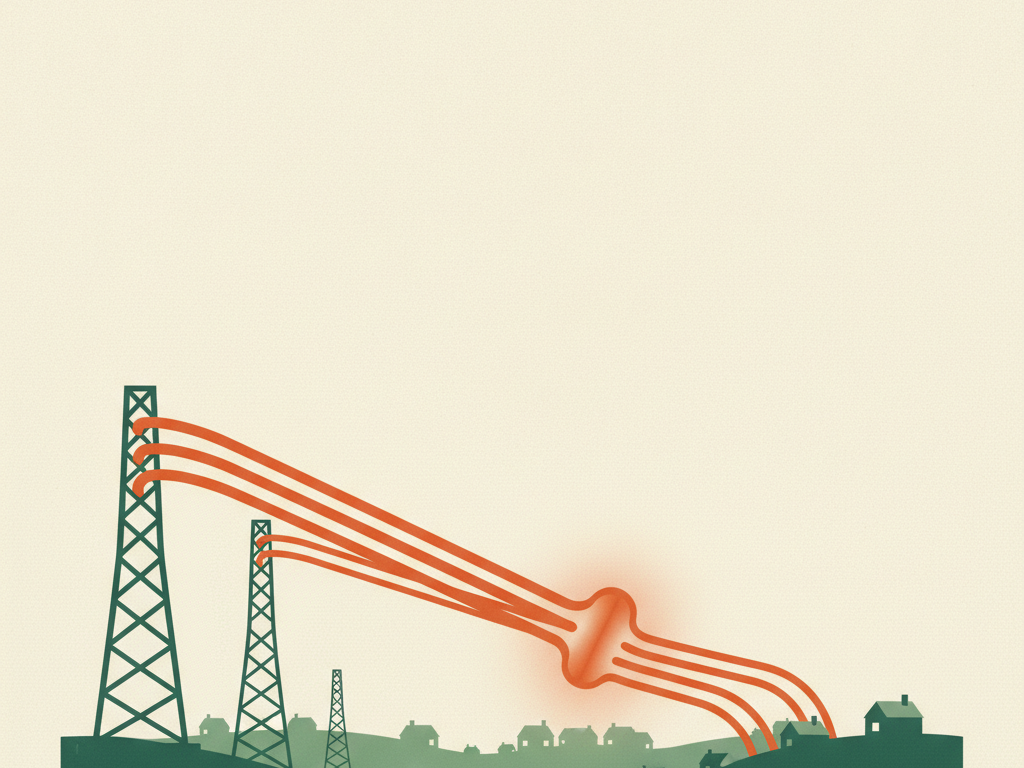
That is why the grid hosting capacity measures and priority connection for village communities are different in character. Neither is a call to build one more piece of equipment. They are a call to make what has been built flow.
Priority connection in particular opens up a place in line for small generation operators who had been pushed back by large businesses and left waiting their turn. Even at a small scale, generation close to the point of consumption does not pass through long transmission sections, so it puts less burden on the grid.
This contrast is not a matter of blaming anyone. Institutions are organizations that move according to the evaluation sheet they are given, and those who draw up the sheet have no choice but to pick items that can be measured. So what has been counted determines what will be done. If items such as clearing the connection queue or the amount actually carried on the grid enter the evaluation, the subject of an institution's first meeting shifts from sites to wires.
The points to watch are clear. How many lines on connection and transmission and distribution go into the implementation plans each institution puts out, and whether the priority connection discussion leads to actual adjustments in the queue. And there is one question to ask at the briefing sessions on generation projects held in each region.
It is which line this equipment will be connected to, and when. The more people who ask that way, the more the order in the plans changes.