

On the way out after taking off the headset, the seat next door is empty. There was no notice that anyone had been fired, and no new person came to fill the empty seat. What happened while one bank's call center shed some 400 agents looked mostly like this. Fear is concentrated on the sentence 'the machine is pushing me out,' but what is actually under way is a matter of whether the people who leave get replaced.
About half of office workers said their own work could someday be replaced by AI. In the same survey, 78% worried that AI would widen job polarization. The two numbers sit side by side but differ in nature. The first is a forecast about what will happen to me, and the second an intuition about who it will happen to first.
The argument of this article lies with that second tally. The problem is which jobs go first rather than how much automation takes place. Generative AI, the technology in which machines produce the sentences and answers people used to write, does not eat into work evenly. It touches first the jobs with fixed procedures, with performance measured in case counts, and with short contracts.
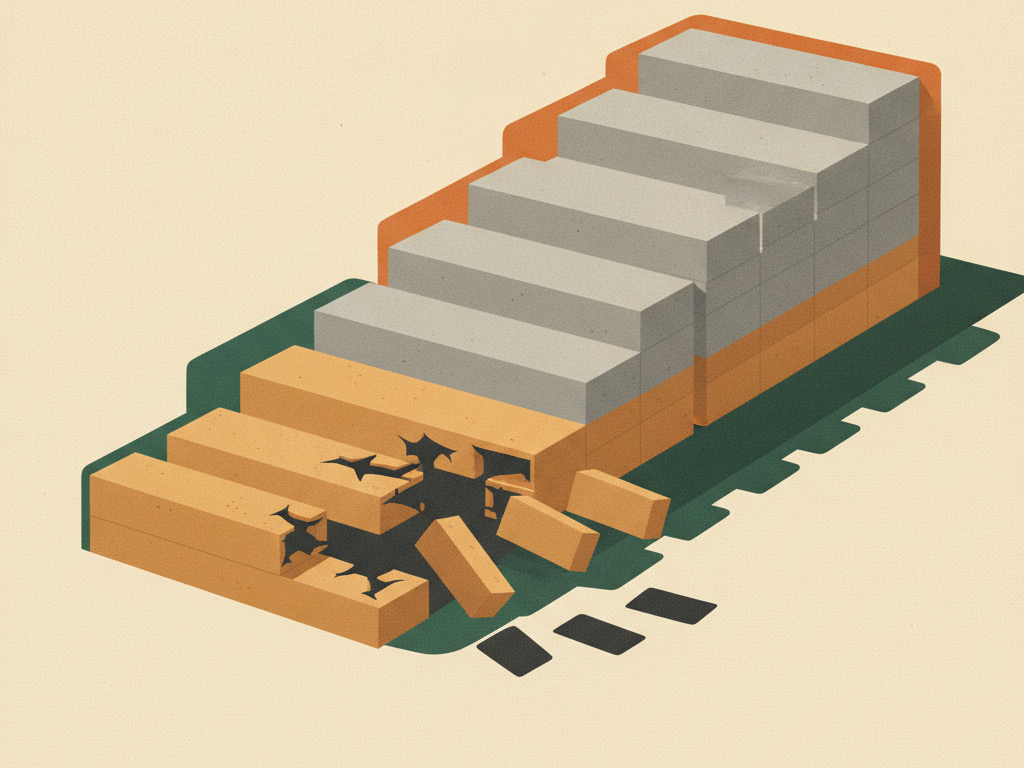
The people who fit those conditions exactly are workers in their twenties, non-regular workers and low-wage workers. The work they handle usually has well-maintained manuals, which also makes it easy for machines to learn. Work at the points where experience has accumulated involves many judgments that are never written down, which makes it hard to use as training material. That is why the same technology arrives as a tool for one tier and as a notice for another.
The strongest counterargument is a familiar one. Technology has always created more jobs than it destroyed, and it will do so again this time. In terms of totals, that may not be wrong. But totals do not answer whether the person who held the position that vanished is the same person who holds the one newly created.
New positions generally appear with a higher threshold attached. Those who lost their place need time and money for retraining, plus income to get through that period, and the shorter a person's contract was, the thinner all three are. The few years it takes for the statistics to regain balance can be a few years an individual never recovers.
On the technology side, what still cannot be done is clear. Calming an angry person, judging an exception that is not in the manual, taking responsibility for a wrong decision remain human work. Detailed official statistics showing how much headcount has actually fallen in which jobs have yet to be released. That gap gets used to keep pushing the discussion off to 'someday.'
So the place to watch is job postings, not unemployment figures. The pace at which entry-level and contract listings quietly shrink is the real pace of this technology. Whose day got shorter and whose day disappeared as each call ran 30 seconds faster, when companies begin to present that bill along with the gains, this change finally becomes something that can be managed.