Prosecutions in cases involving violations of the Occupational Safety and Health Act fell 43.5% over two years. The figure was obtained from the Ministry of Employment and Labor and released by National Assembly member Lee Kun-tae (이건태). Over the same period, reported cases in the industrial safety field handled by the Ministry of Employment and Labor dropped from 3,166 in 2022 to 2,775 in 2024. That is a decrease of 391 cases.
The Yoon Suk Yeol government moved the center of industrial safety policy from regulation and punishment to a "self-regulated prevention system." It is an approach in which labor and management themselves diagnose and improve hazards and take responsibility for the results. The Ministry of Employment and Labor presented this as the core of industrial safety policy. When the shift was decided, labor groups raised objections.
Accidents themselves may have decreased, leaving fewer cases to punish, or accidents may have stayed the same while the hand applying the law loosened.
To separate the two explanations, the trends in industrial accident deaths and injured workers over the same period must be placed in the same table. That comparison table is not in the released figures. Nor does the 43.5% figure specify which year is being compared with which. The absolute number of prosecutions is also missing, so there is no way to know what change in case numbers the percentage represents.
A similar gap remains in the number of reported cases handled. The fact that 391 fewer cases were handled does not by itself distinguish whether workers filed fewer reports or whether the administration processed fewer of the cases it received. The measures needed in the two situations are completely different.
Hazards on site are noticed faster by the workers doing the job than by anyone else. The self-regulated prevention system was designed to make that awareness the starting point of the system. If the design worked, the drop in reports could mean hazards were resolved before the reporting stage. If it did not work, it means more workers concluded that reporting changes nothing.
The parliamentary audit is one of the few venues where this difference can be questioned. If the Ministry of Employment and Labor puts the number of industrial accident deaths in 2022 and 2024, the number of labor inspections conducted, and the number of corrective orders and fines in the same table as the prosecution figures, a determination becomes possible. Adding the 2025 figures would also show the trend.
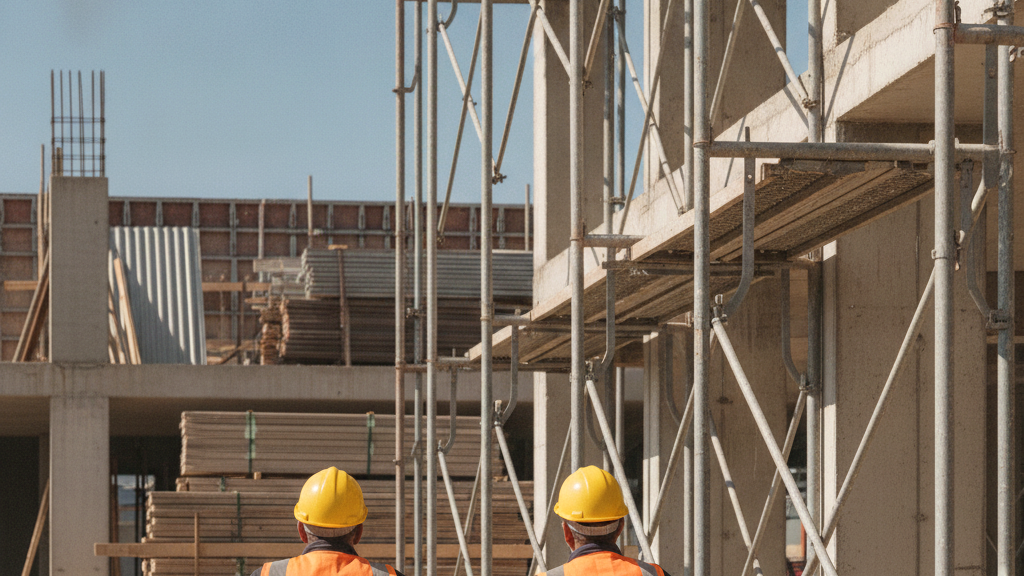
People climbing scaffolding do not look at statistics. They look at whether the footboard wobbles and whether there is anywhere to hook a safety harness. Whether a 43.5% drop in prosecutions is an achievement or a gap is decided on that footboard.