Shinhan Bank's service for loan brokers, KB Kookmin Bank's mobile work support system for employees. The list of breach targets revealed in reports on October 2-3, 2026 contains no branch counters and no apps. The figure of 89 people whose personal data was taken from Hana Bank is the only leak scale confirmed so far.
Rather than the apps or internet banking that customers use, the computer systems straddling the banks' interior and its outer edge were targeted. Shinhan Bank's service for loan brokers and KB Kookmin Bank's mobile work support system for employees were named as specific breach targets. Neither is a channel where transactions take place, but both handle names and contact numbers.
Traces of the use of AI agent tools emerged during the investigation. Some parties stated flatly that these were traces while others described them at the level of circumstance or conjecture, so the confirmed grade of involvement differs by institution. An agent is a program that, given only a goal, breaks down and carries out the intermediate steps itself without a person issuing each command. Used in an attack, it runs everything from reconnaissance to the design of intrusion routes without a break.
On GitHub, a system called ARTEX AI has been posted as open source, mainly in Chinese. It is an autonomous penetration testing tool that links a large language model with multiple agents to gather information on attack targets and plan intrusion routes. There has been no confirmation that this tool was actually used in this incident. Tools of similar capability can be downloaded by anyone.
Over this incident, there are claims that the premise of security assessment has gone astray. There is an account that the affected banks had been classified as having high security levels under the existing assessment criteria, while alongside it there is also the exact opposite account that lax outer systems were targeted. The two look less like a conflict of fact than a difference in the unit of assessment. The company-wide grade was high, and the individual outer systems holding up that grade may have been outside the scope of inspection.
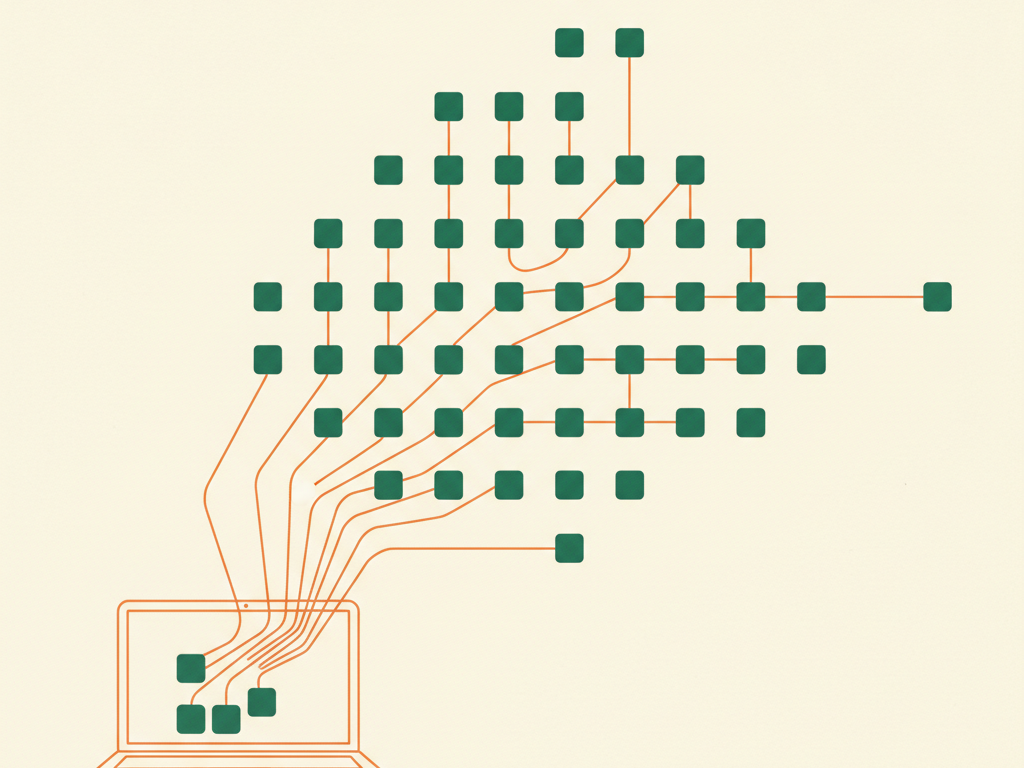
When people attacked by hand, there was a cost. Combing through dozens of subsystems one by one carried time and labor costs, so attackers aimed at the high-value front door and defenders concentrated their resources there. Agents cut that cost. When a tool that runs reconnaissance in parallel is attached to the attacking side, the peripheral systems that human hands never reached turn into the cheapest targets.
The Financial Services Commission has begun a full inspection of computer systems at banks and card companies. The number of institutions to be inspected and the deadline have not been fixed. Shinhan Bank President Jung Sang-hyuk said he feels the weight of responsibility for the incident.
Along with the assessment that banking-sector hacking using open-source agents has become a reality, there have also been calls for national-level preparation against AiPT (penetration-test-style attacks mobilizing AI). How far the full inspection puts outer systems on its list will determine the actual scope of the response to this incident.
Even if the counter screen is clean, if the work systems behind it are open, the names and numbers written there go out. The screen customers see stays the same, but how far banks write down the list of their own computer networks changes right away.